Texas State Comptroller Targeted Islamic Schools for Voucher Exclusion Based on Discredited Allegations

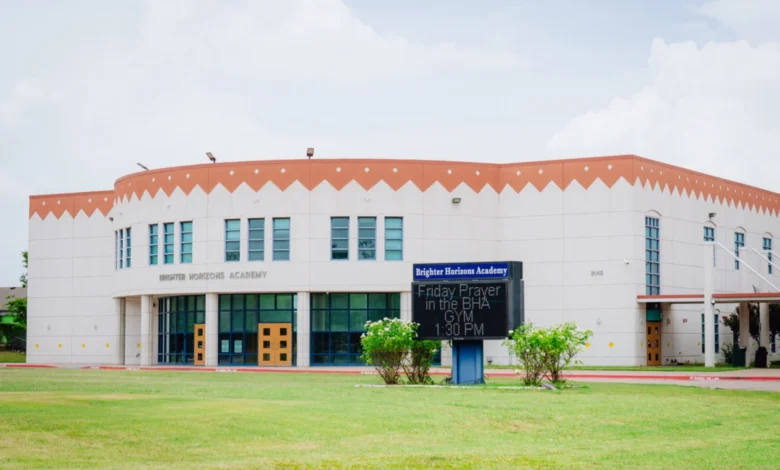
New legal filings and deposition testimony have revealed that the Texas Comptroller of Public Accounts utilized taxpayer funds to conduct targeted investigations into dozens of Islamic private schools, seeking to exclude them from the state’s burgeoning school voucher program. The probe, which focused on approximately 50 institutions, was largely prompted by allegations from a researcher with a documented history of libel and comes amid a period of heightened anti-Muslim rhetoric within Texas political circles.
The revelations emerged as part of an ongoing lawsuit filed in March by four Islamic private school campuses. The schools allege they were unfairly singled out and delayed from participating in the Texas education savings account program, which provides families with public funds for private schooling or homeschooling. While the schools have since been admitted to the program, the litigation continues as the plaintiffs seek class-action status to prevent future discriminatory vetting processes.
The Origins of the Investigation
The state’s scrutiny of Islamic schools appears to have been catalyzed by research provided by Sam Westrop, a researcher currently affiliated with the Texas Public Policy Foundation (TPPF), a prominent conservative think tank. Court documents show that Westrop began sharing research with the Comptroller’s office as early as the fall of 2023, alleging that various Islamic schools in Texas maintained connections to extremist groups or foreign entities, including Hamas and the Chinese Communist Party.
However, Westrop’s history as a source of intelligence has previously been called into question. Nearly a decade ago, a British court ordered Westrop to pay over $173,000 in libel damages after he falsely labeled the founder of a London-based Islamic television channel a "convicted terrorist" on his website. In that case, the presiding judge noted there was "simply no evidence" to support the allegation. Westrop eventually retracted the claim and admitted the evidence used was unreliable.
Despite this history, the Texas Comptroller’s office relied heavily on Westrop’s input. Murl Miller, the Comptroller’s chief counsel for general litigation, admitted in a May deposition that he did not perform a basic internet search on Westrop’s background before treating his allegations as credible. Miller testified that third-party investigators hired by the state had ostensibly confirmed Westrop’s credentials, though those investigators failed to mention the prior defamation judgment.
Discrepancies in the State’s Narrative
The Comptroller’s office initially maintained that the Islamic schools were not specifically targeted but were instead part of a routine administrative review. Agency officials claimed that approximately 700 schools accredited by Cognia—a global nonprofit vetting organization—were set aside for review because some lacked up-to-date documentation required by Texas law.
However, Miller’s eight-hour deposition contradicts this official stance. He confirmed that the agency specifically identified a list of nearly 50 schools for deep-dive investigations based on claims of ties to "radical Islamic organizations" or the Chinese government. While more than 2,600 private schools have been approved for the voucher program, the third-party counterterrorism researchers hired by the state only examined this specific subset of 50 campuses.
The timeline of the investigation further suggests a reactive and targeted approach. For instance, Bayaan Academy, one of the plaintiffs in the lawsuit, was initially approved for the voucher program. However, the school was abruptly removed from the approved list just two hours after Westrop sent an email to the Comptroller’s office in January containing his "research" on the institution.
The Role of Third-Party Investigators
To conduct these probes, the Comptroller’s office contracted with two specialized researchers: Reuben Katz and Lara Burns. Burns is a retired FBI agent currently associated with George Washington University’s Program on Extremism. The state tasked them with creating dossiers on the accused schools and cross-referencing school leadership against various government and non-governmental databases of extremist groups.
The deposition revealed that the Comptroller’s office felt "not readily prepared" to conduct deep research into foreign terrorist organizations internally. Consequently, they relied on Katz and Burns to validate the claims made by Westrop and other activist groups, such as the RAIR Foundation—an organization that describes its mission as combating "threats from Islamic supremacists."
Despite the intensive vetting and the creation of these dossiers, the investigators found no actionable evidence of terrorist ties. Ultimately, every school that had been flagged for Islamic or Chinese government connections was admitted into the voucher program.
Political Context and the Rise of Anti-Muslim Rhetoric
The investigation into the schools did not occur in a vacuum. It coincided with a broader wave of anti-Muslim sentiment expressed by high-ranking Texas officials. In late 2025, Governor Greg Abbott designated the Council on American-Islamic Relations (CAIR), a prominent civil rights organization, as a foreign terrorist organization. This move was widely criticized by civil rights advocates as a violation of due process and federal law, leading to an ongoing legal challenge.
The political climate was further illustrated during the Texas Republican Party convention in mid-2026. Reports from the event detailed attempts to remove Muslim delegates from their positions and instances of verbal harassment directed at Muslim attendees.
In December 2025, acting Comptroller Kelly Hancock formally requested an opinion from Attorney General Ken Paxton regarding the state’s authority to exclude schools from the voucher program based on supposed ties to the Chinese Communist government or CAIR. Paxton issued a ruling in January 2026, confirming that the Comptroller had the "full authority" to block taxpayer funds from reaching such institutions.
Even after the schools were admitted to the program, Hancock continued to push for their removal. In a March 2024 letter to Paxton, Hancock alleged that the principal of Houston Quran Academy had ties to the Muslim Brotherhood and urged the Attorney General to strip the school of its corporate charter. Murl Miller, during his deposition, distanced the agency’s legal team from Hancock’s letter, describing it as containing "mistakes and misstatements" and noting that the agency’s own research had already determined the "terror ties" accusations were inaccurate.
The Legal Path Forward
The four Islamic schools pursuing the lawsuit—Bayaan Academy, Houston Quran Academy, and two others—are now pushing for the court to certify their case as a class action. Their legal team, led by attorney Eric Hudson, argues that the state’s eventual admission of the schools does not resolve the underlying issue of discriminatory vetting.
"Religious liberty is not a temporary pass issued after a lawsuit," Hudson stated. "We’re pressing on so equal treatment is the rule—not an exception granted under pressure."
The state’s legal defense has focused on procedural grounds, arguing that because the schools are now in the program, the case is moot. Lawyers for the Comptroller have also asserted that the current court lacks jurisdiction over a class-action claim in this context. They maintain that the plaintiffs have received the approval they sought and are now on "the same footing" as all other participants.
However, the plaintiffs argue that without a formal ruling or a change in policy, the Comptroller’s office retains the power to arbitrarily remove schools in the future based on unverified allegations from political activists. Miller conceded during his deposition that it is "possible" for the Comptroller to override internal research and remove a school from the approved list at his discretion.
Implications for Education Policy and Religious Freedom
The Texas school voucher program, a cornerstone of the state’s current education policy, was designed to provide "school choice" and allow taxpayer dollars to follow students to the institutions of their parents’ choosing. The controversy surrounding the vetting of Islamic schools raises fundamental questions about the government’s role in monitoring religious institutions that receive public funds.
Policy analysts suggest that if the state establishes a precedent for "ideological vetting" or "national security screening" of private schools, it could lead to a fragmented system where minority religious groups face higher hurdles for participation than mainstream organizations.
Furthermore, the reliance on third-party "extremism" researchers and activist-provided data highlights a potential vulnerability in state administrative processes. The failure to vet the credibility of sources like Westrop suggests that political pressure may, at times, supersede standard investigative protocols.
As the lawsuit moves toward a decision on class certification, the eyes of both education advocates and civil rights groups remain on Texas. The outcome could define the boundaries of state authority in the era of school vouchers and determine whether "school choice" truly applies to all Texans, regardless of faith or political background.
Acting Comptroller Kelly Hancock has announced his intention to step down at the end of the month, leaving the future administration of the voucher program to a successor who will inherit both a robust education initiative and a significant legal challenge regarding its implementation.
Related posts: