
Supreme Court Immunity Case
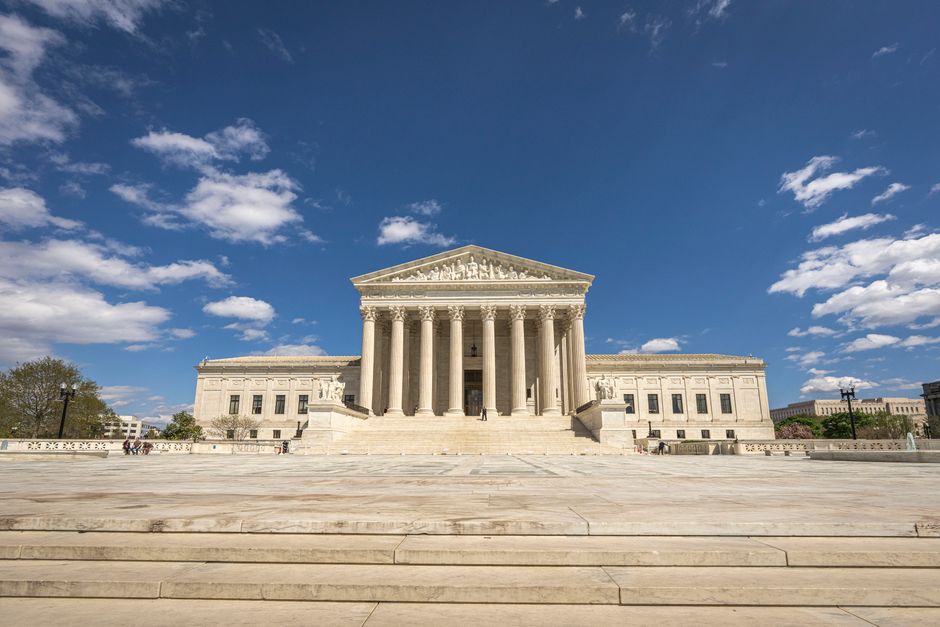
Supreme Court Immunity: Navigating the Uncharted Waters of Judicial Protection
The concept of immunity for public officials is a bedrock principle designed to allow for the unfettered exercise of their duties without the constant threat of politically motivated litigation. Within the American legal system, this protection extends to the judiciary, culminating in the unique and often debated question of Supreme Court immunity. This article delves into the legal underpinnings, historical evolution, contemporary challenges, and profound implications of the immunity afforded to the nine justices of the United States Supreme Court. Understanding this complex doctrine is crucial for comprehending the checks and balances inherent in our government and the boundaries of accountability for those at the apex of our judicial branch.
The doctrine of judicial immunity, which forms the basis of Supreme Court immunity, is rooted in common law and has been recognized and reinforced by the Supreme Court itself through a series of pivotal decisions. At its core, judicial immunity is an absolute defense against civil liability for acts performed by a judge in their judicial capacity. This means that a judge, including a Supreme Court Justice, cannot be sued for damages for any decision or action taken while presiding over a case or engaging in other judicial functions, regardless of how erroneous, malicious, or corrupt those actions might appear to have been. The rationale behind this absolute protection is multifaceted. Firstly, it aims to protect the judicial process from constant harassment and vexation through lawsuits. Without this shield, judges would be perpetually bogged down defending themselves in court, diverting their attention and resources from their primary responsibility of adjudicating disputes. Secondly, it is argued that judicial immunity is essential to preserving judicial independence. If judges feared personal liability for their rulings, they might be susceptible to external pressures, political influence, or the personal cost of unpopular decisions, thereby compromising their ability to impartially interpret and apply the law. The Supreme Court has consistently affirmed this principle, most notably in Pierson v. Ray (1967), which established that judges are immune from civil rights suits for damages based on their judicial acts. While Pierson specifically addressed lower court judges, the reasoning and scope of immunity extend unequivocally to the highest court in the land.
The historical trajectory of judicial immunity reveals a gradual but firm entrenchment of the principle. While not explicitly enumerated in the Constitution, its origins can be traced to English common law, where judges were shielded from liability to ensure the integrity of the nascent judicial system. Early American jurisprudence, influenced by this tradition, gradually incorporated and solidified judicial immunity. The Supreme Court’s decision in Bradley v. Fisher (1872) is a cornerstone in this development, holding that a judge’s “errors of law” or “mistake of jurisdiction” do not subject them to civil liability. The Court reasoned that the exercise of jurisdiction, even if irregular or erroneous, cannot be made the basis of a suit against the judge. Subsequent cases have refined and expanded upon this doctrine, consistently upholding its absolute nature. The underlying philosophy has remained remarkably consistent: the need for an independent and impartial judiciary, free from the chilling effect of personal litigation, outweighs the desire to hold judges accountable for every perceived misstep in their judicial capacity. This commitment to judicial independence is seen as paramount to the functioning of a democratic society, ensuring that the law is applied without fear or favor.
The application of judicial immunity to Supreme Court Justices is absolute and extends to all actions taken within their judicial capacity. This includes their rulings on cases, their participation in the Court’s deliberations, the issuance of opinions, and any other official duties related to the administration of justice. The rationale for this absolute immunity is particularly strong at the Supreme Court level. As the ultimate arbiters of legal disputes in the United States, their decisions have profound and far-reaching consequences. Subjecting them to civil lawsuits for their rulings would create an untenable situation, undermining the finality of judicial decisions and potentially paralyzing the Court. The threat of litigation could lead to a cautiousness that stifles necessary legal development or, conversely, to decisions swayed by the potential for personal financial ruin, thereby compromising the Court’s role as the guardian of the Constitution and the rule of law. Therefore, the immunity they enjoy is not a personal privilege but a functional necessity for the effective operation of the judicial branch.
Despite the robust legal framework supporting Supreme Court immunity, the doctrine is not without its critics and faces ongoing scrutiny, particularly in an era of heightened political polarization and public distrust in institutions. The primary arguments against absolute judicial immunity center on accountability and the potential for abuse. Critics contend that absolute immunity can shield judges from responsibility for egregious misconduct, such as outright corruption, blatant bias, or decisions that demonstrably violate fundamental rights. The argument is that while judicial independence is vital, it should not come at the cost of complete impunity. This concern is amplified when considering the immense power wielded by the Supreme Court, whose decisions can shape the lives of millions for generations. The lack of a readily available mechanism for civil redress against a Justice for potentially harmful judicial actions can lead to feelings of injustice and a perception that the Court is above the law. This can erode public confidence in the judiciary, a crucial element for the legitimacy of the legal system.
One of the most challenging aspects of Supreme Court immunity lies in the determination of what constitutes an act "in a judicial capacity." While generally straightforward, situations can arise where the lines become blurred. For instance, if a Justice were to engage in conduct that is clearly outside the realm of judicial duty, such as engaging in partisan political activity that directly impacts pending cases or engaging in financial dealings that create an irreconcilable conflict of interest, the question of immunity might become more contentious. However, the prevailing legal interpretation leans heavily towards broad protection, and exceptions are exceptionally rare and difficult to prove. The Supreme Court itself has consistently interpreted "judicial capacity" broadly, encompassing all acts performed by a judge in the exercise of their judicial functions. This broad interpretation is a direct consequence of the core rationale: to protect the judicial function itself, not necessarily the personal virtue of every individual judge.
The concept of accountability for Supreme Court Justices is, therefore, primarily addressed through other mechanisms, rather than civil litigation. Impeachment by the House of Representatives and conviction by the Senate is the constitutionally prescribed method for removing a federal judge, including a Supreme Court Justice, for "Treason, Bribery, or other high Crimes and Misdemeanors." This is a high bar and has been rarely invoked for federal judges, and never successfully for a Supreme Court Justice. Other forms of accountability include ethical guidelines and codes of conduct, which Justices are expected to follow, though enforcement mechanisms for these are less formal and primarily rely on public scrutiny and the Justices’ own adherence to professional standards. Additionally, the Court’s legitimacy is inherently tied to public perception and its ability to command respect for its decisions. A pattern of perceived misconduct or egregious errors could, in theory, erode this legitimacy and lead to political pressure for reform or impeachment, though this is a slow and indirect form of accountability.
The debate surrounding Supreme Court immunity is intricately linked to broader discussions about judicial reform, ethics in government, and the balance of power within the American system of checks and balances. Proposals for reform often grapple with the challenge of enhancing accountability without undermining judicial independence. Some suggest strengthening ethics enforcement mechanisms, while others advocate for more robust transparency in judicial decision-making. However, any proposed changes to the immunity doctrine would require significant legal and constitutional hurdles, likely necessitating a constitutional amendment or a fundamental reinterpretation of long-standing precedent. The Supreme Court itself would ultimately have to weigh in on any such challenges, creating a complex self-referential loop.
In conclusion, Supreme Court immunity is a vital, albeit controversial, aspect of the American legal landscape. It is a doctrine designed to safeguard the independence and integrity of the judiciary, allowing Justices to perform their critical constitutional duties without fear of personal repricusal. While the absolute nature of this immunity offers strong protection for the judicial function, it also raises legitimate questions about accountability and the potential for unchecked power. The ongoing tension between these competing concerns ensures that the debate over Supreme Court immunity, and its implications for the future of judicial governance, will continue to be a significant subject of legal and public discourse. Understanding the historical context, legal rationale, and contemporary challenges of this doctrine is essential for appreciating the delicate balance of power that underpins the American system of justice.
