Texas State Comptroller Faces Legal Scrutiny Over Targeting of Islamic Private Schools Based on Discredited Allegations

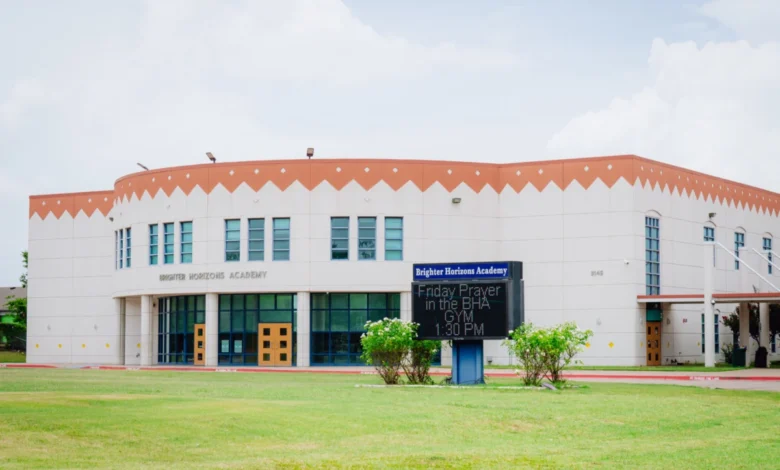
The intersection of religious freedom, state-funded education, and national security has ignited a complex legal battle in Texas, as new court filings reveal the state’s reliance on a previously discredited source to investigate and temporarily exclude Islamic private schools from a nascent school voucher program. The controversy centers on the actions of the Texas Comptroller of Public Accounts and its utilization of research provided by Sam Westrop, a man who nearly a decade ago was ordered by a British court to pay over $173,000 in libel damages for falsely labeling a Muslim leader a "convicted terrorist."
The legal proceedings, stemming from a lawsuit filed in March by four Islamic private school campuses, have pulled back the curtain on how state officials navigated the implementation of the Texas voucher program. The program, which allows eligible families to use taxpayer dollars for private education or homeschooling, became a battlefield where allegations of "extremism" and "foreign influence" were leveraged against specific religious institutions. While the schools were eventually admitted into the program, the ongoing litigation seeks to ensure that such targeting does not become a recurring feature of state administrative oversight.
The Genesis of the Allegations and the Role of Sam Westrop
The roots of the current legal dispute trace back to the activities of Sam Westrop, who is currently associated with the Texas Public Policy Foundation, a prominent conservative think tank in Austin. Long before his involvement in Texas politics, Westrop was the subject of a high-profile libel case in the United Kingdom. In that instance, a judge ruled that Westrop had no evidence to support claims published on his website that the founder of a London-based Islamic television channel was a terrorist. Westrop eventually admitted the unreliability of his evidence and issued a correction, but the judgment remains a significant mark on his record as a researcher.
Despite this history, Westrop began sharing "research" with the Texas Comptroller’s office as early as the fall of 2023. His reports alleged that several Islamic schools in Texas—many of which were applying for the state’s new voucher program—had connections to extremist groups such as Hamas. These allegations were not confined to private correspondence; Westrop also published his findings through the Middle East Forum, an organization that states its mission is to protect Western interests from Middle Eastern threats.
The impact of Westrop’s claims was immediate. Legal filings indicate that Bayaan Academy, one of the plaintiffs in the lawsuit, was initially approved for the voucher program, only to have its approval revoked just two hours after Westrop sent an email to state officials containing his research in January. This rapid reversal suggests a high degree of influence exerted by external activists over state administrative processes.
Expansion of the State’s Investigation
While the Comptroller’s office initially claimed that the delay in admitting certain schools was due to routine accreditation checks, a May deposition of Murl Miller, the Comptroller’s chief counsel for general litigation, suggests a far more targeted approach. Miller’s testimony revealed that the state used taxpayer funds to contract two specialized investigators—Reuben Katz and Lara Burns, a retired FBI agent—to probe the backgrounds of approximately 50 private schools.
This number significantly exceeds previous reports and indicates that the scope of the state’s scrutiny was specifically focused on schools with alleged ties to either radical Islamic organizations or the Chinese Communist Party (CCP). Miller confirmed that these investigators did not review the broader pool of over 2,600 private schools approved for the program, but instead focused exclusively on the list of schools flagged by Westrop and other activist groups, such as the RAIR Foundation.
The RAIR Foundation describes itself as an investigative organization dedicated to combating "Islamic supremacists" and "radical leftists." The inclusion of such groups in the state’s intelligence-gathering process has raised concerns among civil rights advocates regarding the objectivity and fairness of the Comptroller’s vetting procedures.
Conflicting Internal Accounts and Official Responses
The deposition of Murl Miller exposed a disconnect between the Comptroller’s professional legal staff and the political leadership of the agency. During the eight-hour deposition, Miller was asked if the agency had conducted basic due diligence on Westrop, such as a simple internet search that would have revealed his prior libel judgment. Miller admitted that he had not "Googled" Westrop and was unaware of the $173,000 defamation ruling.
Furthermore, Miller appeared to distance the agency’s legal findings from the public statements of acting Comptroller Kelly Hancock. In a March letter to Attorney General Ken Paxton, Hancock continued to push for the removal of the Houston Quran Academy from the voucher program, citing alleged "terror ties" involving the school’s principal. Hancock even urged the Attorney General to strip the school of its corporate charter.
When questioned about Hancock’s letter, Miller characterized it as containing "a lot of mistakes and misstatements," noting that the agency’s internal review had already determined the accusations of terrorist ties were inaccurate. Miller described Hancock’s letter as a "surprise" that came "completely out of the blue." Hancock has since announced his intention to resign from his position as acting Comptroller.
The Political Climate and Anti-Muslim Rhetoric
The investigation into the Islamic schools occurred against a backdrop of increasing political tension in Texas. In November, Governor Greg Abbott designated the Council on American-Islamic Relations (CAIR), a prominent Muslim civil rights organization, as a "foreign terrorist organization." This designation has been challenged in court by CAIR, which argues the move was made without due process and violated federal law.
The political environment was further strained during the Texas Republican Party convention, where reports surfaced of attempts to remove Muslim delegates and instances of verbal hostility toward Muslim attendees. These events have contributed to a perception among the plaintiffs that the Comptroller’s investigation was motivated more by political pressure and religious bias than by legitimate security concerns.
Attorney General Ken Paxton also played a pivotal role, issuing a legal opinion in January that confirmed the Comptroller’s authority to exclude schools from the voucher program based on perceived ties to foreign adversaries or extremist groups. This ruling provided the legal framework for the state to bypass traditional accreditation standards in favor of "security-based" exclusions.
Legal Arguments for Class-Action Certification
Although the Comptroller eventually admitted all the investigated schools into the voucher program, the plaintiffs are not dropping their lawsuit. Instead, they are seeking class-action certification to prevent the state from engaging in similar conduct in the future.
Eric Hudson, the attorney representing the Islamic schools, argued that "religious liberty is not a temporary pass issued after a lawsuit." The plaintiffs contend that without a court order, the state remains free to use "black-box" investigative methods to target specific religious or ethnic groups whenever political winds shift. They seek to establish a precedent that ensures equal treatment under the law for all private educational institutions, regardless of their religious affiliation.
The state’s legal team, however, argues that the case is moot because the schools are now participating in the program. In a June filing, state lawyers asserted that the plaintiffs have received the approval they sought and that the court no longer has jurisdiction over the matter. They maintain that the state’s actions were a necessary precaution to ensure that taxpayer funds do not inadvertently support organizations with ties to hostile foreign entities or extremist movements.
Chronology of Key Events
- 2015: A British court orders Sam Westrop to pay libel damages for falsely accusing a Muslim leader of being a terrorist.
- Fall 2023: Westrop begins sharing dossiers on Texas Islamic schools with the Texas Comptroller’s office.
- November 2023: Governor Greg Abbott designates CAIR a foreign terrorist organization.
- December 2023: Acting Comptroller Kelly Hancock asks AG Ken Paxton for authority to exclude certain schools from the voucher program.
- January 2024: Ken Paxton rules the Comptroller has the authority to exclude schools. Bayaan Academy is removed from the approved list hours after an email from Westrop.
- March 2024: Four Islamic school campuses file a lawsuit against the Comptroller alleging discrimination.
- May 2024: Murl Miller, chief counsel for the Comptroller, gives a deposition revealing the state’s reliance on Westrop and other activists.
- June 2024: The state moves to dismiss the lawsuit, arguing the schools have already been admitted.
- July 2024: Acting Comptroller Kelly Hancock announces his resignation.
Implications for School Choice and Governance
The outcome of this legal battle carries significant implications for the future of school choice in Texas and across the United States. As more states adopt voucher programs and Education Savings Accounts (ESAs), the question of how governments vet private providers becomes paramount. If states are permitted to use subjective, politically charged criteria to exclude certain schools, it could undermine the principle of parental choice and open the door to systemic religious discrimination.
Conversely, the state’s argument highlights the challenges of ensuring that public funds are used responsibly and do not benefit organizations that may pose a legitimate security risk. The central tension lies in the definition of "due process" and the standard of evidence required to levy such serious accusations against educational institutions.
As the case proceeds toward a decision on class-action certification, it remains a stark reminder of how easily administrative power can be influenced by external ideological actors. The "mistakes and misstatements" admitted by the Comptroller’s own counsel suggest that the intersection of intelligence-gathering and education policy requires a level of transparency and rigor that, in this instance, the state of Texas may have struggled to maintain. For the Islamic schools involved, the fight is no longer just about vouchers; it is about securing a permanent place in the public square, free from the shadow of unverified allegations.
Related posts: