ICC Assembly of States Parties to Vote on Ouster of Chief Prosecutor Karim Khan Amid Sexual Misconduct Allegations

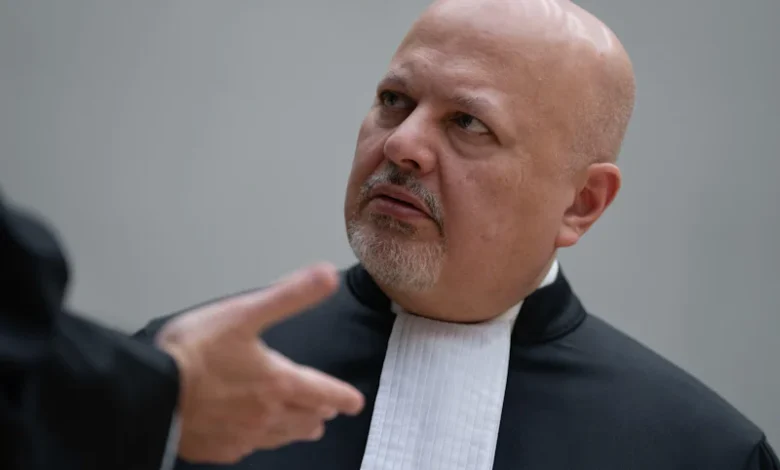
The International Criminal Court (ICC) faces a defining institutional crisis as its 125 member states prepare to vote on the future of Chief Prosecutor Karim Khan. The upcoming July 25 ballot will determine whether Khan, a prominent British jurist who has led some of the world’s most high-profile war crimes investigations, will be permanently removed from his post following a series of grave sexual misconduct allegations. The move follows his suspension in June 2026, a decision that sent shockwaves through the global legal community and raised urgent questions regarding the internal governance and accountability mechanisms of the world’s permanent war crimes tribunal.
The allegations against Khan center on the testimony of a lawyer, identified in media reports only as Sarah, who served as his direct assistant at the ICC’s headquarters in The Hague. According to a leaked copy of a United Nations investigative report obtained by CNN, Sarah has accused Khan of a pattern of predatory behavior and nonconsensual sexual acts. The report details a series of harrowing incidents occurring throughout 2024, alleging that Khan repeatedly subjected her to groping, attempted kissing, and digital and genital penetration. These allegations, if proven, represent not only a violation of the ICC’s code of conduct but a significant criminal breach of the trust placed in one of the highest-ranking officials in international law.
The Dynamics of Power and Alleged Misconduct
At the heart of the complaint is the issue of power disparity within the Office of the Prosecutor (OTP). In her statements to investigators, Sarah emphasized the impossibility of meaningful consent in a relationship characterized by such a profound professional imbalance. "There is no way for something to be consensual when you have such a power disparity," Sarah stated, according to the leaked UN findings. "What I think many people don’t understand is that Mr. Khan was not just my boss, he was everyone’s boss. And it cannot be consensual."
This perspective aligns with modern legal and ethical standards regarding workplace conduct in international organizations, where the hierarchy is often rigid and the influence of a chief executive can determine the trajectory of a subordinate’s entire career. The ICC, established by the Rome Statute, is intended to be a beacon of justice and human rights. Consequently, allegations of this nature against its lead prosecutor strike at the very core of its mission.
The investigation into Khan’s conduct expanded significantly when a second woman came forward with similar claims. This second accuser, who served as an unpaid intern at the ICC in 2009—a period when Khan was working in a different legal capacity—has alleged that she too was subjected to sexual misconduct. While the details of the 2009 incident remain less publicized than the 2024 allegations, the emergence of a second complainant has bolstered the arguments of those calling for Khan’s permanent removal, suggesting a potential long-term pattern of behavior rather than an isolated incident.
A Strenuous Denial and Legal Defense
Karim Khan has maintained a stance of total innocence since the allegations first surfaced. Through his lead counsel, Sareta Ashraph, Khan has denied every aspect of the accusations. Ashraph, who took over Khan’s defense following his suspension in June, has stated that her client "denied and continues to deny them in their entirety—any form of sexual content, relationship, consensual or nonconsensual, with the complainant."
The defense team has characterized the allegations as potentially politically motivated or the result of a misunderstanding of professional interactions. However, the depth of the UN investigative report and the testimony provided by Sarah have made it increasingly difficult for the Assembly of States Parties (ASP) to dismiss the matter. The ASP, which serves as the management oversight and legislative body of the ICC, is now tasked with weighing the evidence gathered by independent investigators against the denials of a man who has spent his career prosecuting the world’s most notorious criminals.
Chronology of the Crisis
The timeline of the current crisis reveals a rapidly escalating series of events that began behind closed doors before exploding into the public consciousness:
- February 2021: Karim Khan is elected by the Assembly of States Parties to serve a nine-year term as the ICC Chief Prosecutor, succeeding Fatou Bensouda.
- January – December 2024: The period during which Sarah alleges the majority of the misconduct occurred while serving as Khan’s direct assistant.
- Early 2025: Initial internal reports are filed within the ICC’s Internal Oversight Mechanism (IOM). Due to the sensitivity of the case involving the Chief Prosecutor, the investigation is eventually elevated to an external body.
- Late 2025 – Early 2026: The United Nations conducts an independent investigation into the claims to ensure impartiality, given Khan’s status within the ICC.
- June 2026: Following the preliminary findings of the UN investigation, the ICC Assembly of States Parties takes the unprecedented step of suspending Khan from his duties pending a final decision.
- July 16, 2026: CNN publishes details from the leaked UN report, bringing the specific nature of the allegations—including digital and genital penetration—to global attention.
- July 25, 2026: The 125 member states are scheduled to convene for a decisive vote on Khan’s permanent ouster.
The Legal Framework for Removal
The removal of an ICC Prosecutor is governed by Article 46 of the Rome Statute. This article stipulates that a prosecutor may be removed from office if they are found to have committed "serious misconduct" or a "serious breach of his or her duties." The decision for removal requires a majority vote by the Assembly of States Parties.
This process is intentionally rigorous to protect the independence of the prosecutor from political interference. However, the nature of the allegations against Khan—centering on sexual violence—places the ASP in a difficult position. The court, which often prosecutes sexual and gender-based violence as war crimes and crimes against humanity, risks a total collapse of its moral authority if it is seen as lenient toward such behavior within its own leadership.
Supporting Data and Institutional Impact
The scandal comes at a time when the ICC is already under immense pressure. Under Khan’s leadership, the court has taken bold steps, including issuing arrest warrants for high-ranking officials in the Russian government regarding the situation in Ukraine, and seeking warrants for leaders in the Israel-Hamas conflict. These actions have earned Khan both international acclaim and fierce political enemies.
Data from the ICC’s Internal Oversight Mechanism suggests that while the court has made strides in establishing reporting protocols for harassment, the actual reporting rates remain low relative to the size of the organization. A 2023 internal culture survey indicated that roughly 15% of staff had witnessed or experienced some form of harassment or abuse of authority, but fewer than 3% officially reported it, citing fear of retaliation or a lack of faith in the process. The Khan case is seen by many staff members as a "litmus test" for whether the institution’s leadership is truly subject to the same laws it enforces globally.
Geopolitical Implications and the Shadow of Doubt
The potential ouster of Karim Khan has significant geopolitical ramifications. Khan has been the face of the ICC’s most controversial and high-stakes investigations. Critics of the court, particularly those in nations not party to the Rome Statute, such as the United States, Russia, and Israel, may use the scandal to delegitimize the warrants and investigations Khan initiated.
Legal analysts suggest that if Khan is removed, his successor will inherit a deeply fractured office. There is also the concern of "procedural taint." While the legal validity of the warrants issued during Khan’s tenure should theoretically remain intact—as they are granted by a chamber of independent judges—the "moral taint" of the prosecutor’s alleged actions could be used in the court of public opinion to undermine the pursuit of justice in Ukraine, Gaza, and beyond.
Global Reactions and the Path Forward
The reaction from international human rights organizations has been one of cautious concern. Groups such as Human Rights Watch and Amnesty International have emphasized the need for a transparent and fair process that respects the rights of the accusers while maintaining the presumption of innocence until a final determination is made. However, there is a growing consensus that for the ICC to survive this scandal, it must demonstrate an unwavering commitment to accountability, regardless of the rank of the individual involved.
As the July 25 vote approaches, the 125 member states are engaged in intense diplomatic consultations. The decision is not merely about one man’s career; it is about the integrity of the international legal order. If the Assembly votes to oust Khan, it will mark the first time a Chief Prosecutor has been removed for misconduct, setting a powerful precedent for accountability. If they vote to retain him, they must be prepared to justify that decision in the face of a detailed and disturbing UN investigative report.
The eyes of the world are now on The Hague. The outcome of the upcoming vote will determine whether the International Criminal Court can uphold its own standards of justice within its own walls, or whether the shadow of these allegations will permanently dim the institution’s ability to hold the world’s most powerful figures to account. For Sarah and the other unnamed accusers, the vote represents a personal quest for justice; for the ICC, it is an existential turning point.