The Ideological Fault Lines: Suburban New York Becomes Crucible for House Majority Battle and Democratic Party’s Future

The contest for control of the House of Representatives in the upcoming autumn midterm elections is intensifying, with suburban New York City emerging as a critical battleground. Districts such as New York’s 17th, 3rd, and 4th congressional districts, all designated as crucial swing seats, are at the epicenter of this struggle, simultaneously showcasing a deepening ideological rift within the Democratic Party that Republicans are actively leveraging as a potent campaign issue. The stakes are exceptionally high, as Republicans endeavor to maintain their precarious House majority, while Democrats seek to flip the chamber amidst internal debates over the party’s direction.
The Battleground: New York’s Crucial Swing Districts
These three districts—NY-17, NY-3, and NY-4—represent the quintessential suburban American political landscape, characterized by diverse demographics, economic ties to New York City, and a history of swinging between parties. NY-17, encompassing much of New York City’s northern suburbs, is currently represented by Republican Rep. Mike Lawler. This district, like many suburban areas, often serves as a bellwether for national political sentiment, reacting to both local issues and broader national narratives. Similarly, NY-3 and NY-4, situated on Long Island in New York City’s eastern suburbs, are highly competitive. NY-4, currently held by Democratic Rep. Laura Gillen, was flipped by her two years ago, underscoring its volatility. Neighboring NY-3 saw a narrow victory for veteran Democratic Rep. Tom Suozzi over Republican nominee Mike LePetri in 2024, highlighting the district’s closely divided electorate.
These districts are home to a significant population of commuters, professionals, and working-class families whose daily lives are intricately linked to the economic and social dynamics of New York City. Voters in these areas often prioritize issues such as economic stability, public safety, and local governance, making them particularly sensitive to political messaging that touches upon these concerns. Historically, suburban voters have played a decisive role in national elections, often acting as swing voters who can tip the balance in closely contested races. The outcomes in these specific New York districts will not only determine the state’s congressional representation but could also forecast broader national trends for the midterm elections.
The Democratic Party’s Internal Ideological Rift
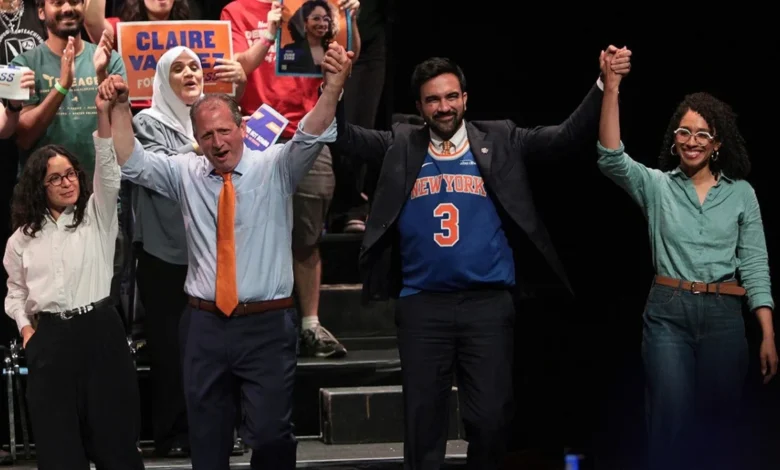
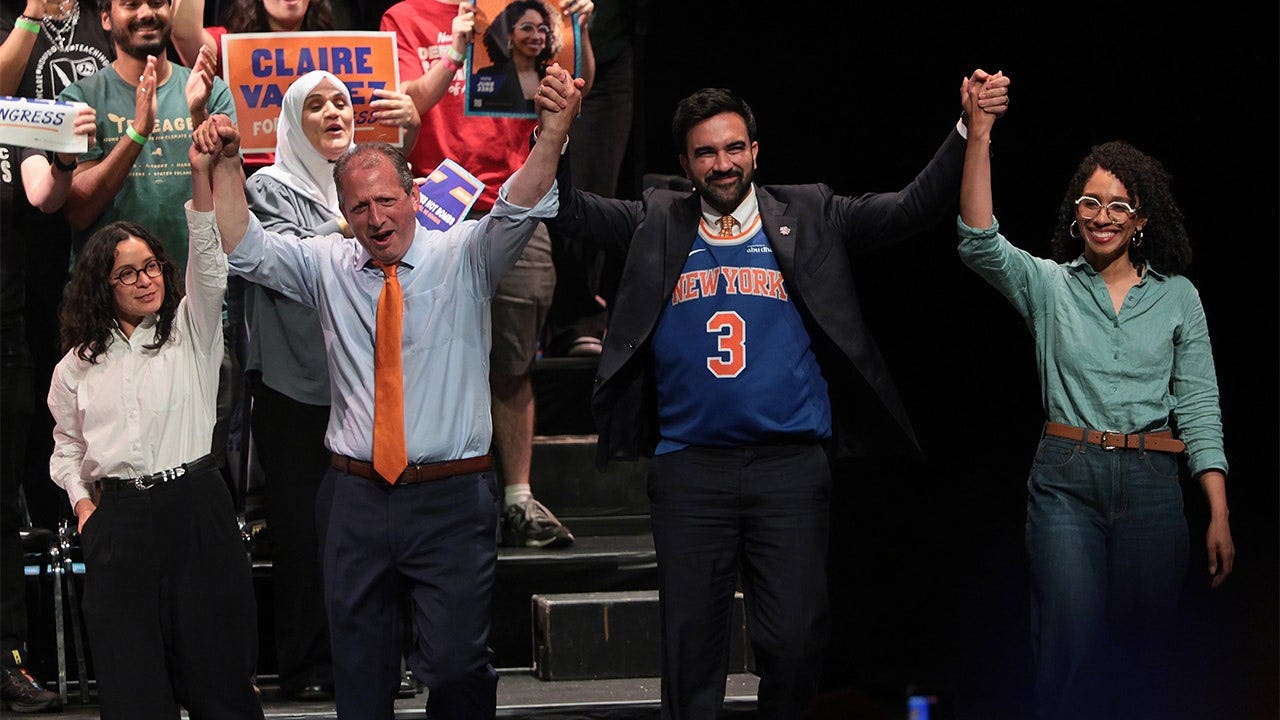
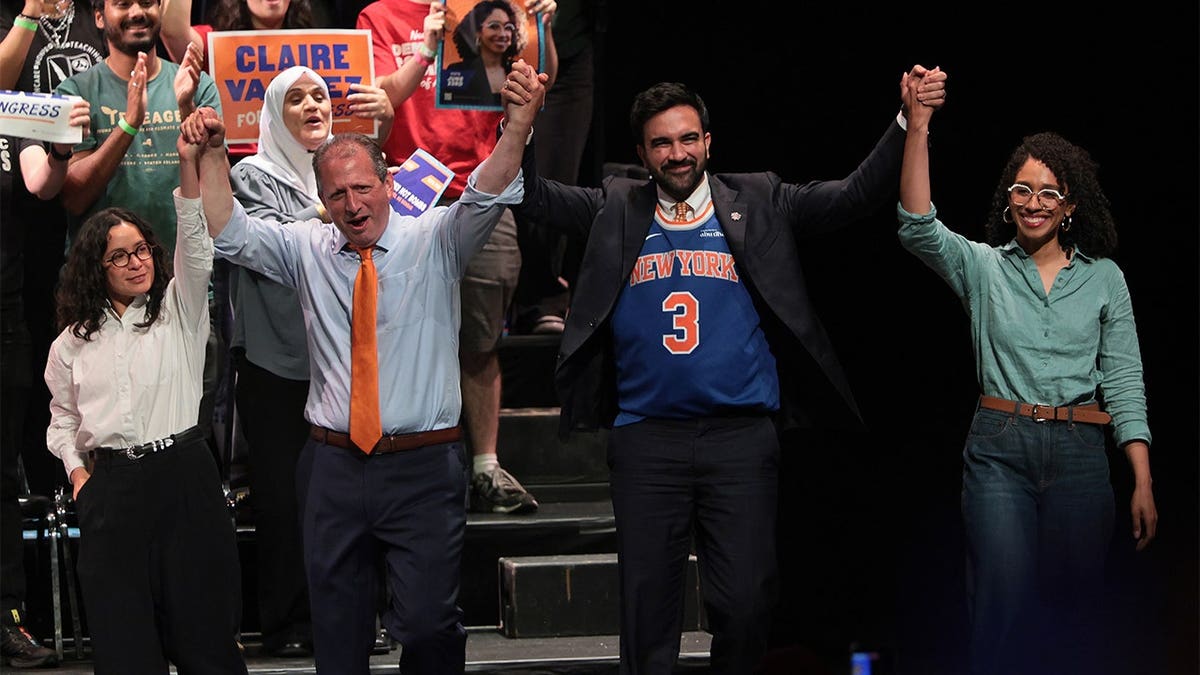
A significant dimension of the current political narrative in these districts stems from recent primary election results within the Democratic Party, which have drawn national attention. In a series of showdowns, three candidates, characterized as far-left and backed by New York State Assemblymember Zohran Mamdani (who is often characterized as a socialist and has a significant progressive following), successfully defeated more moderate, establishment-backed rivals. Two of these primary winners were notably aligned with the Democratic Socialists of America (DSA), and two of the defeated candidates were incumbent members of Congress.
These victories highlight a growing tension within the Democratic Party between its progressive and moderate wings. The DSA, along with other influential far-left groups like the Justice Democrats and the Working Families Party, advocates for policies that often include universal healthcare (Medicare for All), a Green New Deal, significant social spending, and criminal justice reform. These platforms contrast sharply with the more centrist approaches typically favored by establishment Democrats, who often prioritize incremental change, fiscal pragmatism, and bipartisan cooperation. The successful primary challenges, particularly against incumbents, signal a determined effort by the progressive wing to shift the party’s ideological center of gravity, not just in New York City but across the state and potentially nationally.
Assemblymember Mamdani, a prominent figure in New York’s progressive movement, has been vocal in his support for these insurgent candidates, effectively becoming a symbolic leader for this faction. His endorsements and active campaigning have lent significant momentum to candidates advocating for more radical policy shifts. The impact of these primary results extends beyond the immediate districts, as they provide tangible evidence of the progressive movement’s electoral strength and its capacity to mobilize voters against established party figures. This internal dynamic presents a complex challenge for the Democratic Party, which must simultaneously appeal to its energized progressive base while retaining the support of moderate voters in competitive general election contests.
Republican Strategy: Painting Democrats as Radicals
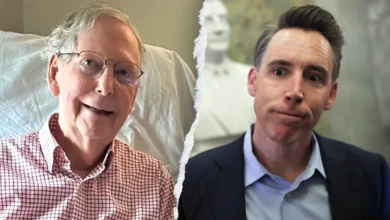
Republicans are seizing upon these internal Democratic divisions, utilizing them as "political ammunition" to portray the entire Democratic Party as increasingly radicalized. Republican Rep. Mike Lawler, a two-term lawmaker representing NY-17, articulated this strategy in a Fox News Digital interview, stating, "Democrats have gone further and further and further to the left with no end in sight." Lawler specifically linked the influence of these progressive victories in New York City to his own district, noting that many of his constituents work in the city as "cops, firefighters, nurses, teachers" and are therefore directly impacted by its political climate. He charged that "these radical socialists are taking over the Democratic Party, not just for Congress, but the state legislature," and predicted that Mamdani would become "the face of the Democratic Party and its leader," which he believes is precisely what is happening.
Lawler’s Democratic challenger in the midterms, Cait Conley, is not formally backed by the DSA, Justice Democrats, or the Working Families Party. However, Lawler argues that this distinction is superficial, asserting that Conley "agrees with them from a policy standpoint, even if she doesn’t couch herself in the same title of socialist." He warned that his opponent "would be a rubber stamp for the radical socialists who are coming, and she wouldn’t have the ability to stand up to these people and push back." This tactic aims to create a guilt-by-association narrative, tying moderate Democratic candidates to the most progressive elements of their party, regardless of their individual platforms or endorsements.
This strategy is not unique to New York; it is a national Republican playbook designed to energize their conservative base and sway undecided independent voters who may be wary of extreme ideological positions. High-profile Republican figures have echoed and amplified this message. Former President Donald Trump has repeatedly warned of a "communist" threat, a broad label applied to left-wing policies. Vice President JD Vance recently argued on Fox News’ "The Ingraham Angle" that Democrats hold "a view that the United States is an evil country that must be dismantled from the ground and then built back up. That’s communism at its core, and you see more and more momentum in that direction from the Democrat Party." Such rhetoric aims to elevate the stakes of the midterm elections, portraying them as a referendum on the very foundations of American society, rather than merely a contest of policy differences. The effectiveness of this strategy hinges on whether voters in swing districts perceive the Democratic Party as having moved too far left and whether they believe moderate Democrats can effectively resist this perceived shift.
Democratic Counter-Narrative: Focus on "Pocketbook Issues"
In response to these Republican attacks, Democratic leaders and candidates are employing a counter-narrative that focuses on economic concerns and local issues, while also attempting to delineate themselves from the far-left labels. Rep. Suzan DelBene, chair of the Democratic Congressional Campaign Committee (DCCC), dismissed the GOP’s attempts to paint Democrats as far-left radicals as "desperate attacks." In a statement to Fox News Digital, DelBene asserted, "The midterms will ultimately be a referendum on who is going to lower costs and help improve the lives of everyday Americans – which House Republicans have failed spectacularly to do." She charged that Republicans "already know they’ve lost the American people, and that’s why they are resorting to desperate attacks that aren’t actually about the pocketbook issues, but just baseless spin that falls flat with voters who are eager to reject Republicans." This response aims to pivot the conversation back to economic realities and away from ideological labels, arguing that voters are more concerned with their daily financial struggles than with abstract political classifications.
Cait Conley, Lawler’s Democratic opponent in NY-17, echoed this sentiment by pushing back on his criticisms and emphasizing a desire for new leadership. A West Point graduate and military combat veteran with three Bronze Stars from six deployments, Conley told Fox News Digital, "Voters are sick of political insiders, politicians, political operatives who care more about their next reelection than they do solving the actual problems with the time they are given to represent their people." She implicitly criticized Lawler, who had a background as a political strategist before serving as a state lawmaker and then winning election to Congress, stating, "we need new leaders, not people who are part of the political insider network." Her message seeks to appeal to a broader electorate tired of partisan bickering and looking for practical solutions, while also highlighting her non-traditional political background.
Further illustrating the effort by moderate Democrats to define their distinct identity, Reps. Laura Gillen (NY-4) and Tom Suozzi (NY-3) are part of a group of moderate House Democrats who earlier this year launched the "Promise to America." This initiative is a centrist political pledge that explicitly rejects socialism, supports secure borders, and promotes fiscal responsibility and economic growth. Suozzi, in a "Fox and Friends" interview, described himself as "a new kind of old-fashioned Democrat. Someone who believes in the traditional values." He emphasized, "We’re for capitalism, not socialism. We’re for safety, not lawlessness. We’re proud of America. Not ashamed of America. And we need to be promoting those things." Suozzi acknowledged the internal party divisions, stating, "There are people in the Democratic Party that are left of center that don’t agree with the far left. And we just need to do a better job organizing because you’ll see big rallies for people who are extremists, far right, far left, but if I show up and say ‘hey let’s work together to solve the problems that we face in our country,’ you’re not going to get a big rally for that." This candid assessment underscores the challenge for moderate Democrats: to articulate a clear, appealing centrist vision that can win elections without alienating their party’s progressive base.
Voices from the Front Lines: Candidates in NY-3 and NY-4
The reverberations of the New York City primary results are keenly felt in the neighboring Long Island districts of NY-3 and NY-4. Jeanine Driscoll, the Republican nominee in NY-4, who currently serves as the receiver of taxes in Hempstead, America’s largest township by population, expressed concern about the influence of the far-left victories. She told Fox News Digital, "I think it will definitely affect us in Nassau County since we’re a border county." Driscoll explicitly characterized the successful candidates as "ultra left wing people who are proclaiming themselves to be socialists, really communists," believing that this will "wake people up" among the electorate. She is challenging Democratic Rep. Laura Gillen, who flipped the district two years ago and is now a proponent of the "Promise to America" initiative. Driscoll’s remarks indicate a clear intention to link Gillen, despite her moderate stance, to the broader progressive movement in the state.
Similarly, in NY-3, Republican nominee Mike LePetri, who narrowly lost to veteran Democratic Rep. Tom Suozzi in 2024, articulated his apprehension. LePetri told Fox News Digital, "Frankly, the people of Long Island and northeast Queens are scared. They’re concerned about the future of America if you have the Democrat Party take over the House of Representatives." His statement reflects the high stakes Republicans are attaching to the midterm elections, framing the choice as one that could fundamentally alter the nation’s trajectory.
However, Suozzi and Gillen, as signatories to the "Promise to America," are actively attempting to differentiate themselves. Suozzi’s emphasis on "capitalism, not socialism" and "safety, not lawlessness" is a direct appeal to the centrist voters of his district. Gillen’s voting record and public statements align with this moderate platform, seeking to underscore her independence from the more extreme elements of her party. Yet, their Republican challengers remain skeptical. LePetri charged that Suozzi "is two faced. He says one thing, but votes exactly with his conference," implying that Suozzi’s moderate rhetoric does not align with his legislative actions. Driscoll, speaking of Gillen, argued, "they claim they’re moderate. If you look at her voting record, her voting record is not moderate." These accusations suggest that Republicans will meticulously scrutinize the voting records of moderate Democrats, seeking any instance where they align with the national party’s progressive agenda to undermine their centrist claims.
Implications for the Midterm Elections and Beyond
The dynamics playing out in these suburban New York districts are microcosms of the larger national battle for the House majority. With a razor-thin Republican majority, every competitive race is crucial. The ability of Republicans to successfully brand all Democrats as "radical socialists" could be a deciding factor in these swing districts, potentially galvanizing conservative voters and swaying independents who are wary of ideological extremes. Conversely, the success of moderate Democrats in articulating a distinct centrist platform, focused on practical issues like cost of living and local governance, will be vital to their electoral survival.
For the Democratic Party nationally, the internal struggle between its progressive and moderate wings poses a significant challenge. While the energy and enthusiasm of the progressive base are undeniable and crucial for voter mobilization, the party risks alienating swing voters in crucial districts if it is perceived as moving too far to the left. The "Promise to America" initiative is a clear attempt by centrist Democrats to establish an ideological firewall, but its effectiveness depends on their ability to convince voters that they are truly independent actors, rather than merely offering lip service to moderation.
The midterm elections will also test the efficacy of different campaign strategies. Republicans are employing a nationalized message, aiming to tie local candidates to broader ideological currents. Democrats, particularly in purple districts, are attempting to localize the election, focusing on "pocketbook issues" and the perceived failures of the current Republican-led House. The outcome will provide valuable insights into the current mood of the American electorate, particularly in the critical suburban areas that frequently determine control of Congress. The ability of either party to effectively frame the narrative—whether as an ideological battle for the nation’s soul or a pragmatic contest over everyday concerns—will likely dictate the balance of power in Washington.
The Road Ahead: Key Factors to Watch
As the autumn midterms approach, several key factors will influence the outcomes in New York’s swing districts and, by extension, the national House majority. The state of the economy, particularly inflation and consumer confidence, will heavily impact voter sentiment, aligning with the Democratic emphasis on "pocketbook issues." Candidate messaging and the ability of each campaign to effectively differentiate themselves from broad party labels will also be crucial. For Republicans, the challenge will be to maintain a consistent message that links Democratic candidates to perceived radicalism without alienating more moderate voters. For Democrats, the task involves unifying their diverse ideological factions while presenting a cohesive, centrist front in competitive races.
Voter turnout, often a decisive factor in midterms, will be another critical element. Both parties will invest heavily in Get Out The Vote (GOTV) efforts, particularly among their respective bases. External events, such as national or international crises, could also shift public opinion and influence the political landscape. The ongoing debate over issues like immigration, crime, and education will continue to shape local political discourse, intertwined with the national ideological struggle. The battle in suburban New York is more than just a contest for a few congressional seats; it is a critical indicator of the broader ideological currents shaping American politics and the strategic approaches both major parties will adopt in their quest for power. The results in NY-17, NY-3, and NY-4 will offer a compelling snapshot of America’s political future.