International Criminal Court Member States Set to Vote on Ousting Chief Prosecutor Karim Khan Amid Sexual Misconduct Allegations

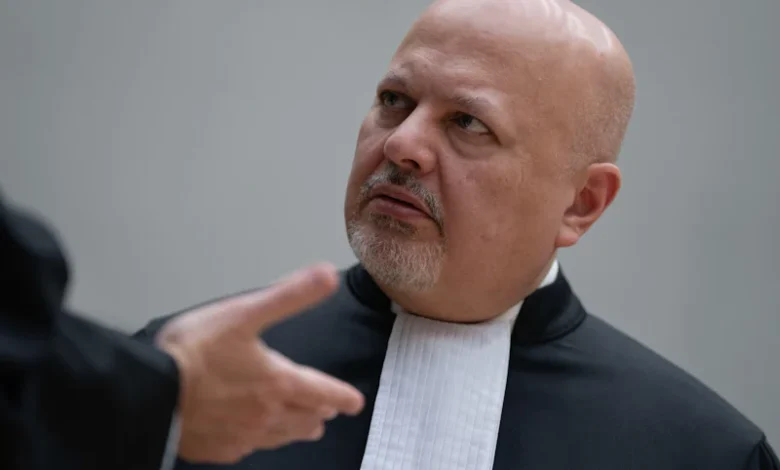
The International Criminal Court (ICC) is facing an unprecedented internal crisis as its 125 member states prepare for a decisive vote on whether to permanently remove Chief Prosecutor Karim Khan from his position. This high-stakes decision follows a series of grave allegations involving sexual misconduct, which have sent shockwaves through the Hague-based institution and raised fundamental questions regarding the accountability of its highest-ranking officials. The vote, scheduled for July 25, 2026, represents a pivotal moment for the court, which has long positioned itself as a global beacon of justice and human rights.
The controversy centers on accusations brought forward by a lawyer currently employed at the ICC, identified in media reports as Sarah. According to a leaked copy of a United Nations investigative report obtained by CNN, Sarah, who served as Khan’s direct assistant, alleges that the Chief Prosecutor repeatedly subjected her to nonconsensual sexual acts. The details of the report are harrowing, citing instances of groping, attempted kissing, and digital and genital penetration. The allegations surfaced internally in 2024, but the details have only recently become a matter of public record, prompting an immediate and intense debate over the leadership of the Office of the Prosecutor (OTP).
The Nature of the Allegations and Power Disparity
The testimony provided by Sarah emphasizes the inherent power imbalance within the International Criminal Court’s organizational structure. In her statements, she underscored the difficulty of resisting the advances of a figure with such immense professional influence. "There is no way for something to be consensual when you have such a power disparity," Sarah stated in an interview with CNN. "What I think many people don’t understand is that Mr. Khan was not just my boss, he was everyone’s boss. And it cannot be consensual."
This argument highlights a growing discourse within international organizations regarding "coercive environments" and the inability of subordinates to provide meaningful consent when their career trajectory and professional standing are entirely dependent on their superior. The allegations suggest that the misconduct was not an isolated incident but a pattern of behavior that occurred during official duties and international travel.
Compounding the pressure on Khan is the emergence of a second accuser. A woman who served as an unpaid intern at the ICC in 2009 has recently come forward with her own allegations of sexual misconduct against Khan. While this incident predates his tenure as Chief Prosecutor, legal experts suggest it may be used by member states to establish a historical pattern of behavior during the upcoming deliberations.
A History of Denials and Legal Defense
Karim Khan has maintained a stance of absolute innocence since the allegations first surfaced. Through his lead counsel, Sareta Ashraph—who was herself suspended in June amid the escalating investigation—Khan has categorically denied any wrongdoing. "Mr. Khan has denied and continues to deny them in their entirety—any form of sexual content, relationship, consensual or nonconsensual, with the complainant," Ashraph stated.
Khan’s defense team has characterized the allegations as potentially politically motivated, though they have not provided specific evidence to link the internal HR complaints to external political actors. Khan has previously hinted that his work in high-profile geopolitical conflicts, such as the investigation into alleged war crimes in Ukraine and Gaza, has made him a target for various international interests. However, the UN investigative report focuses strictly on the internal workplace dynamics and the specific testimony provided by the survivors.
Chronology of the Crisis
To understand the gravity of the current situation, it is necessary to examine the timeline of events leading up to the scheduled July 25 vote:
- June 2021: Karim Khan, a British barrister, begins his nine-year term as the ICC Chief Prosecutor, succeeding Fatou Bensouda.
- 2024: Sarah, serving as Khan’s direct assistant, reports the alleged misconduct to the ICC’s internal oversight bodies.
- Late 2024 – Early 2025: The Independent Oversight Mechanism (IOM) begins a preliminary review of the claims. Due to the sensitivity of the case involving the Chief Prosecutor, the United Nations is eventually brought in to conduct an external investigation to ensure impartiality.
- May 2024: Amidst the internal investigation, Khan makes global headlines by seeking arrest warrants for high-ranking Israeli and Hamas leaders, a move that increases international scrutiny on his office.
- June 2026: Following the preliminary findings of the UN report, the Assembly of States Parties (ASP) moves to suspend Khan from his duties pending a final decision.
- July 16, 2026: Details of the UN investigative report are leaked to major news outlets, including CNN, providing the public with the specific nature of Sarah’s allegations.
- July 25, 2026: The 125 member states of the ICC are scheduled to meet to vote on the permanent removal of Karim Khan.
The Legal Mechanism for Removal
The removal of an ICC Prosecutor is governed by the Rome Statute, the treaty that established the court. Specifically, Article 46 outlines the conditions under which a prosecutor can be ousted. According to the statute, a prosecutor may be removed from office if they are found to have committed "serious misconduct" or a "serious breach of duty," or if they are unable to exercise the functions required of them.
The process for removal is intentionally rigorous to protect the independence of the prosecutor from political interference. For Khan to be officially removed, a two-thirds majority of the member states must vote in favor of the motion. Given that there are currently 124 (or 125, depending on the status of recent accessions) member states, approximately 83 to 84 nations must agree that the evidence of misconduct is sufficient to warrant his termination.
This high threshold means that the upcoming vote is not merely a formality but a significant legal and diplomatic hurdle. Member states will have to weigh the credibility of the UN report against Khan’s denials and the potential destabilization of the court’s ongoing investigations.
Institutional Integrity and Global Implications
The International Criminal Court has long struggled with its reputation among major world powers. The United States, Russia, and China are not members of the court, and the ICC has frequently been accused of bias or overreach. The allegations against Khan come at a time when the court is handling some of the most sensitive cases in its history, including warrants for Russian President Vladimir Putin and the leadership of both Israel and Hamas.
If Khan is removed, it could lead to a period of significant uncertainty for these cases. While the Office of the Prosecutor is designed to function independently of any one individual, the Chief Prosecutor sets the strategic direction and provides the public face of the court’s enforcement efforts. A leadership vacuum or a prolonged search for a successor could delay justice for victims in various conflict zones.
Furthermore, the case has highlighted the need for more robust internal protection for whistleblowers and victims of sexual harassment within international legal bodies. Critics argue that the fact that Sarah had to wait nearly two years for her allegations to result in a formal vote of removal indicates a failure in the ICC’s internal culture and reporting mechanisms.
Reactions from the International Community
The reaction from the international community has been divided. Human rights organizations have largely called for a transparent and thorough process that prioritizes the rights of the accusers. Human Rights Watch and Amnesty International have both emphasized that no individual, regardless of their status or the importance of their work, is above the law or the court’s own ethical standards.
Diplomatically, the situation is delicate. European Union member states, who are among the ICC’s strongest financial and political backers, are reportedly engaged in intense consultations. The United Kingdom, Khan’s home country, faces a particularly difficult position, balancing its support for the institution with the gravity of the allegations against one of its prominent citizens.
The outcome of the July 25 vote will be a litmus test for the ICC. If Khan is retained, the court must find a way to restore its moral authority and address the concerns of its staff. If he is removed, the Assembly of States Parties will face the monumental task of selecting a new leader who can navigate the complex legal and political minefields that define the court’s work, all while rebuilding the internal trust that has been so severely damaged by this scandal.
As the date of the vote approaches, the eyes of the legal world remain fixed on the Hague. The decision made by the 125 member states will not only determine the future of Karim Khan but will also define the ethical standards and the institutional resilience of the International Criminal Court for years to come.