Fervo Energy Targets Landmark 1.8 Billion Dollar IPO as Geothermal Innovation Meets Rising AI Power Demand

The global energy landscape is set for a historic milestone on Wednesday morning as the NASDAQ exchange welcomes a new ticker symbol, FRVO, marking the public debut of Fervo Energy. The Houston-based geothermal pioneer is aiming to raise $1.8 billion in an initial public offering (IPO) that analysts describe as a watershed moment for the renewable energy sector. At a projected valuation of $7.4 billion, Fervo’s entrance into the public markets represents one of the largest clean-technology debuts in United States history, signaling a robust appetite for "baseload" renewable power in an era defined by the massive electricity requirements of artificial intelligence and data center expansion.
The magnitude of the offering has sent ripples through the financial and environmental sectors. Gernot Wagner, a prominent climate economist at Columbia Business School, characterized the event as a significant shift in market sentiment. "This is a very, very big deal," Wagner noted, emphasizing that the sheer volume of capital being mobilized proves that institutional investors see long-term profitability in advanced geothermal solutions. "Money speaks," he added, suggesting that the success of this IPO could catalyze a new wave of investment into technologies that were once considered too experimental for the public markets.
The Evolution of Geothermal Technology and Fervo’s Innovation
To understand the significance of Fervo’s market entry, one must look at the evolution of geothermal power. Traditionally, geothermal energy has been limited to specific "hot spots" where volcanic activity or tectonic shifts bring heat close to the Earth’s surface, such as in Iceland or parts of Northern California. The process involves tapping into underground reservoirs of hot water or steam to spin turbines. However, the difficulty of locating these rare geological formations has historically kept geothermal as a niche player in the broader energy mix.
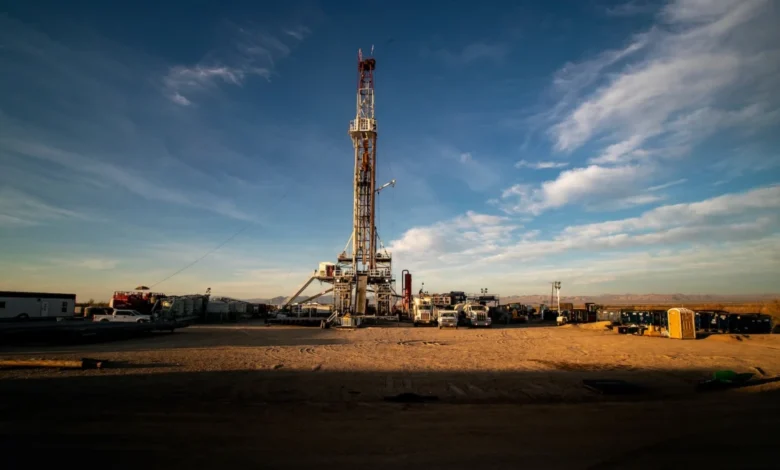
Fervo Energy has disrupted this paradigm by leveraging techniques borrowed from the shale revolution. By utilizing horizontal drilling and advanced fiber-optic sensing, the company can create its own reservoirs in hot rock formations that lack natural permeability. This approach, often referred to as Enhanced Geothermal Systems (EGS), allows Fervo to tap into heat sources that were previously unreachable.
Zainab Gilani, a geothermal analyst with the research firm Cleantech Group, explained that innovation is the primary driver behind this expansion. "Innovation is allowing these technologies to cover a wider variety of sites," Gilani said. She highlighted that Fervo is effectively "de-risking" the sector by applying proven oil and gas engineering to carbon-free energy. A critical component of Fervo’s strategy is cost reduction; the company aims to slash the price of geothermal electricity from approximately $7,000 per kilowatt to $3,000 per kilowatt as it scales its operations. If successful, this would place geothermal in direct competition with traditional fossil fuels and even established renewables like wind and solar, with the added benefit of being a constant, 24/7 power source.
A Chronology of Growth: From Nevada to Cape Station
Fervo’s journey to the NASDAQ has been marked by rapid technical milestones and strategic partnerships. The company first proved its commercial viability with a successful pilot project in Nevada. That facility, which went operational last year, produces enough clean energy to power roughly 2,600 homes. While modest in scale, the Nevada project served as a proof-of-concept for the company’s fiber-optic monitoring systems, which provide real-time data on flow rates and temperatures miles beneath the surface.
Building on that success, Fervo is currently developing "Cape Station" in Beaver County, Utah. This massive undertaking is expected to be more than 100 times larger than the Nevada pilot, with a projected output of 400 megawatts. The first phase of Cape Station is slated to go online later this year, with full capacity expected by 2026.
The project’s potential has attracted a "who’s who" of high-profile backers. Bill Gates’ Breakthrough Energy Ventures has been a long-term supporter, viewing geothermal as a critical "missing piece" of the decarbonization puzzle. Furthermore, Alphabet, the parent company of Google, has not only invested in the company but has signed first-of-its-kind power purchase agreements (PPAs) to supply its data centers with geothermal energy. This partnership highlights the growing synergy between the tech industry’s carbon-neutral goals and the reliability of geothermal power.
Market Dynamics: The AI Boom and Global Instability
The timing of Fervo’s IPO is no coincidence. The United States is currently facing its most significant surge in electricity demand in decades. The primary driver is the "AI arms race," as tech giants like Microsoft, Amazon, and Google scramble to build out data centers capable of handling massive computational loads. These facilities require immense amounts of reliable, around-the-clock power—something that intermittent sources like wind and solar struggle to provide without expensive battery storage.
"The race to build the data centers needed to sustain the artificial intelligence boom has strained grids nationwide," market analysts have noted, describing the current appetite for reliable energy as "insatiable." Furthermore, geopolitical tensions, specifically the ongoing conflict involving Iran, have introduced volatility into global energy markets, keeping oil and gas prices elevated and making domestically produced renewable energy an attractive hedge for investors.
In response to this high demand, Fervo recently "upsized" its IPO. Originally, the company planned to sell 55.6 million shares at a price range of $21 to $24. However, citing overwhelming interest, the company boosted its target to 70 million shares at a price between $25 and $26. This move reflects a "line out the door" mentality among institutional investors who are eager to gain exposure to the next generation of utility-scale energy.
Political Headwinds and the Resilience of Clean Tech
Despite the optimism surrounding the IPO, Fervo is entering the public market during a period of intense political uncertainty. The clean energy industry in the U.S. has been subject to significant "whiplash" over the last several years. The 2022 Inflation Reduction Act (IRA), signed by President Joseph Biden, provided a massive tailwind for the sector, offering billions in tax credits for geothermal and other green technologies.
However, the political landscape shifted dramatically following the return of Donald Trump to the presidency. The current administration and a restructured Congress have moved to dismantle key pillars of the IRA, rolling back wind energy development and renewing a federal focus on fossil fuel extraction. This shift has led to the cancellation or delay of several high-profile offshore wind and solar projects.
Yet, Fervo appears to be bucking this trend. The company recently secured $421 million in non-recourse project financing for Cape Station, a sign that private lenders remain confident in the project’s economics regardless of the federal policy environment. Jigar Shah, a managing partner at the investment firm Multiplier and a former senior official at the Department of Energy, noted that the climate sector is showing unexpected resilience. "You’re in this situation where it is very obvious that the oil and gas sector is doing the best it can," Shah said. "But the climate sector is the one that’s surging."
Broader Implications for the Energy Transition
The success of the Fervo IPO could serve as a bellwether for other advanced energy technologies. Earlier this year, X-Energy, a developer of small modular nuclear reactors backed by Amazon, raised $1 billion in its own public offering and is now valued at over $9 billion. These successful debuts suggest that the financial markets are beginning to treat advanced renewables and nuclear power not as "alternative" energy, but as the new mainstream.
"There is a level of confidence coming to our sector, which I think is great," said Shah. He pointed out that clean energy sources now account for nearly 90 percent of all new capacity added to the U.S. power grid annually. "When you’re 90 percent of everything that gets added to the grid every year, you’re no longer alternative."
However, industry veterans caution that challenges remain. Rob Gramlich, president of the consultancy Grid Strategies, noted that while Fervo’s technology is revolutionary, it will take time to reach the scale necessary to replace fossil fuels entirely. "They’re just not here yet on any large scale," Gramlich said. "They are great 2040 and 2050 options." The transition will require not only technological success but also massive upgrades to the nation’s aging transmission infrastructure to move geothermal power from remote Western sites to urban load centers.
As the opening bell rings on Wednesday, all eyes will be on FRVO. If the stock performs well, it will likely trigger a flurry of activity in the geothermal space, encouraging competitors and startups to accelerate their own development timelines. For Fervo Energy, the IPO is more than just a fundraising event; it is a high-stakes test of whether the heat beneath our feet can truly power the future of the American economy. With the backing of tech titans and a grid desperate for stability, Fervo is betting that the Earth’s internal furnace is finally ready for its prime-time debut on Wall Street.
Related posts: