The Prairie Paradox: How North Dakota’s Wind Energy Boom Is Colliding with Traditional Values and Shifting Political Realities

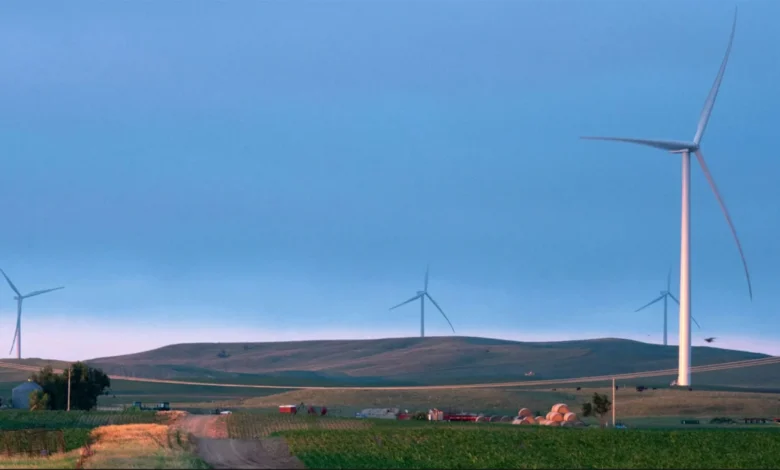
On the sweeping prairies of McIntosh County, North Dakota, the landscape is undergoing a profound physical and ideological transformation. In Wishek, a quiet community of approximately 850 residents located 90 miles southeast of Bismarck, the arrival of the 92-turbine Badger Wind Farm—a 250-megawatt project commissioned by Danish energy giant Ørsted in January 2026—has become a focal point for a growing statewide debate over the future of rural land use. While these massive steel structures represent a significant influx of capital into the local economy, they have also fractured community cohesion, pitting the promise of renewable energy revenue against deep-seated concerns regarding aesthetics, agricultural heritage, and the perceived encroachment of outside corporate interests.
The tension in Wishek is a microcosm of a broader, more complex narrative unfolding across the Great Plains. For nearly two decades, North Dakota maintained a pragmatic “all-of-the-above” energy policy, successfully integrating wind power into an economy historically dominated by coal, oil, and natural gas. However, as the state reaches a point of perceived saturation, the once-celebrated renewable boom is facing significant political headwinds and a tightening regulatory environment.
A Chronology of Conflict and Cooperation
The expansion of wind energy in North Dakota began in earnest in 2003, when NextEra Energy Resources completed the North Dakota Wind I and II projects in LaMoure County. For years, the industry enjoyed steady growth, with 38 wind farms coming online between 2005 and 2020. During this period, the industry generated more than $10 billion in economic activity, providing a lucrative alternative revenue stream for farmers struggling with the cyclical volatility of commodity prices.

The Badger Wind Farm, which represents the largest economic development project in Wishek’s history, was intended to be the latest success story in this long-term trend. The project provides substantial lease payments to participating landowners and generates an estimated $1.3 million in annual tax revenue for the county. These funds are earmarked for critical infrastructure, including roads, bridges, schools, and fire services. Despite these financial injections, the project has triggered a backlash. In April 2026, just months after the turbines went live, the McIntosh County Commission enacted a one-year moratorium on new wind energy developments, signaling a desire to halt further expansion until the long-term impacts on non-participating residents and local landscapes are better understood.
Economic Benefits Versus Cultural Costs
For farmers like George Wolff, a fourth-generation steward of the land, the presence of turbines is a pragmatic business decision. With two 3-megawatt turbines on his 3,500-acre property, the lease payments—roughly $5,000 per turbine per quarter—provide a vital hedge against the rising costs of fuel, fertilizer, and agricultural machinery. For Wolff, the turbines are not a threat to his way of life, but a tool to ensure the farm remains financially viable for the next generation.
However, for residents like Lila Raile, the visual transformation of the horizon represents an irreversible loss of the region’s character. Raile, who built a home on a hill overlooking what was once unobstructed farmland, now views the installation as a “nightmare.” This sentiment is echoed by former mayor Larry Wald, who argues that the benefits of the project are disproportionately skewed toward absentee landowners who benefit from the lease checks without having to endure the sight of the turbines on a daily basis.
The disparity between those who benefit from the wind and those who live alongside it has created a deep social rift. While the City of Wishek received $150,000 in direct goodwill donations from Ørsted—funds utilized to upgrade the local firehouse, swimming pool, and community center—many residents feel that such payments are insufficient compensation for the fundamental change to their environment.

The Political Pivot: The War on Wind
The shift in local sentiment is occurring alongside a significant change in the state’s political climate. North Dakota’s legislative and regulatory bodies, which once championed wind as an engine of growth, are increasingly skeptical. This skepticism is largely fueled by the belief that the proliferation of wind energy is actively undermining the state’s legacy coal industry.
Public Service Commission (PSC) Chair Randy Christmann has become a vocal critic of the industry, frequently questioning the impact of wind growth on the state’s grid reliability and its role in the forced closure of coal-fired power plants. During a hearing regarding the $800 million Longspur wind project, Christmann engaged in a pointed exchange with project supporters, emphasizing that as more renewable energy enters the transmission lines, coal capacity is being systematically "pushed out."
This rhetoric has been amplified at the federal level. Rep. Julie Fedorchak, North Dakota’s sole member of the U.S. House, played a key role in the 2025 passage of the "One Big Beautiful Bill Act," which phased out federal tax credits for wind and solar. Fedorchak has argued that North Dakota’s wind expansion is largely driven by the energy requirements of neighboring states—particularly Minnesota, which has aggressive decarbonization mandates—rather than the internal energy needs of North Dakota itself.
Structural Analysis: The Energy Trilemma
The current standoff in North Dakota highlights an "energy trilemma" involving sustainability, security, and affordability. From an environmental standpoint, the state’s reliance on lignite coal—which is among the most carbon-intensive and pollutant-heavy forms of coal—presents a long-term challenge as national regulations tighten. While wind energy offers a cleaner alternative, its intermittency requires a robust grid and storage capability that many rural regions are still developing.

From an economic standpoint, the reliance on exported wind energy has created a dependency on out-of-state policy goals. If, as critics argue, the expansion of wind is a tool for states like Minnesota to reach their climate goals, then North Dakota landowners are essentially hosting the infrastructure for a foreign market while bearing the local social and environmental costs.
Furthermore, the "all-of-the-above" policy is showing signs of internal contradiction. As more wind is added to the grid, the economic viability of coal plants—which are designed to operate as baseload power—becomes more difficult to maintain. The resulting decline in coal mining and power generation has led to job losses and revenue declines in traditional energy regions of the state, further fueling the political fire against renewables.
Future Outlook and Local Resilience
As the moratorium in McIntosh County persists, the future of wind energy in North Dakota remains uncertain. The pipeline for new projects has slowed to a trickle, with only one project—the 67-turbine Homestead Wind Farm in Williams County—currently under serious consideration by the PSC.
For the people of Wishek, the task ahead is one of reconciliation. Former Mayor Brenda Dohn, who oversaw the project’s development, suggests that the community must move past the initial shock. "It’s here," she noted, highlighting the permanence of the massive infrastructure. The challenge for local officials will be to manage the remaining lifecycle of these projects—which typically span 20 to 30 years—while balancing the needs of landowners like Wolff, who rely on the income, and the concerns of citizens like Raile, who feel their environment has been compromised.

Ultimately, the North Dakota experience serves as a case study for the rest of the nation. It demonstrates that the transition to a renewable-based energy economy is not merely a technical or financial hurdle; it is a cultural one. Without meaningful public participation, transparent planning, and a clear articulation of how these projects benefit the local community—rather than just the regional grid—the "green" transition is likely to face continued, and perhaps deepening, resistance in the rural heartland of America. The debate in Wishek is far from over; it is a preview of the difficult conversations to come as the nation continues to navigate the complex trade-offs of its energy future.