New Scientific Study Reveals Asian Elephants Possess Advanced Cognitive Self-Control and Problem-Solving Abilities

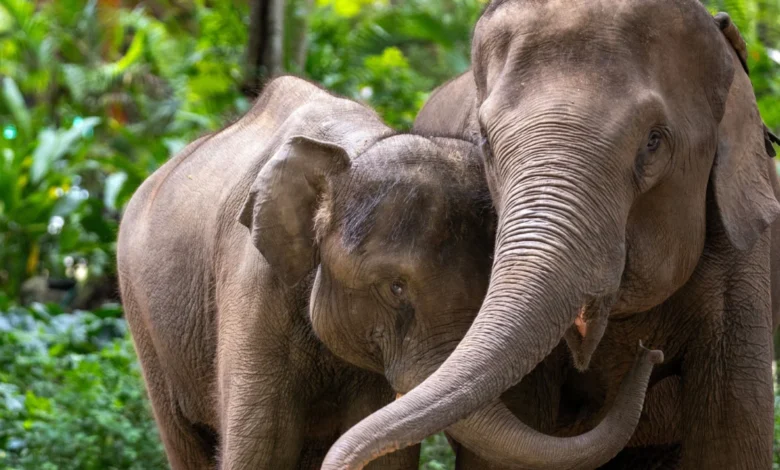
Recent behavioral research has shed light on the cognitive sophistication of Asian elephants (Elephas maximus), demonstrating that these massive mammals possess a high degree of inhibitory control. Conducted by an international team of researchers, the study reveals that elephants can successfully override immediate, impulsive instincts in favor of more calculated, indirect solutions to complex problems. This psychological trait, long studied in humans and primates, offers profound new insights into elephant behavior, evolutionary biology, and practical strategies for mitigating human-wildlife conflict.
The findings, published in the peer-reviewed journal PLOS One, highlight an often-overlooked aspect of pachyderm intelligence. While the social structures, emotional intelligence, and memory capacities of elephants have been well-documented for decades, their ability to regulate impulses—known scientifically as inhibitory control—remained largely unexplored in controlled experimental settings.
The Experimental Setup: Testing Impulse and Adaptation
To evaluate this cognitive ability, researchers at the National Elephant Institute in Thailand designed a series of detour and barrier tests involving 16 captive Asian elephants. The experiments were structured to observe how the animals handled frustration, temptation, and the need to alter previously learned behaviors when environmental conditions shifted.
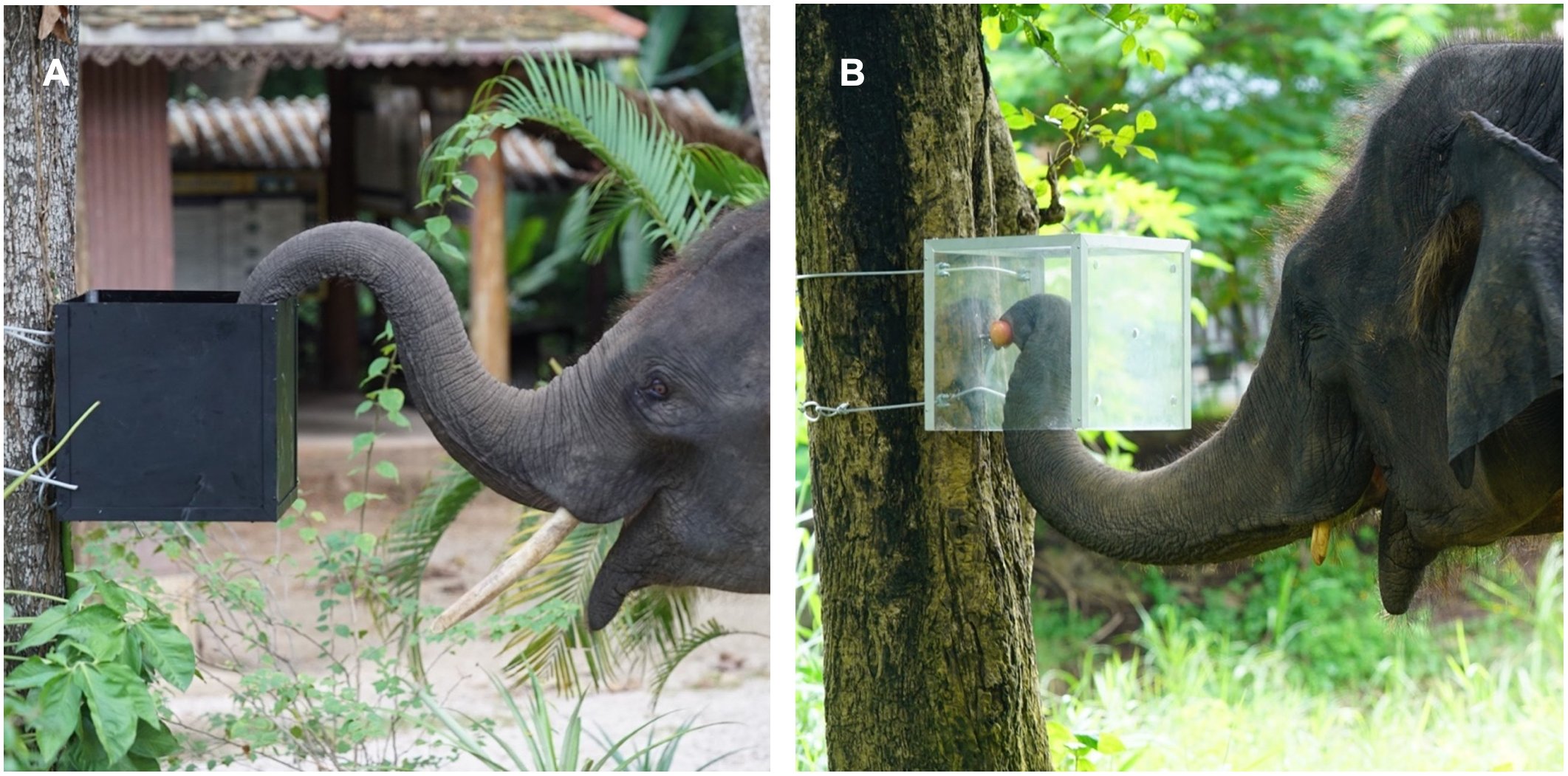
In the primary test, elephants were presented with a transparent box filled with appealing fruits, such as apples. The enclosure featured small perforations that allowed the animals to see and smell the food inside. Naturally, an elephant’s immediate impulse is to reach directly through the barrier toward the visible reward. However, the holes were too narrow for a trunk to fit through effectively.
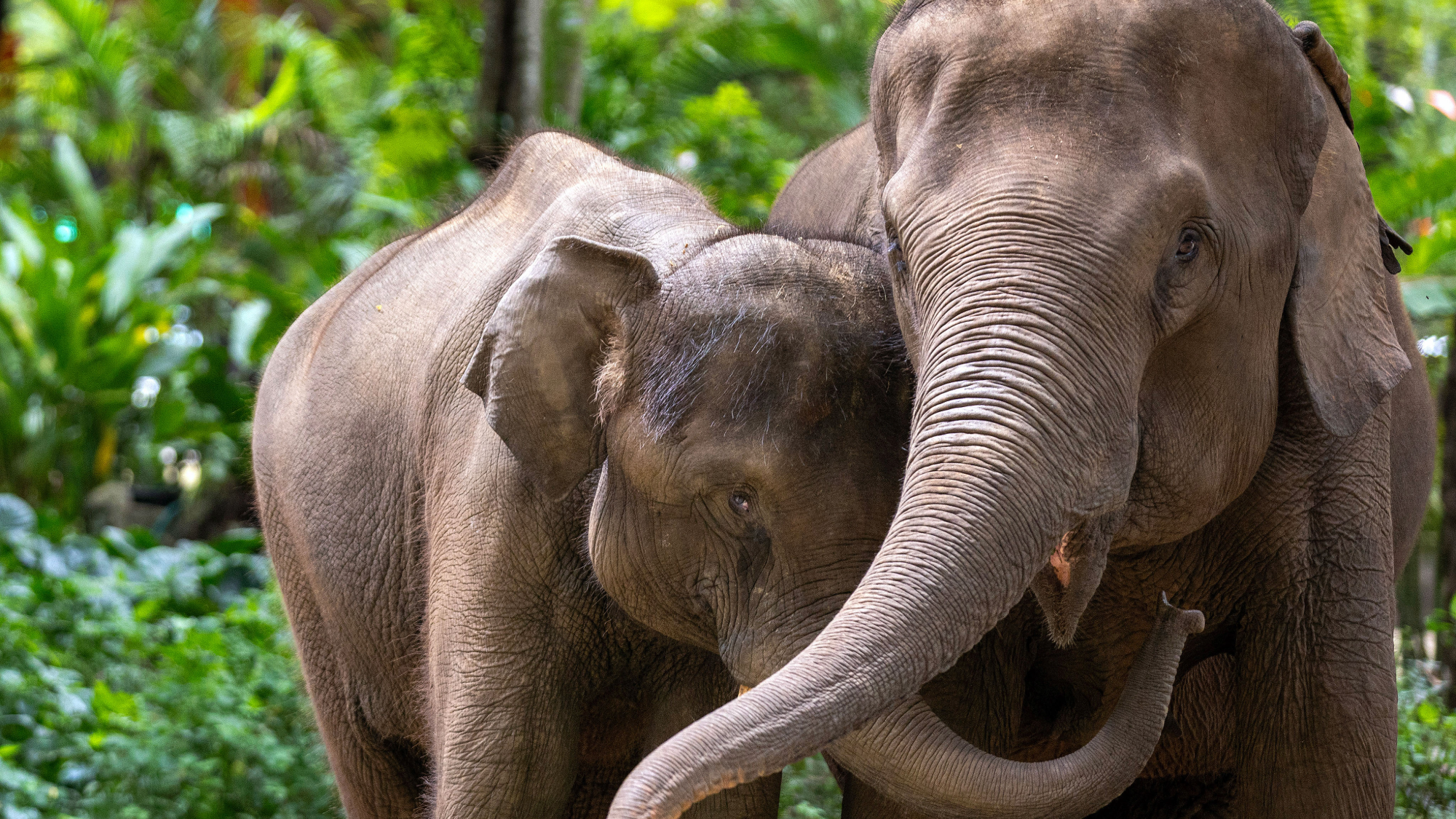
To succeed, the subjects had to suppress this direct impulse, ignore the visual temptation, and instead utilize a designated side opening to retrieve the treat—a technique they had been taught during a prior familiarization phase. The results demonstrated that the elephants could consistently exercise inhibitory control, successfully resisting the ineffective direct approach in favor of the indirect alternative.
A secondary phase of the experiment introduced a dynamic challenge: the researchers rotated the box. Initially, several elephants reverted to their conditioned habit of reaching toward the spot where the opening had previously been located. However, the animals rapidly corrected their behavior, adjusting to the new spatial orientation. Interestingly, older elephants adapted at a slower pace compared to their younger counterparts, pointing toward potential age-related cognitive shifts that mirror patterns observed in humans and other intelligent species.
Understanding Inhibitory Control in Comparative Zoology
Inhibitory control is a cornerstone of executive function. In cognitive psychology, it refers to an individual’s conscious or unconscious capacity to override dominant, automatic, or impulsive responses and instead substitute more goal-directed, appropriate behaviors.
While heavily studied in humans, great apes, and corvids, documenting inhibitory control in large herbivores provides evolutionary biologists with a broader framework for understanding how cognitive traits develop across vastly different lineages. Sydney Hope, a postdoctoral researcher at Hunter College in New York and co-author of the study, emphasized the broader significance of the research.
"Although we are beginning to understand how intelligent elephants are, we still know very little about their capacity for inhibitory control," Hope noted. "Understanding elephant inhibitory control will help us understand how this aspect of cognition may have evolved across species, including humans. It will also help us understand how elephants may cope with environmental—including anthropogenic—changes."
The capacity to inhibit immediate reactions is not merely a laboratory curiosity; it is vital for survival in the wild. Elephants must navigate complex ecosystems, manage social hierarchies, and adapt to seasonal variations in food and water availability. The ability to pause, assess, and alter behavioral strategies when traditional methods fail likely underpins their legendary problem-solving skills.
Implications for Conservation and Human-Wildlife Coexistence
Beyond the theoretical insights into animal psychology, the study’s authors and independent conservationists emphasize that these cognitive findings have immediate, practical applications in the field.
As human populations expand across South and Southeast Asia, the overlap between human agricultural lands and elephant migration corridors has intensified. This overlap frequently results in human-elephant conflict, a major conservation challenge characterized by crop raiding, property damage, and, tragically, retaliatory violence against the animals. Elephants frequently have to navigate man-made barriers, such as electric fences, trenches, and concrete walls, to access food sources in agricultural zones.
By understanding how elephants approach physical barriers, process spatial changes, and detour around obstacles in controlled experimental environments, conservationists can design more effective, humane deterrent systems. Traditional static barriers often fail because elephants eventually figure out ways to dismantle or bypass them using flexible problem-solving techniques. Insights into their inhibitory control and spatial adaptability could guide the development of next-generation deterrents that account for the cognitive strategies these animals employ when facing obstacles.
Welfare and Rehabilitation Context
The research also underscores the importance of mental stimulation in the welfare of captive elephants. The study subjects were housed at the Thai Elephant Conservation Institute in Lampang Province, an institution that provides long-term care, veterinary services, and sanctuary for animals rescued from strenuous labor or tourism camps.

Many elephants in such facilities arrive with historical injuries or behavioral challenges. For instance, recent high-profile rescues at the center—such as an older blind elephant named Saen Wan and her daughter Saen Suay—highlight the complex medical and psychological needs of these animals. Providing structured cognitive challenges and enrichment activities not only aids scientific research but also supports the psychological well-being of captive and rehabilitated elephants by engaging their natural problem-solving drives.
Future Directions in Pachyderm Cognition Research
As ethologists continue to decode the intricacies of elephant cognition, this study opens new avenues for future investigation. Researchers plan to explore how social learning influences inhibitory control within elephant herds—specifically, whether younger elephants learn self-regulation faster by observing matriarchs and older herd members.
Furthermore, longitudinal studies could clarify the tentative link between age and slower adaptation rates observed during the box-rotation trials. Investigating whether elephants experience forms of cognitive aging similar to human neurodegeneration could provide deeper comparative data for biomedical and psychological sciences.
Ultimately, this research reinforces a growing scientific consensus: the cognitive architecture of elephants is far more nuanced than previously understood. By proving that Asian elephants can successfully balance immediate impulse against flexible, long-term strategy, the study bridges a critical gap in comparative psychology and offers valuable tools for ensuring the peaceful coexistence of humans and wildlife in an increasingly crowded world.