Beyond Coral: Palladium Hotel Group Pioneers Seagrass Conservation with New Ibiza Marine Lab

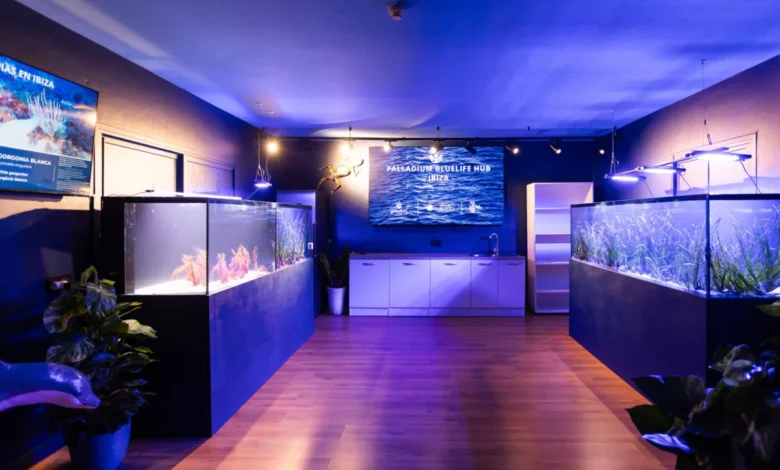
The hospitality industry has long championed marine conservation through coral reef restoration projects, viewing vibrant underwater gardens as a vital draw for eco-conscious travelers. However, a significant paradigm shift is underway in the Mediterranean. Palladium Hotel Group, a major international hospitality player, is expanding the horizon of resort-based environmental stewardship by turning its attention toward a critically underappreciated marine ecosystem: seagrass meadows. By establishing a dedicated marine conservation laboratory at the Grand Palladium Select Palace Ibiza, the hotel group is spearheading a novel initiative that blends tourism, guest education, and hands-on marine biology.
This ambitious project introduces an on-site seagrass nursery directly within the resort grounds, allowing guests to witness firsthand the delicate process of cultivating and protecting marine flora. Beyond the nursery walls, the initiative offers specialized recreational dives that take visitors beneath the surface to observe ongoing conservation and restoration efforts. By bridging the gap between luxury hospitality and scientific research, Palladium Hotel Group aims to elevate public awareness regarding the vital role seagrass plays in maintaining the ecological balance of Ibiza’s coastal waters.
The Main Facts of the Initiative
The centerpiece of this conservation effort is the newly operational marine conservation lab situated at the Grand Palladium Select Palace Ibiza. Designed to function as both a working scientific research facility and an interactive educational center, the lab focuses specifically on the cultivation, study, and protection of Mediterranean seagrass, most notably Posidonia oceanica.
Guests staying at the resort are no longer passive beneficiaries of the island’s natural beauty; they are invited to become active participants in conservation. The resort has curated a series of educational programs, including guided tours of the nursery where visitors can learn about the biology of seagrass from on-site marine biologists. Furthermore, certified scuba divers can book specialized eco-dives led by professionals to observe restoration sites, monitor plant growth, and gain a deeper understanding of underwater habitat management.
The overarching goal of the initiative is twofold: to actively restore damaged local marine habitats and to cultivate a profound sense of environmental responsibility among international travelers. By demystifying the science behind marine conservation, Palladium Hotel Group hopes to transform standard holidaymakers into vocal advocates for ocean preservation long after they check out of the resort.
The Chronology and Evolution of Resort-Based Conservation
To understand the significance of Palladium’s new venture, it is essential to examine the historical trajectory of environmental initiatives within the hospitality sector. For decades, coastal resorts operated under a largely extractive model, focusing heavily on aesthetic maintenance—such as beach grooming and artificial sand replenishment—while paying scant attention to the complex ecological machinery operating just offshore.
In the late 1990s and early 2000s, rising global awareness of climate change and coral bleaching prompted forward-thinking hotels in tropical destinations to invest in coral nurseries. These early projects laid the groundwork for modern sustainable tourism, proving that luxury resorts could serve as viable platforms for marine rehabilitation. However, these efforts were overwhelmingly concentrated in tropical and subtropical regions, leaving temperate and Mediterranean ecosystems with fewer corporate-sponsored conservation models.
The genesis of the Ibiza marine lab project can be traced back several years, as Palladium Hotel Group’s sustainability executives and local environmental consultants began noticing accelerated degradation along the Balearic coastline. Increased maritime traffic, coastal development, and rising sea temperatures began taking a visible toll on native marine flora.
By 2022, preliminary discussions were underway to design a facility that could address these localized pressures. Throughout 2023, the hotel group collaborated with regional marine biologists, academic researchers, and environmental agencies to draft the blueprint for the Ibiza conservation lab. The facility officially broke ground in late 2023, undergoing rigorous testing of its saltwater filtration and nursery systems during the first half of 2024. The lab officially opened its doors to guests and researchers in the summer season of 2024, marking a milestone as one of the first resort-integrated facilities of its kind dedicated specifically to Mediterranean seagrass.
Supporting Data: The Ecological and Economic Value of Seagrass
The strategic shift from coral to seagrass is backed by compelling ecological data. For generations, destination marketing organizations (DMOs) have successfully marketed Mediterranean and tropical destinations using imagery of pristine white-sand beaches and crystal-clear turquoise waters. However, many tourists remain unaware of the geological and biological processes that create these idyllic settings.
The white sand that draws millions of visitors to Mediterranean shores is, in large part, calcium carbonate originating from fragmented coral skeletons, shells, and calcareous algae. Yet, maintaining the clarity of the water that laps against these shores relies heavily on less glamorous underwater vegetation: seagrass meadows.
Seagrass acts as a natural coastal filter. As ocean currents move sediment toward the shore, dense underwater meadows slow the water velocity, causing suspended particles to drop to the seafloor. This natural filtration prevents coastal waters from becoming turbid and cloudy, preserving the visibility that beachgoers expect. Without robust seagrass meadows, wave action stirs up fine coastal sediment, resulting in murky waters and accelerated beach erosion.
Furthermore, seagrass ecosystems are economic engines for marine biodiversity. Often referred to as the "lungs of the sea" or "marine nurseries," these nutrient-rich habitats provide shelter, breeding grounds, and an abundant food source for hundreds of species of fish, crustaceans, and mollusks. Healthy seagrass beds directly support local artisanal fisheries and contribute to the overall resilience of the marine food web.
Perhaps most critically in the era of global climate change, seagrass meadows are powerhouses of carbon sequestration. While terrestrial forests often dominate discussions regarding carbon sinks, marine vegetation captures carbon at rates up to 35 times faster than tropical rainforests. Known scientifically as "blue carbon," organic carbon is trapped in the dense root systems and underlying sediments of seagrass meadows, where it can remain safely stored for millennia if undisturbed.
According to marine scientific assessments, seagrass meadows—despite covering less than 0.2% of the ocean floor—are estimated to store up to 18% of all oceanic carbon. In the Mediterranean, Posidonia oceanica meadows form massive, ancient underwater structures that are vital to regional climate mitigation efforts. However, these systems are exceedingly fragile. Rising ocean temperatures, anchor damage from recreational vessels, coastal construction, and chemical runoff pose severe, escalating threats to their survival.
Official Responses and Industry Perspectives
The launch of the marine lab at the Grand Palladium Select Palace Ibiza has generated significant discourse within both the hospitality industry and the marine science community. While corporate sustainability claims are frequently scrutinized for greenwashing, independent observers have noted the tangible, science-based foundation of Palladium’s initiative.
In statements released surrounding the launch, corporate leadership at Palladium Hotel Group emphasized that modern hospitality can no longer afford to treat environmental protection as a peripheral marketing exercise. Representatives noted that luxury and sustainability must be inextricably linked, arguing that guests increasingly demand vacations that align with their ethical values. By integrating a fully functioning scientific lab into a commercial resort, the group aims to set a new benchmark for corporate environmental accountability in the Mediterranean.
Local marine biologists and conservationists working in partnership with the resort have also voiced optimism. Speaking on condition of anonymity pending formal publication of collaborative research, project scientists highlighted the educational dividends of the initiative. "When tourists put on a mask and fins and swim directly over a restored seagrass plot, the abstract concept of climate change suddenly becomes concrete," one researcher remarked. "They see the fish swimming in the meadow, they feel the clarity of the water, and they understand that this plant is alive and working for them."
Local governmental bodies in the Balearic Islands have similarly welcomed the initiative. The regional authorities have long enforced strict protections for Posidonia oceanica, banning unregulated anchoring over meadows to prevent physical destruction of the seabed. The presence of a high-profile corporate ally investing in public education and active restoration is viewed as a welcome reinforcement of municipal conservation goals.
Broader Impact and Industry Implications
The implications of Palladium Hotel Group’s initiative extend far beyond the shores of Ibiza. As climate change accelerates and coastal destinations face unprecedented environmental stress, the traditional business model of sun-and-sand tourism is undergoing a necessary reckoning.
Hotels and resorts worldwide are realizing that their long-term economic viability is tethered to the health of the natural ecosystems surrounding them. If coastal waters turn murky due to sediment loss, or if beaches erode away completely because offshore barriers have collapsed, the fundamental product being sold to travelers ceases to exist. Consequently, conservation is shifting from a philanthropic afterthought to a core operational necessity.
The success of the Ibiza marine lab could catalyze a broader trend across the Mediterranean and global hospitality markets. If guests respond positively to immersive seagrass conservation programs—participating in dives, attending educational seminars, and sharing their experiences—other major hotel groups are likely to replicate the model. This could lead to a wave of corporate investment in neglected marine habitats, shifting attention toward ecosystems like mangroves, salt marshes, and seagrass beds that have historically received less funding than charismatic coral reefs.
Furthermore, the initiative highlights the growing importance of citizen science in marine conservation. By leveraging the foot traffic and financial resources of the tourism industry, scientific institutions gain access to funding, logistical support, and a vast, global audience of willing volunteers. This synergy between hospitality and marine science creates a multiplier effect, amplifying research capabilities while instilling environmental stewardship in travelers who might never have otherwise engaged with marine biology.
As the Grand Palladium Select Palace Ibiza welcomes its latest wave of travelers, the marine conservation lab stands as a physical manifestation of a changing industry. By looking past the superficial appeal of white sandy beaches and diving deep into the roots of marine ecology, Palladium Hotel Group has outlined a forward-thinking blueprint for sustainable tourism—one where luxury and environmental preservation coexist beneath the waves of the Mediterranean.