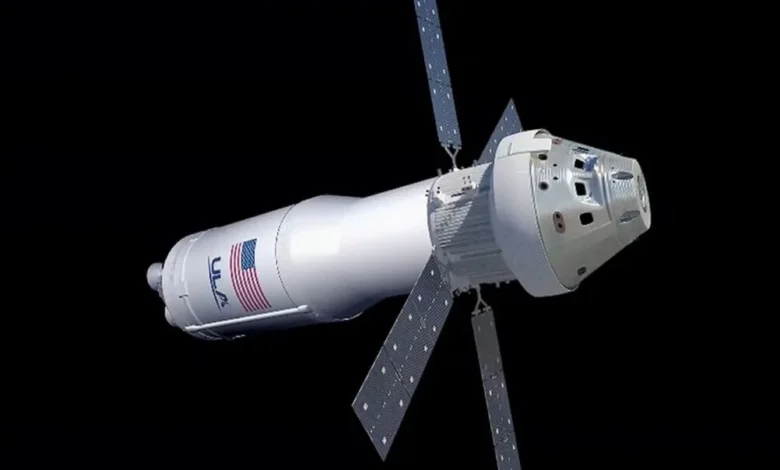
The National Aeronautics and Space Administration (NASA) is recalibrating its operational strategy for the Artemis lunar exploration program, shifting focus toward achieving low-lunar orbit (LLO) rendezvous for its human-rated landers. Recent technical documentation and project briefings indicate a strategic pivot to facilitate the deployment of Blue Origin’s Blue Moon lander, moving away from the previously mandated high-altitude elliptical orbits that have long characterized the mission architecture.
This fundamental shift in mission profile involves a collaborative effort between NASA and United Launch Alliance (ULA) to develop an enhanced, "extended" version of the Centaur V upper stage. By augmenting the propulsion capabilities of the Space Launch System (SLS) stack, NASA intends to grant the Orion crew capsule the necessary delta-V—the measure of energy required to change an object’s trajectory—to enter a stable, low-lunar orbit, rather than relying exclusively on the near-rectilinear halo orbit (NRHO) originally envisioned for the Lunar Gateway station.
The Technical Evolution of Lunar Rendezvous
Historically, the Artemis architecture was constrained by the performance limitations of the Orion spacecraft’s European-built Service Module. Because Orion lacks the propellant mass fraction required to insert itself into a low-lunar orbit and subsequently perform the trans-Earth injection burn necessary for a return to Pacific splashdown, mission planners opted for an NRHO. This orbit, while mathematically stable and accessible to Orion, placed a significant burden on commercial lunar lander partners.
Under the previous model, landers like Blue Origin’s Blue Moon would have been required to perform complex orbital maneuvers to meet Orion at an altitude of approximately 8,500 kilometers above the lunar surface. Jeremy Parsons, the manager of the Artemis Program at NASA, noted that such an extreme distance imposes severe penalties on lander design. By moving the rendezvous point to a low-lunar orbit—a few hundred kilometers above the surface—the lander’s propulsion requirements for descent and ascent are drastically reduced.
This reduction in propellant mass serves a dual purpose: it either permits the lander to carry a larger scientific payload or increases the safety margins for crew egress and abort scenarios. In a low-lunar orbit, the time required for a lander to reach the lunar surface is compressed, and the window for emergency ascent is significantly widened, offering mission commanders more flexibility during critical surface operations.
Historical Context and the Gateway Compromise
The decision to utilize the Lunar Gateway—a small station that orbits the Moon in a highly elliptical path—was initially intended to serve as a staging ground for lunar operations. For years, the Gateway was framed as the essential "stepping stone" for deep space exploration. However, the mission-critical reliance on the Gateway created a "bottleneck" effect. By offloading the burden of orbital mechanics to the lunar landers, NASA essentially forced private contractors to develop landers with significantly higher engine performance and fuel storage than would have been required for a direct LLO approach.
This reality became a point of professional friction within the aerospace community. For years, critics of the Orion program pointed to the Service Module’s limited range as a design oversight, arguing that the spacecraft was over-engineered for Earth orbit but under-powered for the deep lunar environment. The inability to reach LLO was frequently cited as an embarrassment that forced NASA to invent complex workarounds.
Engineering the Extended Centaur V
To rectify these limitations, NASA has engaged United Launch Alliance to refine the Centaur V upper stage. The Centaur has served as the workhorse of American space flight for decades, but the "extended" variant represents a significant departure from standard specifications. This upgrade package will likely include additional propellant tanks, higher-efficiency engine nozzles, and updated avionics to support the prolonged, multi-day burns required for a lunar transit and orbital insertion.
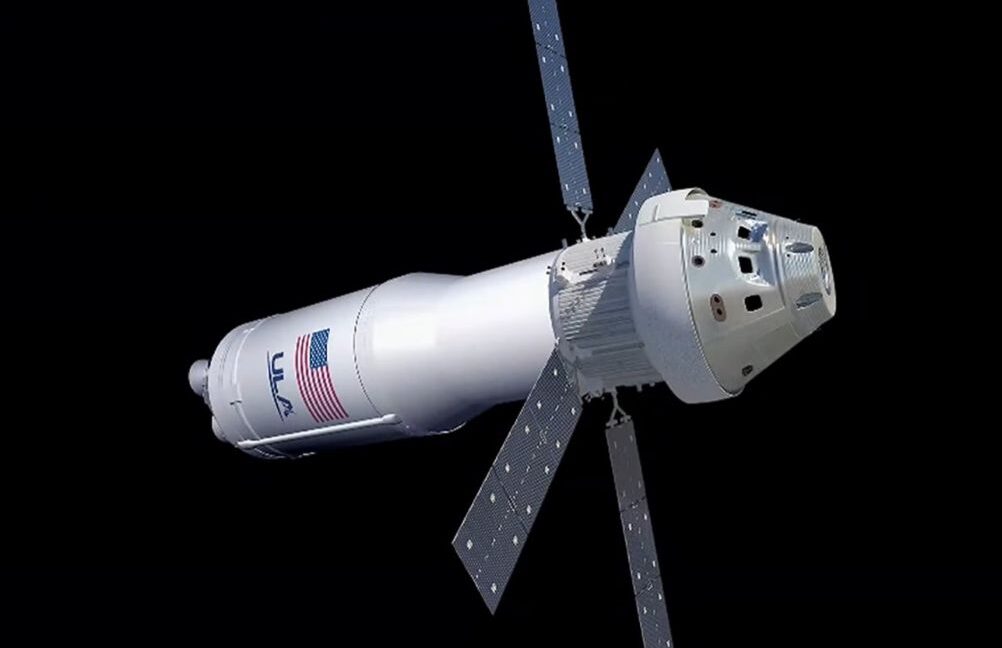
The integration of this upgraded stage with the Space Launch System is a complex engineering challenge. It requires a fundamental re-certification of the entire rocket stack to ensure that the increased mass and center-of-gravity shifts do not compromise the vehicle’s structural integrity during the high-g ascent phase. If successful, this integration will effectively transform the SLS from a heavy-lift launch vehicle into a more versatile lunar transport system, capable of delivering heavier payloads directly to the vicinity of the Moon’s surface.
Industry Reactions and Strategic Realignment
The shift in strategy reflects a pragmatic realization by NASA leadership. During a recent press briefing, program advisors emphasized that the agency is prioritizing the success of its landing partners over adherence to a rigid, legacy mission architecture. By lowering the "barrier to entry" for the lunar surface, NASA is effectively subsidizing the performance of the Blue Moon lander, allowing Blue Origin to focus on reliability and crew safety rather than fighting the physics of high-altitude orbital mechanics.
"We are listening to the data," one agency representative stated, reflecting on the current state of progress among commercial partners. The sentiment within the agency is that if the government can assist by "turning the knobs" on its own hardware—specifically by getting Orion closer to the target—it minimizes the risk of catastrophic failure during the most sensitive phases of the mission.
This cooperative approach is indicative of a broader trend within NASA’s Artemis program: the transition from a government-led directive to a commercial-partnership-led ecosystem. While NASA retains oversight, it is increasingly acting as a facilitator for private industry, providing the necessary infrastructure to ensure that the lunar economy can begin to take shape.
Implications for Future Lunar Exploration
The move to low-lunar orbit has profound implications for the long-term sustainability of lunar exploration. First, it simplifies the logistics of the "lunar taxi" model. If the lander does not need to expend the vast majority of its fuel just to reach the descent start point, it can support more frequent missions and longer surface durations.
Second, it enhances the safety of the crew. In an emergency, every kilometer of distance between the lander and the crew capsule represents a delay in rescue or retrieval. A lower altitude orbit creates a more robust "safe-haven" posture for the astronauts on the surface.
Finally, this development suggests that the Lunar Gateway may transition from a mandatory mission node to a secondary research and logistics platform. While still vital for long-term orbital experiments and as a refueling depot, it is no longer the primary hurdle standing in the way of a landing. This modular approach ensures that even if one element of the architecture—such as the Gateway—faces delays, the core objective of the Artemis program—landing astronauts on the Moon—can still proceed.
As the development of the extended Centaur V continues, the aerospace industry will be watching closely to see if this pivot results in a accelerated timeline for the upcoming crewed missions. The transition to low-lunar orbit is not merely an engineering update; it is a fundamental correction that aligns NASA’s operational capabilities with the realities of modern lunar exploration. By acknowledging the constraints of previous designs and investing in critical upgrades, the agency is positioning itself to meet the ambitious goals of the 2020s and beyond, ensuring that the return to the lunar surface is both technically feasible and operationally sustainable.
This pivot represents a maturation of the Artemis program, signaling that the era of theoretical mission planning is giving way to the realities of operational necessity. With the technical groundwork now being laid for the extended Centaur V, the pathway to a sustained human presence on the Moon appears more grounded in reality than at any point since the inception of the program.
Related posts: