Will Jacks produces career-best performance to lead England to emphatic ODI victory over Sri Lanka

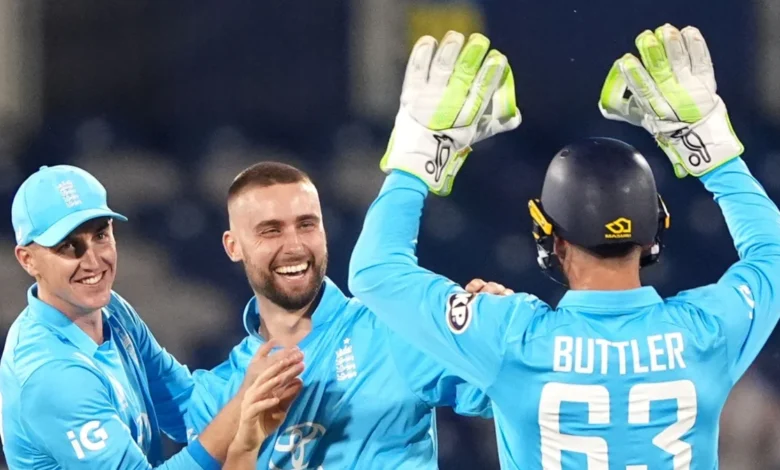
England secured a commanding 89-run victory against Sri Lanka in the opening match of their three-match ODI series at Durham, driven by a superlative all-round performance from Will Jacks. The 27-year-old showcased his growing maturity in a reconfigured role, providing a blueprint for England’s tactical flexibility under captain Harry Brook. By contributing a vital 46 runs with the bat and claiming career-best figures of 5-22 with his off-spin, Jacks cemented his status as a cornerstone of the current England white-ball setup.
The match, played under overcast conditions that challenged both sets of batters, saw England reach 265 all out in 48.1 overs after winning the toss and electing to bat. While the total appeared modest at the innings break, the surface proved increasingly difficult to navigate for the Sri Lankan top order, particularly against the controlled spin of Jacks and the pace of Jamie Overton.
Chronology of the Contest
England’s innings was characterized by periods of consolidation rather than explosive scoring. After early wickets put the hosts under pressure, Harry Brook anchored the middle order with a composed 67 off 69 balls, supported by Joe Root’s 44 from 52 deliveries. As the pitch began to display signs of wear, the run rate stagnated. However, Jacks, batting lower down the order than his traditional opening slot, ensured a strong finish.
The turning point of the first innings occurred in the 48th over. With the pressure mounting, Jacks targeted Sri Lankan pacer Dushmantha Chameera, dispatching him for four consecutive boundaries. This 18-run over shifted the momentum decisively in England’s favor, pushing their total to a defendable 265.
Sri Lanka’s pursuit began with intent, as Pathum Nissanka and Kusal Mendis looked to stabilize the chase. England’s bowling unit remained disciplined, and the introduction of Jacks in the 20th over proved to be the masterstroke. Jacks claimed his first scalp by dismissing Charith Asalanka for just one run. He later removed the set Kusal Mendis for 42, an lbw decision that effectively broke the spine of the Sri Lankan chase.
As the required run rate climbed, the Sri Lankan middle order faltered under the pressure of Jacks’ accuracy. Dunith Wellalage, who top-scored for the tourists with a spirited 45 off 36 balls, threatened to revive the innings, but Jacks halted his progress in the 32nd over. Within two deliveries, the off-spinner had removed Asitha Fernando for a duck, leaving the visitors reeling at 167-8. The final act of the match was a delivery of immense quality, as Jacks bowled Dilshan Madushanka to complete his five-wicket haul and wrap up the victory at 176 all out in 37 overs.
Statistical Context and Historical Significance
Jacks’ figures of 5-22 represent a significant milestone in his international career. Not since Vic Marks in 1984, when he claimed 5-20 against New Zealand in Wellington, has an England spinner achieved such dominant figures in a One Day International. This statistic underscores the rarity of such a performance from a specialist off-spinner in modern English cricket, a role that has historically been secondary to pace-bowling dominance in the domestic game.
The match also highlighted the effectiveness of England’s bowling rotation. Jamie Overton provided excellent support with 2-21, ensuring that the pressure applied by Jacks was sustained from the other end. For Sri Lanka, while Sachindu Colombage and Asitha Fernando claimed three wickets apiece, their failure to restrict England in the final ten overs proved costly, as they conceded nearly 60 runs in that critical window.
Tactical Evolution under Harry Brook
The tactical shift to move Will Jacks down the order is a deliberate strategy employed by captain Harry Brook. Post-match, Brook praised the all-rounder’s adaptability, emphasizing that the team is prioritizing versatility over rigid batting positions.
"He’s really growing into this role," Brook stated during the post-match presentation. "He’s bought into everything that we want to do. We’re talking about all sorts of aspects of the game, trying to adapt to conditions, and he’s done that exceptionally well since he’s come back in over the last 18 months. He could have easily moaned about the change, but he has accepted the responsibility."
Jacks himself reflected on the tactical fluidity, noting that his approach is predicated on mental clarity. "I go into each game with an open mind and see what the conditions are when I walk out there," he said. "Having batted on the wicket earlier in the day, I had an advantage knowing how it was behaving, which helped me settle into my bowling rhythm."
Expert Analysis: The Eoin Morgan Perspective
Former England captain Eoin Morgan, providing analysis for Sky Sports, highlighted the importance of Jacks’ mental application to his new role. Morgan noted that the shift from opening to a middle-order finisher is fraught with difficulty, yet Jacks has navigated the transition with poise.
"His clarity of thought in that role and the way he unpicks every situation is impressive," Morgan observed. "Batting at five, six, or seven is high-risk, high-reward. You often come in when the game is in the balance, and how you manage those initial deliveries is key to setting up a total. Even today, he was scratching around at the start, but he had the discipline to stick in there and build."
Regarding the bowling, Morgan praised Jacks’ control: "He gets a huge amount of turn. Even when he bowled a couple of wides, you could see he was frustrated because he demands precision from himself. He is not just a part-timer; he is a genuine option that the captain can rely on in the middle overs."
Future Implications for the Series
The victory provides England with a 1-0 lead in the three-match series and serves as a psychological boost ahead of the second ODI. For Sri Lanka, the challenge lies in countering the threat of England’s spin-bowling depth, which was previously considered an area of vulnerability for the home side.
The performance of Jacks, in particular, poses a selection dilemma for the visitors: how to disrupt a player who is currently in peak form with both bat and ball. The pitch conditions at Durham were conducive to spin, and if the remaining venues offer similar characteristics, England will be heavily favored to close out the series.
The implications for the broader international calendar are clear. As teams prepare for future ICC tournaments, the value of multi-skilled players like Jacks—who can occupy a spot in the top order while providing ten overs of reliable spin—has never been higher. By fostering a culture of adaptability and "high-risk, high-reward" cricket, England appears to be building a side capable of competing across varying surfaces and conditions.
The second ODI is scheduled to take place on Thursday, with England looking to secure the series and Sri Lanka aiming to restore parity. With the current momentum, the focus will undoubtedly be on whether Sri Lanka can neutralize the threat posed by the England spin contingent or if Jacks can replicate his match-winning performance in the upcoming encounter. Regardless of the outcome, the emergence of a multi-dimensional Jacks marks a positive development for the long-term prospects of the English white-ball team.