Lucas Herbert Leads The Open by Two Shots After Historic Second Round Amidst Controversy and Record-Breaking Performances

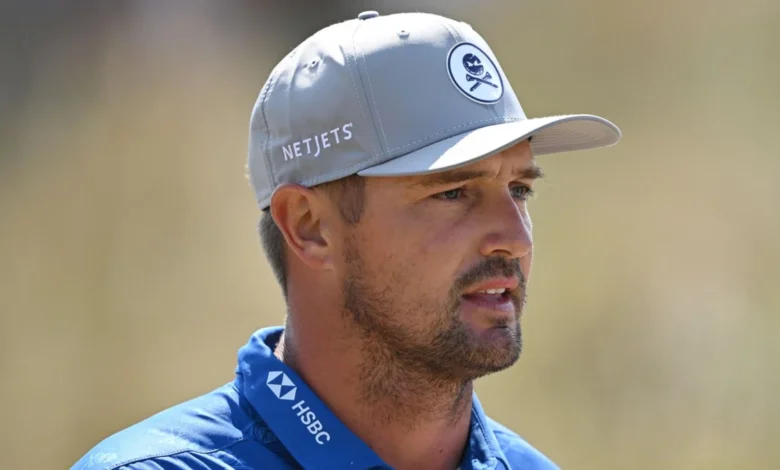
The Open Championship at Royal Birkdale has been thrust into the spotlight following an extraordinary second round that saw Australian Lucas Herbert seize a two-shot lead, a pair of players etch their names into major championship history, and Bryson DeChambeau navigate a controversial rules incident that significantly impacted his standing. Herbert’s remarkable performance, which included equalling the lowest single-round score in men’s major history, has set the stage for a thrilling weekend of golf, with a crowded leaderboard and several of the game’s biggest names in contention.
Herbert fired a sensational eight-under-par 62 to reach 10-under for the tournament, a score that matched the existing record for the lowest round in a men’s major championship. This phenomenal display of golf, however, was almost overshadowed by a lengthy rules review concerning Bryson DeChambeau, a two-time major champion who had been under scrutiny for his pre-tournament strategy. DeChambeau, aiming to avoid the ignominy of missing every major cut in a single year, had responded to his critics with a strong opening round of 67, followed by a birdie-birdie finish to a four-under 66 on Friday. This lifted him to seven-under-par, just one shot behind Herbert at the time.
The drama escalated when DeChambeau was handed a two-shot penalty after inadvertently improving his lie in thick rough on the fifth hole. The ruling, which involved a detailed review by officials, saw DeChambeau drop back to five-under-par, three shots adrift of the new halfway leader. This penalty undoubtedly altered the complexion of the championship’s halfway point, adding another layer of intrigue to an already captivating event.
A Round for the Ages and a Moment of Controversy
Lucas Herbert’s round was nothing short of spectacular. The 28-year-old Australian, who has one PGA Tour victory to his name, delivered a masterclass in ball-striking and putting. His scorecard boasted a remarkable ten birdies, offset by two bogeys. The highlight was a blistering stretch of play that saw him card an eagle on the par-five 15th and a string of birdies on the front nine. His final hole, the par-four 18th, ended in a bogey, a slight blemish on an otherwise flawless round, but the significance of his 62 was undeniable. This performance places him in an elite category of golfers who have achieved such a historic score in a major championship.
The previous holders of the lowest round in men’s major history include Branden Grace (2017 Open Championship at Royal Birkdale), Rickie Fowler and Xander Schauffele (2023 US Open at Los Angeles Country Club), and Shane Lowry (2024 PGA Championship at Valhalla). Herbert now joins this prestigious club, a testament to his exceptional skill and composure under the immense pressure of a major championship.
The incident involving Bryson DeChambeau, however, cast a shadow over the day’s events. DeChambeau, known for his analytical approach to the game and his pursuit of distance, had faced criticism for his strategy heading into The Open. He had vowed to prove his doubters wrong and had started his campaign positively. The penalty at the fifth hole, however, stemmed from a situation where DeChambeau appeared to take an action that improved his lie in the dense rough. While the specifics of the rule governing such situations can be complex, the decision to penalize him two shots was a significant blow to his aspirations for the week. DeChambeau was visibly frustrated following the ruling, a sentiment that was captured by Sky Sports’ broadcast cameras and underscored by his subsequent decision to reportedly snub the media, a departure from his usual post-round engagements.
A Crowded Leaderboard and Familiar Faces in Contention
Despite the drama, the leaderboard remains remarkably tight, showcasing the depth of talent in the field. Following Herbert at 10-under par are Jackson Suber, Cameron Young, and Sam Burns, all of whom also carded stunning rounds of 62 to surge into contention. The quartet of players who equalled the major championship record in the same round is an unprecedented occurrence, highlighting the exceptional scoring conditions and the high level of play at Royal Birkdale.
A host of established stars are within striking distance of the lead, setting the stage for a compelling weekend. World Number 1 Scottie Scheffler, a perennial contender in majors, is among a group of players just four shots behind Herbert. Also in this pack are English favourite Tommy Fleetwood, two-time major champion Jon Rahm, Scottish hope Bob MacIntyre, and fellow Englishmen Matt Wallace and Alex Fitzpatrick. The presence of such a diverse and talented group of golfers ensures that the outcome of The Open remains very much undecided.
Even Rory McIlroy, who has endured a somewhat inconsistent major season thus far, posted a respectable three-under-par 67 in his second round. He sits seven shots behind the leader, indicating that while he has ground to make up, he remains a factor in the championship.
Notable Departures and the Narrow Cut
The halfway cut at The Open proved to be a significant hurdle for several high-profile players. In a testament to the challenging nature of the course and the strength of the field, a mere nine strokes separate all players who successfully navigated the cut. This compressed scoring range suggests that even minor lapses in concentration or execution could prove costly in the final two rounds.
Among the notable players who failed to make the cut were PGA Champion Aaron Rai, who finished at two-over-par, and US Open winner Wyndham Clark, who was three-over. Veteran major champion Justin Rose also missed out, as did 2017 Open Champion Jordan Spieth, who finished a considerable ten-over-par. Matt Fitzpatrick, another English major winner, also found himself on the wrong side of the cut line. These early exits underscore the relentless nature of major championship golf and the difficulty of consistently performing at the highest level.
Historical Context of The Open Championship
The Open Championship, often referred to as the British Open, is the oldest of the four major championships in professional golf and the only one played outside the United States. Founded in 1860, it has a rich and storied history, with legends of the game like Jack Nicklaus, Tiger Woods, and Tom Watson having lifted the coveted Claret Jug. The championship is renowned for its challenging links courses, unpredictable weather, and the unique atmosphere that surrounds it. Royal Birkdale, the venue for this year’s championship, is a classic links layout on the Lancashire coast, known for its undulating fairways, deep pot bunkers, and challenging green complexes. It has a distinguished history of hosting The Open, having previously staged the event on nine occasions, most recently in 2017.
The low scoring seen in the second round, particularly the record-equalling 62s, can be attributed to a combination of factors. Favourable weather conditions, a course that may have been softened by recent rain, and the evolving nature of professional golf, with players hitting the ball further and more accurately than ever before, all contribute to the potential for such low scores. However, the inherent difficulty of a links test, with its wind and undulating terrain, means that even on good scoring days, the pressure remains immense.
Broadcast Information and Future Expectations
For fans in the UK and Ireland, Sky Sports remains the exclusive broadcaster of The Open Championship. Wall-to-wall coverage of the final men’s major of the year is being provided throughout the weekend on Sky Sports Golf. The third round, dubbed ‘Saturday at The Open’, commenced with early play available on Sky Sports+ and the Sky Sports App from 9 am. Full coverage on Sky Sports Golf began at 11 am, with featured groups also accessible via Sky Sports+ or the Sky Sports App. Sunday’s final round coverage is scheduled to start from 8 am on Sky Sports Golf.
As the championship progresses into its final two rounds, the focus will undoubtedly be on Lucas Herbert’s attempt to convert his lead and secure his maiden major title. The performances of his chasing pack, including the record-breakers and established stars, will be crucial in determining who ultimately hoists the Claret Jug. The controversial penalty dealt to Bryson DeChambeau will also remain a talking point, with his ability to fight back from three shots behind a compelling narrative in itself. The unpredictable nature of links golf means that any number of players could emerge as contenders, and the drama is far from over at Royal Birkdale. The history books are already being rewritten, and the coming days promise to deliver further excitement and unforgettable moments from one of golf’s most prestigious tournaments.