WNBA Player Sophie Cunningham Alleges "Targeting" of Caitlin Clark Amidst Growing Concerns Over On-Court Safety

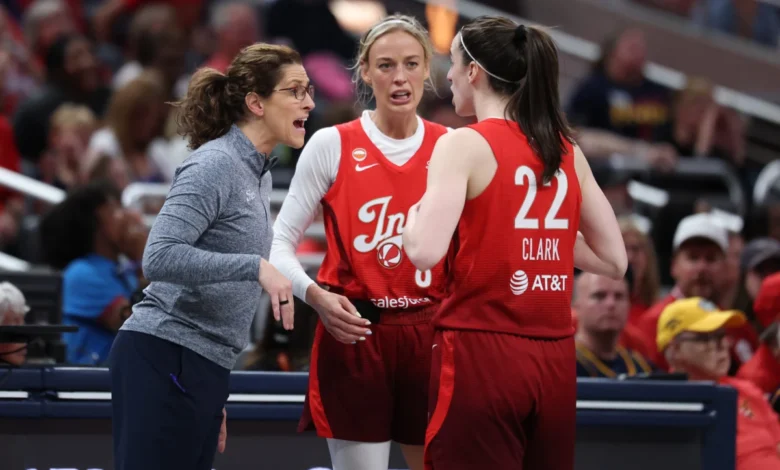
The contentious issue of player safety in the Women’s National Basketball Association (WNBA) has been reignited following a controversial incident involving Indiana Fever star Caitlin Clark and a subsequent accusation by teammate Sophie Cunningham. Cunningham, speaking on her podcast "Show Me Something Sophie Cunningham & West Wilson," asserted that Clark is being deliberately targeted by opponents, with league officials and referees failing to provide adequate protection. This claim emerged in the aftermath of a play where Phoenix Mercury player Alyssa Thomas’s fist made contact with Clark’s throat during a game on Wednesday.
Clark, the highly publicized rookie sensation, was driving to the basket when she tripped and fell to the court. As the ball rolled away, Thomas’s fist connected with Clark’s neck. Crucially, no foul was called on the play by the officiating crew. The incident, which occurred with less than seven minutes remaining in the second quarter, has since drawn significant attention and criticism.
While Cunningham admitted she did not witness the play in real-time, her strong conviction about a pattern of behavior directed at Clark underscores a growing narrative within the league. "Unfortunately, this type of s**t happens every single game to her, and the league and the refs do absolutely nothing about it," Cunningham stated on her podcast, which was released on Saturday. She elaborated, "If she did that to any of our teammates, we’d be pissed, but like, they’re definitely targeting her, and the league and the refs do nothing to protect her."

The league’s response to the incident, however, has been met with its own set of criticisms. Alyssa Thomas was retroactively assessed a Flagrant 2 foul and received a one-game suspension the following day. This disciplinary action, while acknowledging the severity of the contact, has not quelled the concerns raised by the Fever organization and their supporters.
Scrutiny of the League’s Investigation Process
Phoenix Mercury head coach Nate Tibbetts expressed his dissatisfaction with the WNBA’s investigation process concerning the incident. In comments reported by the Arizona Republic, Tibbetts stated, "This was not a thorough investigation in my opinion. The people involved were not questioned at all. It’s extremely disappointing. No one from the league called AT, our security team, or myself about what we felt like happened in this situation. There is a protocol to be followed." Tibbetts suggested that the league’s familiarity with Thomas’s reputation as a physical player might have influenced their approach. "The people in the WNBA know who Thomas is, and that she isn’t ‘cheap’," he added.
Indiana Fever head coach Stephanie White had also voiced her strong disapproval of the on-court officiating immediately following the game. She characterized the no-call as "egregious" and "absolutely unacceptable," highlighting the perceived lack of protection for her star player.
A Timeline of Events and Broader Context
The incident occurred during a highly anticipated matchup between the Indiana Fever and the Phoenix Mercury on June 24, 2026. The game, held at Gainbridge Fieldhouse in Indianapolis, was a closely contested affair that ultimately saw the Mercury emerge victorious with a narrow 111-109 win. Caitlin Clark, despite the circumstances, managed to score 19 points in 20 minutes of play before exiting the game in the second half with an injury. This injury subsequently led to her absence from the Fever’s game on Saturday, June 27, against the Los Angeles Sparks.

Caitlin Clark’s entry into the WNBA has been accompanied by unprecedented media attention and a surge in viewership for the league. Her collegiate success with the Iowa Hawkeyes, marked by record-breaking scoring and a memorable NCAA Tournament run, translated into immediate national interest in her professional career. However, this spotlight has also brought increased scrutiny and, according to some, a heightened level of physicality from opposing players.
Sophie Cunningham and Caitlin Clark have been teammates in Indiana for the past two seasons. Cunningham, a seasoned WNBA veteran, spent her first six seasons in the league with the Phoenix Mercury before joining the Fever. Her perspective as a teammate, coupled with her experience in the league, lends weight to her assertion of a pattern of aggression directed towards Clark.
Analyzing the Implications: Player Safety and League Integrity
The controversy surrounding the incident raises critical questions about player safety and the integrity of the WNBA. The league’s commitment to protecting its athletes, particularly its most prominent figures, is paramount to its continued growth and public perception. While the retroactive Flagrant 2 foul and suspension for Thomas represent an acknowledgment of the infraction, the initial no-call and the subsequent criticisms of the league’s investigative procedures cast a shadow over the process.
The disparity in how similar incidents are handled can lead to perceptions of inconsistency and bias. For players like Caitlin Clark, who are drawing significant attention and commercial value to the league, ensuring their safety on the court is not just a matter of fairness but also of business imperative. The fear of injury, especially due to perceived intentional or reckless play, could deter future stars from entering the league or impact the willingness of current stars to play at their full potential.

Furthermore, the comments from Cunningham and Tibbetts suggest a potential disconnect between the league’s officiating standards and the players’ on-court experiences. The perception that referees are not adequately protecting certain players can erode trust and create an environment of frustration and potential retaliation. This dynamic is particularly sensitive given the physical nature of basketball and the high stakes of professional competition.
A History of Physical Play and Escalating Tensions
This incident is not an isolated event in the WNBA, which has historically featured a physically demanding style of play. However, the amplified spotlight on Clark has seemingly intensified the focus on interactions involving her. Reports and social media discussions have documented numerous instances of hard fouls, physical contact, and what some fans and analysts perceive as overly aggressive play directed at the Fever’s star guard.
The narrative of Clark being "targeted" is fueled by the frequency of these incidents and the often-debated officiating decisions that follow. While some argue that this is simply the nature of competing against a high-profile player, others, like Cunningham, believe it crosses the line into intentional endangerment. The fact that Clark herself has not publicly commented on the specific incident involving Thomas, but has experienced other physical encounters, adds to the complexity of the situation.
The WNBA faces the challenge of balancing the physical nature of the game with the need to ensure player safety and maintain a positive image. A comprehensive review of officiating protocols, player conduct policies, and the league’s disciplinary processes may be necessary to address these mounting concerns. The league’s ability to effectively manage these issues will be crucial in fostering a fair and safe environment for all its athletes and in sustaining the momentum of its recent growth. The ongoing discourse surrounding Caitlin Clark’s treatment on the court serves as a critical juncture for the WNBA, demanding a robust and transparent approach to player welfare.