South Carolina Poised to Lead 2028 Democratic Presidential Primary Calendar After Key DNC Committee Recommendation

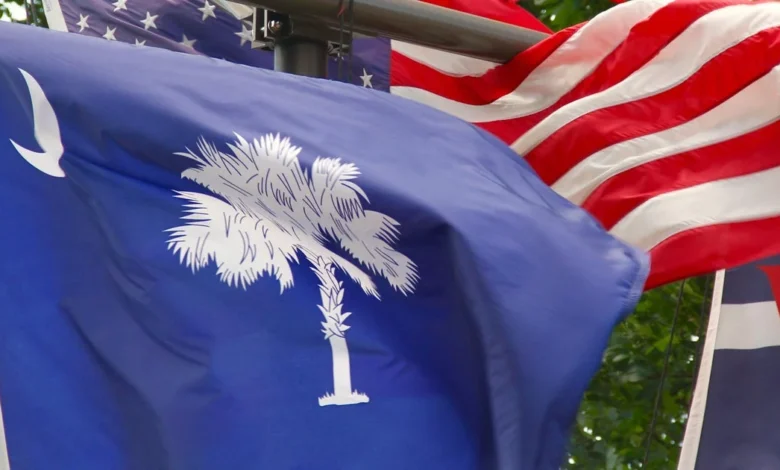
South Carolina stands on the precipice of solidifying its role as the first-in-the-nation Democratic presidential primary state for the 2028 election cycle, following a pivotal recommendation by the Democratic National Committee’s (DNC) Rules and Bylaws Committee. The committee, after extensive deliberation and presentations from competing states, voted on Friday to endorse South Carolina for the coveted lead-off position. This significant proposal now moves to the full DNC for a final vote at its summer meeting, scheduled to take place next month in Austin, Texas, where it is widely expected to be ratified.
The decision represents a strategic move by the Democratic Party to prioritize a more diverse and representative early primary calendar, a reform initiated after the 2020 election cycle highlighted challenges with the traditional sequence of Iowa and New Hampshire. The internal debate leading to this recommendation underscored a fundamental tension within the party: whether to prioritize its most consistent and loyal voting bloc, African Americans, or to focus on rapidly growing demographic groups and working-class voters whose support has shown recent volatility.
The Genesis of Primary Calendar Reform
For decades, the Iowa caucuses and the New Hampshire primary held undisputed sway as the initial contests in the presidential nominating process for both major parties. This tradition, however, came under increasing scrutiny within the Democratic Party. Critics argued that these states, largely rural and predominantly white, did not accurately reflect the demographic tapestry of the national Democratic electorate. The 2020 Iowa caucuses, plagued by technical difficulties and delayed results, further exacerbated calls for change.
Following the 2020 cycle, and particularly after President Joe Biden’s struggles in Iowa and New Hampshire before his decisive victory in the South Carolina primary, the DNC initiated a comprehensive review of its early nominating calendar. The goal was to establish a sequence of states that better represented the party’s diverse base, including African Americans, Latinos, Asian American Pacific Islanders (AAPI), and working-class communities. This reform effort aimed not only to project the party’s values but also to ensure that presidential candidates were "battle-tested" in a variety of environments reflective of the broader American electorate.
South Carolina’s Compelling Case for Continuity
South Carolina’s advocates, in their presentation before the DNC’s bylaws committee in May, articulated a powerful argument for maintaining its first-in-the-nation status, a position it held for the 2024 cycle. Central to their case was the state’s significant African American population, which constitutes approximately 27% of its total residents and forms a critical and historically loyal segment of the Democratic voting base.
Christale Spain, Chair of the South Carolina Democratic Party, passionately framed the issue as one of fundamental party allegiance and respect. "This decision is bigger than South Carolina. It’s about whether the Democratic Party will stand with the voters who have stood with the party through everything," Spain declared in May. She argued that removing South Carolina’s lead-off status would be perceived as a "slap in the face" to the party’s Black voter base, whose unwavering support has been crucial for Democratic victories, particularly in the South.
Furthermore, South Carolina representatives highlighted the broader implications of recent judicial decisions, specifically referencing the Supreme Court’s ruling on the Voting Rights Act. This decision, they contended, has a profound impact on Black representation and the ongoing struggle against gerrymandering, making the symbolic and practical importance of empowering Black voters in the primary process even more critical. By placing South Carolina first, the party would send an unequivocal message of solidarity and commitment to communities on the front lines of defending democratic principles and voting rights.
The state’s role in the 2020 presidential primary also served as a compelling precedent. After disappointing finishes in Iowa, New Hampshire, and Nevada, then-candidate Joe Biden’s campaign was revitalized by an overwhelming victory in the South Carolina primary. This win provided crucial momentum, demonstrating the state’s capacity to serve as a kingmaker and a reliable indicator of broader Democratic sentiment among a key demographic. For many, South Carolina’s early primary status is not just about demographics; it’s about the state’s proven ability to identify a viable candidate capable of uniting the party and appealing to a broad coalition.
Nevada’s Vision: A Coalition for National Victory
While South Carolina emphasized loyalty and historical significance, Nevada presented a strong counter-argument centered on its demographic diversity and its potential to serve as a bellwether for national electoral success. Advocates for Nevada argued that the state more accurately reflects the "coalition Democrats need to win nationally." Nevada boasts a highly diverse population, with approximately 30% Hispanic/Latino residents and a significant Asian American Pacific Islander (AAPI) community, in addition to a substantial working-class electorate.
Daniele Monroe-Moreno, Chair of the Nevada Democratic Party, underscored the state’s evolving political landscape during her testimony. She pointed to the growing influence of non-partisan voters, noting, "Nonpartisan voter registration is the largest voter registration bloc in America now. Why? Because people are mad at both sides of the aisle." Monroe-Moreno argued that Nevada, with its complex mix of urban and rural populations, diverse ethnic groups, and a large contingent of independent voters, offered a unique testing ground for presidential candidates to build the broad appeal necessary to win a general election.
The argument for Nevada also touched on the erosion of Democratic support among certain key groups. Advocates highlighted that working-class voters, Latinos, AAPI communities, men, and low-propensity voters – all significant segments of Nevada’s electorate – have shown signs of shifting allegiances. Placing Nevada early in the calendar, they contended, would force candidates to engage deeply with these groups, understand their concerns, and craft messages that could win back or solidify their support, thereby strengthening the party’s national competitiveness.
The Committee’s Deliberation and the Future Calendar
The DNC Rules and Bylaws Committee’s meeting on Friday was the culmination of months of presentations, lobbying, and internal debate. Members grappled with the merits of both South Carolina’s and Nevada’s cases, ultimately opting to recommend South Carolina for the first position. While the specific sequence of other early states was not detailed in the initial reports, the committee did vote on a broader calendar that aims to expand the party’s reach and engagement with diverse communities.
A notable aspect of the proposed calendar, as highlighted by Christale Spain after the meeting, is the inclusion of New Mexico among the early states. "What we did also is expand our map in a way that I don’t think we’ve ever even imagined that we could by adding New Mexico," Spain remarked, emphasizing its potential to create "a plethora of opportunities to engage with the Latino community." New Mexico’s population is over 49% Hispanic/Latino, making its inclusion a clear signal of the DNC’s commitment to prioritizing Latino voter engagement early in the primary process.
DNC Chairman Ken Martin’s Emphasis on Process Integrity
The lead-up to this decision was also marked by a concerted effort from DNC Chairman Ken Martin to ensure the calendar selection process was as democratic, transparent, and fair as possible. Martin explicitly addressed the controversies surrounding the 2024 selection process, which saw former President Joe Biden’s direct intervention influence the outcome.
In 2022, Biden sent a letter to DNC leaders, strongly urging them to make South Carolina the first nominating contest for 2024. This directive, coming from the sitting president and de facto head of the party, effectively upended the ongoing debate within the Rules and Bylaws Committee. While the party ultimately complied with his request, Martin described the outcome as "unfortunate," stating that the party "had the outcome dictated to us." This experience highlighted the tension between a president’s natural influence and the DNC’s desire for an independent, merit-based selection process.
Martin emphasized that for the 2028 cycle, the committee was determined to avoid a repeat of that scenario. "What we did was about making sure we’re in the best possible position to win. But it’s also setting down a marker of where our values are, what our party stands for, and most importantly, who we’re fighting for," Martin stated. This commitment to a rigorous and objective process aimed to restore confidence in the DNC’s ability to make independent decisions that serve the long-term interests of the party and its diverse electorate, rather than being swayed by immediate political expediency. The process, he underscored, sought to set a calendar that would truly "battle-test" presidential candidates, ensuring they are prepared for the rigors of a general election campaign without incurring excessive costs in the early stages.
Broader Implications for the Democratic Party
The DNC’s recommendation, if confirmed, carries significant implications for the Democratic Party’s future strategies and internal dynamics. By prioritizing South Carolina, the party reaffirms its deep commitment to its African American base, a demographic that has consistently delivered high levels of support for Democratic candidates. This decision could bolster enthusiasm and turnout among Black voters, particularly in the crucial Southern states, where the party often struggles to compete statewide but relies on strong urban and suburban Black voter engagement.
However, the debate also highlighted the ongoing challenge of balancing the interests of various demographic groups. While South Carolina’s win is a victory for proponents of Black representation, Nevada’s compelling case for engaging working-class, Latino, and AAPI voters, as well as non-partisans, remains a critical consideration for the party’s national strategy. The inclusion of New Mexico in the early calendar signals an attempt to address these concerns, expanding the party’s engagement with Latino communities and diversifying the geographical spread of its initial contests beyond the traditional Southern focus.
Strategically, an early South Carolina primary means that future Democratic presidential candidates will likely spend considerable time and resources engaging with Black voters and civil rights issues from the outset of their campaigns. This will shape their messaging, policy platforms, and campaign operations. It also means that candidates will face early scrutiny on their ability to connect with diverse communities, potentially weeding out those who struggle to build broad coalitions.
The DNC’s efforts to reform its calendar are part of a larger ideological evolution within the party, moving away from a traditional reliance on industrial Midwest states as early indicators towards a more inclusive, demographically representative sequence. This shift aims to ensure that the eventual nominee is not only palatable to the party’s core constituencies but also capable of building the winning coalition needed in a complex and rapidly changing national electorate.
The Road Ahead: Austin and Beyond
The next critical step is the full DNC vote in Austin, Texas, next month. While the Rules and Bylaws Committee’s recommendation carries substantial weight, the DNC’s 400-plus members will have the final say. Given the careful deliberation and the stated commitment to a more inclusive process, it is widely anticipated that the committee’s recommendation will be adopted.
Should South Carolina officially be designated the first-in-the-nation primary for 2028, it will cement its position as a pivotal state in the Democratic nominating process, influencing campaign strategies, fundraising efforts, and media attention for years to come. The economic impact on the state, from increased tourism and media presence to direct campaign spending, will also be significant.
This calendar reform represents a conscious effort by the Democratic Party to learn from past mistakes and proactively shape a nominating process that reflects its values and strengthens its electoral prospects. By prioritizing diversity, representation, and a rigorous testing ground for candidates, the DNC hopes to present a nominee in 2028 who is not only well-prepared but also authentically connected to the multifaceted communities that form the backbone of the Democratic coalition.
Zak Hudak contributed to this report.