Pioneering Research Unlocks Qubit Mobility in Quantum Dots, Bridging Scalability and Flexibility in Quantum Computing

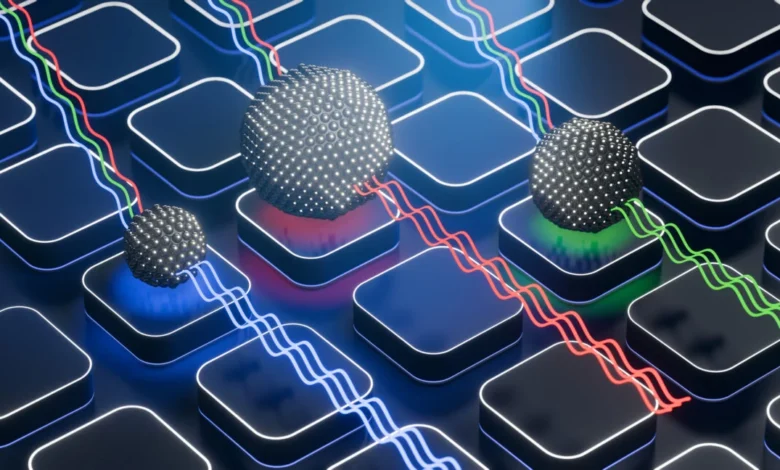
The quest for a universal, fault-tolerant quantum computer has long been defined by a fundamental tension: the challenge of reconciling the scalability inherent in modern electronic manufacturing with the geometric flexibility crucial for robust quantum error correction. For years, the leading approaches to quantum computing have grappled with this dichotomy, often forcing a trade-off between the ease of producing numerous qubits and the ability to dynamically reconfigure their interactions. However, a significant new development, detailed in a paper published in Nature in 2026, presents a potential breakthrough: researchers have demonstrated the ability to physically move spin qubits hosted in quantum dots without compromising their delicate quantum information. This achievement, a collaboration between Delft University of Technology and the startup QuTech, promises to unlock the coveted "any-to-any" connectivity typically associated with more complex, atom-based systems, potentially revolutionizing the pathway to scalable quantum computation.
The Quantum Computing Landscape: A Dichotomy of Approaches
The race to build a practical quantum computer involves diverse technologies, each with its unique advantages and formidable challenges. Broadly, these can be categorized into two major camps. On one side are systems that leverage meticulously engineered electronic devices, often relying on established semiconductor manufacturing techniques. Companies like Google and IBM have made significant strides with superconducting qubits (transmons), achieving impressive gate fidelities and increasing qubit counts. Intel, among others, has heavily invested in silicon-based quantum dots, aiming to capitalize on the vast infrastructure and scaling capabilities of the semiconductor industry. The primary appeal of these electronic approaches lies in their potential for mass production and integration into compact chip architectures. However, a significant drawback has historically been the fixed physical layout of their interconnections. Once fabricated, the wiring that links these qubits is immutable, dictating the possible interactions and, consequently, limiting the flexibility of error correction schemes.
Conversely, the second category of quantum computing platforms employs individual atoms or photons as qubits. Trapped ion systems, championed by companies like IonQ and Quantinuum, and neutral atom arrays, advanced by Pasqal and Atom Computing, confine and manipulate atomic qubits using electromagnetic fields or precisely tuned lasers. These systems boast exceptionally long coherence times and high intrinsic qubit quality. A standout advantage of atomic and photonic qubits is their inherent reconfigurability: individual qubits can be physically moved or re-addressed, allowing for "any-to-any" connectivity. This dynamic reconfigurability is invaluable for implementing sophisticated quantum error correction codes, which often require complex, adaptive interaction patterns between qubits to protect against environmental noise. The trade-off, however, lies in the intricate and often bulky hardware required to manage these systems, involving high-vacuum chambers, cryogenic temperatures for some, and a complex array of lasers and optics, which poses its own scaling challenges.
Quantum Dots: Promise, Limitations, and a New Horizon
Quantum dots, often referred to as "artificial atoms," are nanoscale semiconductor crystals that can confine electrons within a tiny, precisely defined space. In the context of quantum computing, a single excess electron loaded into a quantum dot serves as a qubit, with its spin state (spin-up or spin-down) representing the quantum information. The allure of quantum dots for quantum computing is multifaceted. Firstly, their fabrication leverages mature silicon manufacturing processes, offering a clear path to high-density integration and scalability, potentially accommodating millions of qubits on a single chip. Secondly, the spin of an electron, while susceptible to environmental disturbances, can be relatively well-isolated within a quantum dot, leading to decent coherence times compared to charge-based qubits.
Despite these advantages, quantum dots have traditionally faced the same fundamental limitation as other manufactured electronic qubits: their fixed connectivity. The physical wiring between quantum dots, necessary for performing two-qubit gates and entanglement operations, is etched into the chip during manufacturing. This "hard-wired" architecture means that the choice of error correction scheme must be made at the design stage, permanently locking the processor into a specific configuration. If a more efficient or robust error correction protocol emerges after the chip’s fabrication, or if an algorithm requires a different interaction topology, the hardware cannot adapt. This rigidity has been a significant hurdle, preventing quantum dot systems from fully capitalizing on the benefits of advanced error correction, which are critical for achieving fault tolerance—the ability to perform computations reliably despite noise.
The Breakthrough: Enabling Qubit Mobility
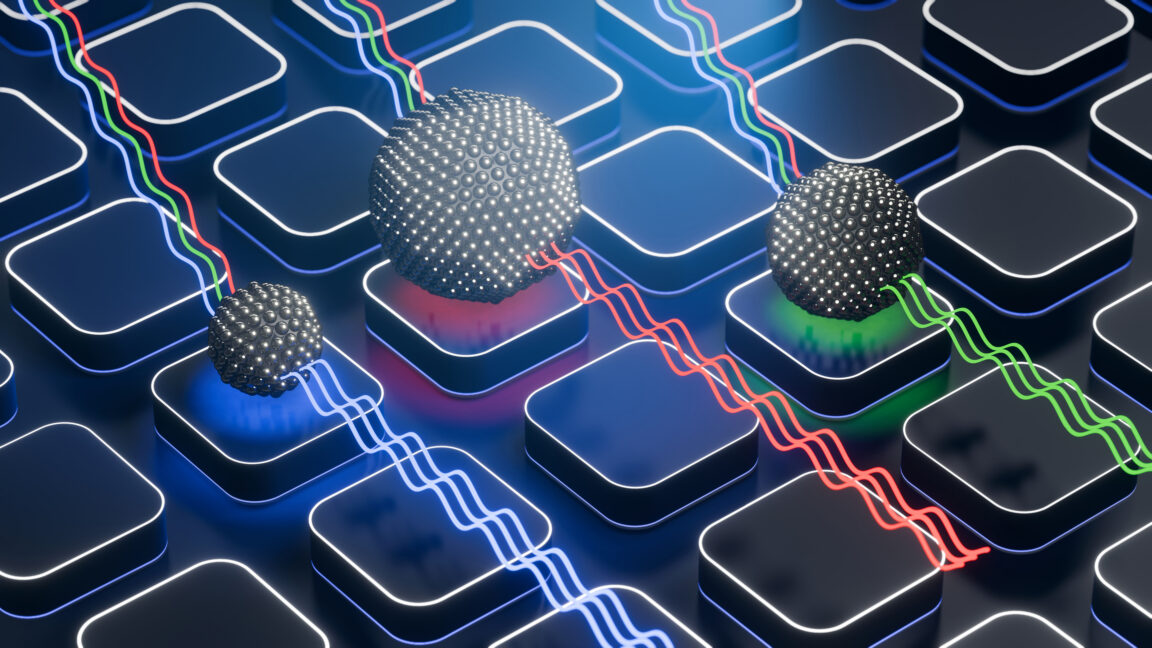
The recent research from Delft University of Technology and QuTech directly addresses this critical limitation by demonstrating a mechanism to move spin qubits between quantum dots without losing their quantum information. This work effectively combines the manufacturability of silicon quantum dots with the reconfigurability previously thought exclusive to atomic systems.
The experimental setup involved a linear array of six quantum dots fabricated on a silicon chip. Researchers initiated the experiment by loading single electron spins into quantum dots at opposite ends of this array. The core innovation lies in the method of transport: by carefully applying a sequence of electrical signals, the research team could create a "moving potential well" that effectively shifted the electron spins from one quantum dot to its adjacent neighbor. This process, akin to a microscopic bucket brigade, allowed the spins to be gradually brought closer together. While "gradually" in this context refers to a fraction of a second—a timescale relatively slow compared to basic electronic switching operations—it is sufficiently fast for many quantum operations.
Once the electron spins were positioned close enough for their wavefunctions to overlap, the researchers were able to perform two-qubit gates, the fundamental building blocks for entanglement and quantum computation. Following these operations, the spins were moved back to their original, separated positions. Crucially, subsequent measurements confirmed that the spins remained entangled, demonstrating that the transport mechanism preserved the delicate quantum state.
Further pushing the boundaries of this capability, the team successfully demonstrated quantum teleportation using their mobile qubit system. It is important to clarify that in quantum mechanics, teleportation refers to the transfer of a quantum state from one qubit to another distant qubit, not the physical movement of the qubit itself. This process requires a two-qubit gate and is a powerful tool for extending entanglement across larger distances, effectively enhancing the "mobility" of quantum information even after physical qubits are widely separated. The successful demonstration of teleportation underscores the robustness of the mobile quantum dot architecture.
Performance and Future Vision
The fidelity of the operations performed on this early-stage test device, while not yet at the threshold for large-scale fault-tolerant computation, is remarkably promising. The two-qubit gates achieved a success rate of over 99 percent, indicating high precision in fundamental quantum operations. Quantum teleportation, a more complex process, succeeded approximately 87 percent of the time. These figures represent significant progress for a new paradigm and provide a solid foundation for further optimization. The researchers are confident that with continued development and engineering improvements, these fidelities can be significantly enhanced to meet the stringent requirements of error-corrected quantum algorithms.
The research team has articulated a compelling vision for future quantum computer architectures based on this mobile quantum dot concept. They envision a modular design comprising:

- Dedicated Storage Zones: Regions on the chip where qubits can reside with long coherence times when not actively participating in computation.
- Interaction Zones: Specific areas where qubits are brought together to perform one- and two-qubit gates, entanglement operations, and other manipulations.
- Qubit Tracks and Connectors: Pathways that allow individual spins to be routed from storage to interaction zones, and to different tracks for longer-distance interactions, facilitating dynamic, any-to-any connectivity across the chip.
This proposed architecture bears a striking resemblance to the designs being developed for neutral atom and trapped ion quantum computers, which also rely on shuttling qubits to perform interactions. However, the quantum dot approach offers the distinct advantage of leveraging silicon manufacturing techniques, potentially leading to much more compact control hardware and higher qubit densities. This hybrid approach, combining the manufacturing scalability of electronics with the reconfigurability of atomic systems, could unlock unprecedented scaling for quantum processors.
Timeline, Industry Context, and Broader Implications
The journey of quantum dot research for computing spans several decades. Initial theoretical work on quantum dots emerged in the 1980s, with practical applications in optoelectronics developing through the 1990s. The idea of using electron spins in quantum dots as qubits gained traction in the early 2000s, leading to demonstrations of single-qubit control and, later, two-qubit gates. The publication of this new research in 2026 marks a pivotal moment, shifting the paradigm from static to dynamic quantum dot architectures. While the current demonstration involved a small array of six quantum dots, the conceptual leap is immense, laying the groundwork for much larger and more complex systems.
The implications of this research for the broader quantum computing industry are substantial. Companies like Intel have made significant strategic investments in silicon spin qubits, recognizing the inherent advantages of leveraging existing semiconductor manufacturing capabilities. This breakthrough from Delft and QuTech directly addresses one of the most pressing challenges for silicon qubits, potentially accelerating Intel’s roadmap and that of other players in the quantum dot space. If mobile quantum dots can achieve fault-tolerant fidelities and scale to hundreds or thousands of qubits, they could emerge as a leading contender in the quantum race.
However, significant challenges remain. Beyond scaling up the number of quantum dots, further improvements in gate fidelities and qubit coherence times are essential for fault-tolerant operation. The sensitivity of electron spins to environmental noise requires meticulous engineering and advanced control techniques. Furthermore, the development of quantum dot technology is still catching up to the maturity of superconducting qubits, which have seen billions of dollars of investment and boast higher qubit counts and fidelities in current commercial prototypes.
Despite these hurdles, the work from Delft and QuTech represents a monumental step forward, challenging conventional wisdom about the trade-offs in quantum hardware design. By demonstrating the feasibility of mobile qubits in a manufacturable solid-state system, they have opened a new avenue for research and development. Whether this innovation will ultimately propel quantum dots ahead of competing technologies like superconducting circuits, trapped ions, or neutral atoms remains to be seen and will likely unfold over the coming years as research progresses from small-scale demonstrations to larger, more robust quantum processors. The promise of a scalable, reconfigurable, and manufacturable quantum computer, however, has just grown significantly brighter.
Nature, 2026. DOI: 10.1038/s41586-026-10423-9.
Related posts: