Former President Joe Biden’s Syracuse Portrait Unveiling Marked by Awkward Remark and Reflective Address on Democracy

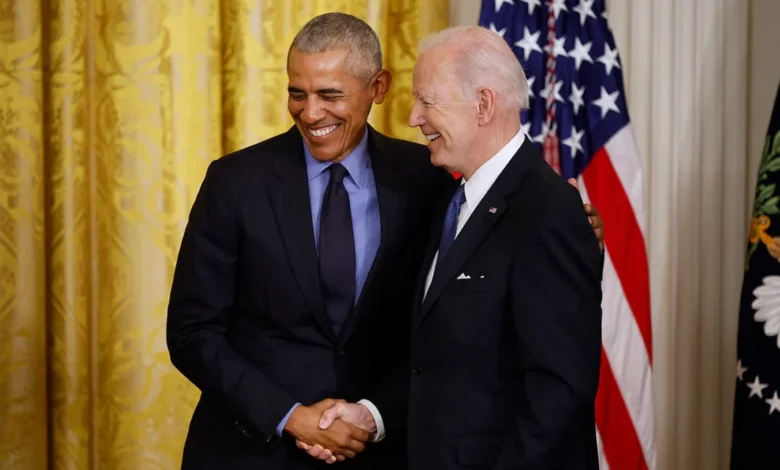
Former President Joe Biden returned to his alma mater, Syracuse University, on Tuesday for a significant event: the unveiling of his official portrait. Intended as a ceremony celebrating his distinguished career and profound connection to the institution, the occasion quickly drew national attention for an unexpected and awkward onstage remark. Addressing the esteemed audience, Biden compared Jeffrey M. Scruggs, the Black Chairman of the school’s Board of Trustees, to former President Barack Obama, a comment that immediately sparked laughter in the room but later ignited a contentious debate across social media platforms. The portrait, a lasting tribute to Biden’s journey from law student to the nation’s highest office, is now permanently displayed in the Syracuse University College of Law’s Law Library Reading Room, symbolizing his enduring legacy at the institution.
A Return to Alma Mater: Acknowledging a Legacy
The unveiling of a presidential portrait is a rare and significant honor, typically reserved for individuals who have reached the pinnacle of public service and maintained a deep connection to their educational roots. For Joe Biden, a proud graduate of Syracuse University College of Law, the event represented a full-circle moment, reflecting on a career that spanned over five decades in public life. Biden, who earned his Juris Doctor from Syracuse in 1968, has frequently spoken of the formative influence the university had on his understanding of law, justice, and public duty. His time at Syracuse laid the groundwork for a political trajectory that saw him become one of the youngest senators in U.S. history, a long-serving Vice President, and ultimately, the President of the United States. The decision by the university to commission and display his portrait underscores the institution’s pride in its most prominent alumnus and the historical significance of his contributions to American society. Such portraits serve not only as artistic representations but also as enduring symbols of the values and achievements associated with the honoree, inspiring future generations of students to pursue similar paths of leadership and service. This particular event, occurring post-presidency as Biden began to shape his broader legacy, carried additional weight, offering him an opportunity for personal reflection on the principles that guided his extensive career.
The Portrait Unveiling and the Remark Heard Round
The ceremony itself was a formal affair, attended by university dignitaries, faculty, students, and members of the Board of Trustees, including Chairman Jeffrey M. Scruggs. Video footage from the event captured the sequence of events leading up to the controversial comment. As Biden stood at the podium, acknowledging various members of the law school’s leadership by name, he paused, seemingly in a moment of playful spontaneity. With a smile, he delivered the remark that would quickly circulate online: "I always want to turn around to one guy and say.. ‘Barack what are you doing?’" The audience responded with laughter, as did Scruggs, who was seated nearby. Biden then gestured for Scruggs to join him on stage, continuing the jest with, "I feel like he should be standing on the right and I should be standing on the left." This second comment, referencing the traditional positioning of a president and vice president, drew further laughter from those present. While the immediate reaction in the room appeared to be one of amusement, the subsequent online discourse highlighted a stark division in how the comment was perceived. The exchange, meant to be lighthearted, inadvertently overshadowed the solemnity of the occasion for some observers, redirecting focus from the celebration of Biden’s achievements to a momentary verbal slip.
The ‘Barack’ Comment: Reactions and Context
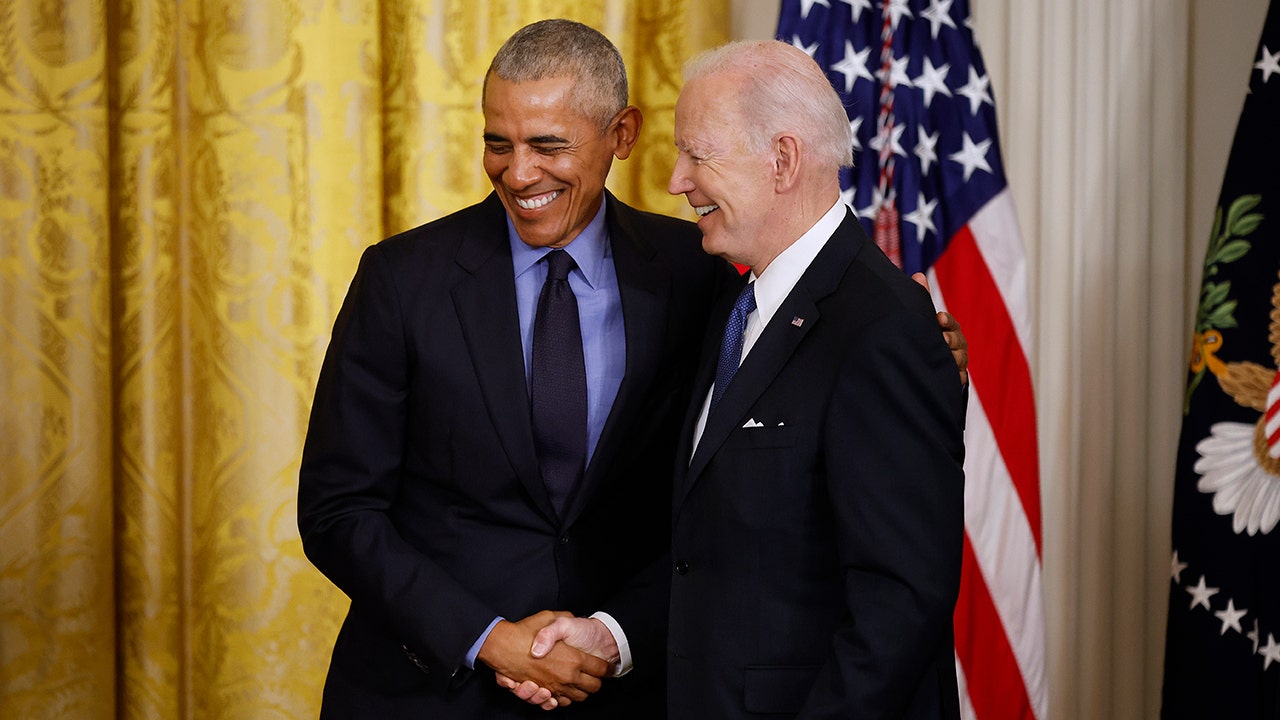
The immediate aftermath of Biden’s remark saw a bifurcated response. Within the confines of the Syracuse auditorium, the laughter from attendees and Jeffrey M. Scruggs himself suggested the comment was received as an innocuous, albeit somewhat clumsy, attempt at humor. However, as clips of the moment rapidly disseminated across social media platforms, public opinion diverged sharply. Critics seized upon the comment as yet another instance of Biden’s long-documented propensity for verbal gaffes, often referred to as his "gaffe machine" persona. These detractors frequently linked the remark to ongoing discussions about the former president’s age and perceived cognitive acuity, framing it as evidence of a decline. Conversely, many defenders argued that the comment was clearly intended as a joke, a lighthearted reference to his close working relationship with former President Obama during their two terms in the White House. They contended that misinterpreting or overanalyzing such an off-the-cuff remark was an unfair and politically motivated attempt to undermine Biden’s character and intelligence. The racial undertones of comparing two Black men, regardless of the speaker’s intent, also became a significant point of contention. In an era of heightened sensitivity regarding identity and representation, such comparisons, even if meant humorously, can be perceived as reductive or racially insensitive by some, highlighting the persistent challenges public figures face in navigating complex social dynamics through their rhetoric. The incident underscored the ever-present scrutiny on prominent political figures, where every word, especially from a former president, is dissected and analyzed through multiple lenses.
Jeffrey M. Scruggs: A Profile of Distinction
The individual at the center of the awkward exchange, Jeffrey M. Scruggs, is a highly respected and accomplished figure within the Syracuse University community and beyond. As the Chairman of the Syracuse University Board of Trustees, Scruggs holds a pivotal leadership position, overseeing the university’s governance, strategic direction, and financial health. Trustees are typically chosen for their significant professional achievements, philanthropic contributions, and deep commitment to the institution’s mission. While the specific details of Scruggs’s professional background were not extensively detailed in the immediate news coverage of the event, individuals in such roles often come from distinguished careers in law, business, finance, or public service. His presence on stage with former President Biden underscored his stature within the university’s hierarchy and the importance of the event. The fact that Scruggs himself laughed in response to Biden’s comments suggests an immediate acceptance of the remark as a joke within the context of their personal interaction and the event’s atmosphere. His role as Chairman implies a commitment to diversity and inclusion within the university, making the comparison to a prominent Black political figure like Barack Obama a particularly sensitive point for public discussion, regardless of the perceived intent. Scruggs’s professional standing and leadership at Syracuse represent a commitment to educational excellence and community engagement, values that were ironically part of Biden’s own reflective speech during the ceremony.
Biden’s Reflective Address: Law, Legacy, and Democracy
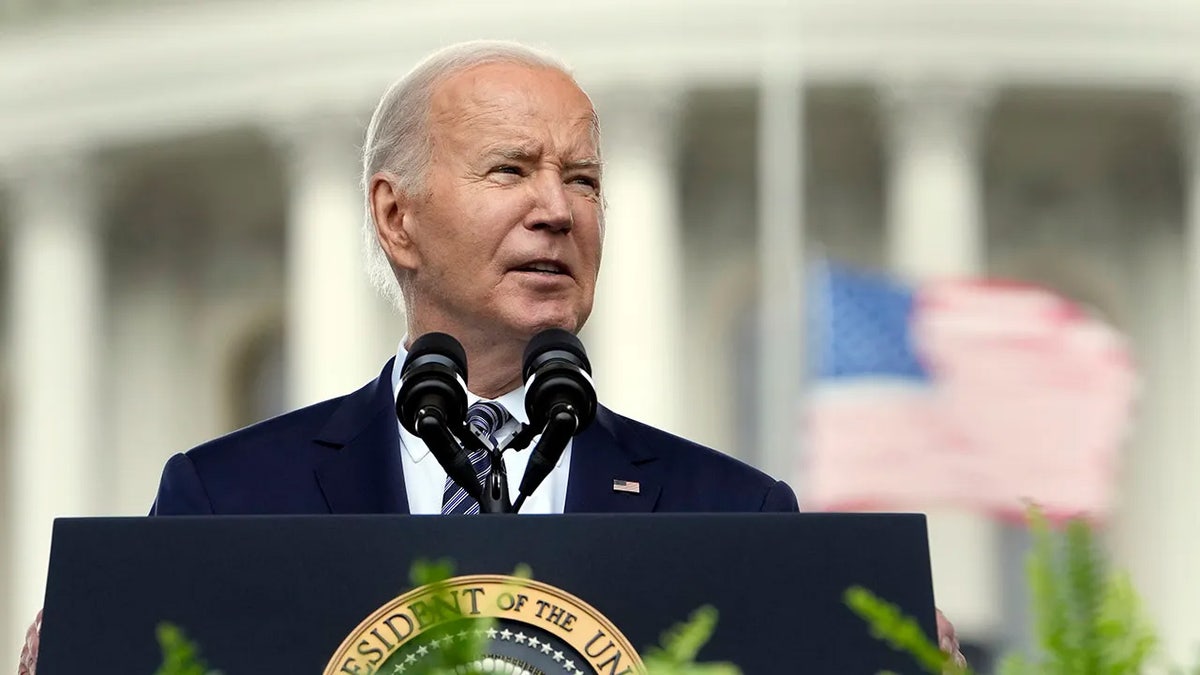
Beyond the brief, controversial exchange, former President Biden’s speech at the portrait unveiling was a deeply personal and reflective address, largely centered on the enduring themes of law, public service, and the preservation of democracy. He credited his family, his Syracuse classmates, and his mentors with shaping his career and instilling in him the values that guided his decades in politics. Biden spoke passionately about how his legal education at Syracuse profoundly influenced his belief in the power of law as a tool to advance dignity, equality, and democracy. He recounted key moments from his path from a law student to a public servant, navigating periods of national upheaval and personal tragedy, including the profound loss of his late son, Beau. Beau Biden’s legacy, particularly his commitment to justice and public service, was highlighted as a continuing inspiration. In his closing remarks, Biden articulated his vision for his post-presidency, emphasizing his commitment to establishing his presidential library and foundation. He expressed a hope that these institutions would serve to "pass down to future generations a reverence for democracy," a cause he vowed never to stop striving for. He further implored future Syracuse law students, who would view his portrait, to remember "not of me, but of the greatness and power of our democracy and of their obligation to do their part to preserve, protect, defend our Constitution." This segment of his speech, rich in sentiment and conviction, aimed to distill the essence of his public life and his hopes for the nation’s future, presenting a stark contrast to the momentary gaffe that preceded it.
Public Discourse and the ‘Gaffe Machine’ Label
The incident at Syracuse University reignited a familiar conversation surrounding former President Biden’s public speaking style and its perception. Throughout his long career, Biden has earned a reputation, both affectionately and critically, as a "gaffe machine," known for his impromptu remarks, occasional misstatements, and sometimes rambling anecdotes. While supporters often view these as authentic quirks of a seasoned politician, critics frequently leverage them to question his rhetorical precision or, more pointedly, his cognitive fitness, especially given his advanced age. This specific comparison of Jeffrey M. Scruggs to Barack Obama, regardless of intent, falls into a pattern that political opponents have historically used to fuel narratives about Biden’s perceived mental acuity. The incident thus became fodder for a broader political and media discourse, underscoring the intense scrutiny under which former presidents and high-profile public figures operate. In an era dominated by instantaneous information sharing and viral content, a brief, unscripted moment can quickly overshadow hours of prepared remarks, shaping public perception far more effectively than any policy speech. This dynamic highlights the precarious balance political communicators must maintain between authenticity and absolute precision, especially when navigating sensitive topics like race and identity. The Syracuse gaffe, therefore, serves as a microcosm of the challenges faced by public figures in maintaining a consistent and unblemished public image in the digital age.
Building a Legacy: The Presidential Library and Future Aspirations
In his closing remarks at Syracuse, former President Biden elaborated on his post-presidential endeavors, specifically his plans for a presidential library and foundation. These institutions are traditionally established by former U.S. presidents to house their official papers, artifacts, and personal collections, serving as centers for historical research, public education, and policy discourse. Biden’s vision for his library extends beyond mere archiving; he expressed a profound desire for it to become a beacon for democratic ideals. He articulated his hope that the library would instill in future generations a "reverence for democracy," reflecting his belief that the preservation and strengthening of democratic principles are paramount. This aspiration is deeply consistent with the overarching themes of his career, which frequently emphasized unity, constitutionalism, and the rule of law. The establishment of such a foundation underscores a former president’s commitment to shaping their historical narrative and influencing future civic engagement. Biden’s statement, "whatever my legacy may be, I hope will be said that I never stopped striving for the cause of democracy," encapsulates a defining characteristic of his public service. He aimed for his portrait at Syracuse to be a constant reminder not just of himself, but of "the greatness and power of our democracy and of their obligation to do their part to preserve, protect, defend our Constitution," thereby extending his legacy beyond personal achievement to a collective civic responsibility.
Official Responses and University Stance
Following the widespread attention garnered by the "Barack" remark, Fox News Digital reportedly reached out to the Office of Joe and Jill Biden for comment. As is often the case with such inquiries regarding impromptu remarks, an immediate official statement clarifying or defending the comment was not provided or publicly released, or at least not included in the initial reports. This absence of an immediate official response is not uncommon, as political offices often weigh the impact of commenting versus allowing a brief controversy to dissipate naturally. From Syracuse University’s perspective, the primary focus of the event remained the honor bestowed upon its distinguished alumnus. Universities, when hosting such high-profile figures, typically emphasize the academic and historical significance of the occasion. While the university would undoubtedly be aware of the social media chatter, their official communications would likely continue to highlight Biden’s contributions to the legal field and public service, the importance of his portrait, and the inspiration he provides to current and future students. Any potential internal discomfort regarding the gaffe would likely be managed discreetly, with public statements maintaining a tone of respect and celebration for the former president’s achievements and his connection to the institution. The overriding narrative from the university would be one of pride in its graduate’s accomplishments and the enduring values he represents, rather than dwelling on a momentary verbal misstep.
Concluding Thoughts on Political Communication
The incident at Syracuse University serves as a salient reminder of the complexities inherent in modern political communication, especially for figures of the stature of a former U.S. president. In an era of instant dissemination of information and