Ava DuVernay Defends Use of Artificial Intelligence in New Documentary 14th Amidst Rising Industry Scrutiny

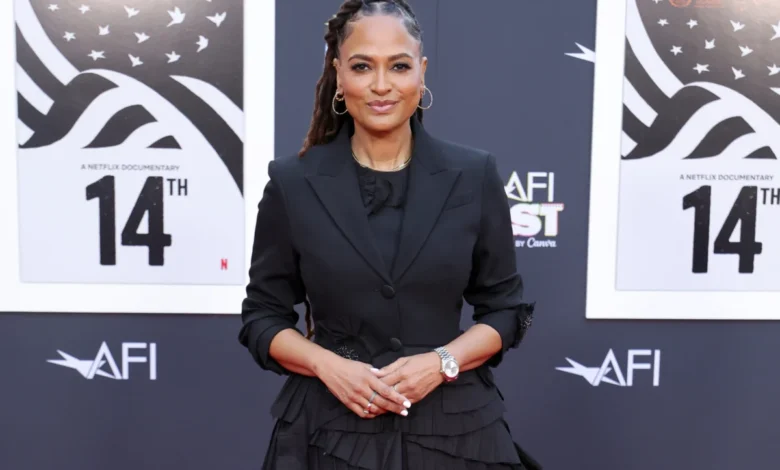
As director Ava DuVernay continues her extensive festival circuit tour for her latest documentary, 14th, the filmmaker has found herself navigating the complex intersection of historical preservation and modern technological ethics. The film, a rigorous examination of the 14th Amendment and the precarious nature of birthright citizenship in the United States, has drawn significant attention not only for its subject matter but for its integration of artificial intelligence tools during post-production. Following a screening at AFI Fest this past Sunday, DuVernay addressed the burgeoning debate surrounding the ethics of AI in documentary filmmaking, emphasizing a pragmatic view of evolving production standards.
The documentary serves as a profound investigation into the legal and social architecture of the United States, specifically focusing on the 1868 amendment that granted citizenship to all persons born or naturalized in the country. By utilizing archival photography and employing AI-driven animation techniques, the production team sought to "bring history to life," an artistic choice that has triggered vocal criticism from segments of the viewing public concerned about the potential for digital manipulation in non-fiction storytelling.
Contextualizing the Technological Workflow
During her appearance at AFI Fest, DuVernay sought to demystify the use of these tools, framing them not as a radical departure from traditional filmmaking, but as an evolution of industry-standard software. She drew direct comparisons between the AI-powered parallax and animation tools used in 14th and the long-established reliance on sophisticated software like Avid for editorial, Pro Tools for audio engineering, and DaVinci Resolve for color grading.
"The tools that the artists used to do the parallax and the animation in the films have that technology in it," DuVernay stated. "I think we’ve come to a place in filmmaking where we have to be really sober about the ways in which that technology is used across so much of the workflow." Her argument highlights a growing consensus among industry professionals: that "artificial intelligence" is often an umbrella term for automated processes that have been quietly integrated into professional post-production suites for years.
However, the director was careful to draw a firm line regarding the extent of this usage. She explicitly clarified that the production did not employ generative AI to fabricate individuals, create synthetic avatars, or replicate the voices of historical figures to present false narratives. Instead, the application was restricted to the visual enhancement of public domain archival materials. The goal, she asserted, was to foster a deeper emotional connection between modern audiences and the historical figures of the 19th and early 20th centuries.
The Genesis of 14th: A Chronological Retrospective
The conceptual roots of 14th trace back to the political landscape of the late 2010s. A decade after the release of her seminal, Oscar-nominated documentary 13th—which dissected the relationship between the U.S. prison system and the 13th Amendment’s loophole regarding involuntary servitude—DuVernay found herself contemplating a return to constitutional themes.
The impetus for the new project was rooted in specific policy threats directed at the 14th Amendment. As a candidate, the former president made the dismantling of birthright citizenship a central pillar of his platform, suggesting he would move to rescind the practice via executive action within his first week in office. Upon taking office, these threats materialized as concrete policy attempts, prompting DuVernay to pivot her focus.
"I didn’t know much about the 14th Amendment at that point, but I know birthright citizenship is in it," she noted. "So we started thinking about the possibility of making this film at that point, and once we saw all of the tentacles of the current administration attacking this amendment, we knew that there was more there. So we investigated it, and that’s what the film became."
The film’s development followed a rigorous investigative trajectory:
- 2016-2017: Initial political rhetoric regarding the 14th Amendment begins to dominate headlines.
- 2018-2020: Research and archival gathering commence, with the team identifying the need for visual innovation to bridge the gap between static, damaged photography and modern documentary standards.
- 2021-2023: Production phase, including the integration of AI-assisted animation for historical archival sequences.
- 2024: Festival circuit premiere and official announcement of the limited theatrical and streaming release strategy.
Broader Implications for Documentary Ethics
The debate sparked by 14th is symptomatic of a larger, systemic anxiety within the film industry. As documentary filmmakers gain access to increasingly powerful computational tools, the standard for "truth" in non-fiction is being renegotiated. The Documentary Organization of Canada and other industry bodies have recently begun drafting guidelines regarding the transparency of AI usage, suggesting that future productions may be required to disclose where such technology has been employed.
From a technical perspective, the use of AI to "parallax" or provide depth to 2D historical photographs is a process known as "2.5D animation." It creates a sense of spatial volume, allowing the camera to pan and tilt through a historical scene, providing a more immersive viewing experience. While some critics argue this compromises the integrity of the archival record, proponents argue that it prevents historical fatigue, keeping younger audiences engaged with critical subject matter that might otherwise feel distant or inaccessible.
Data and Constitutional Significance
The 14th Amendment remains one of the most litigated sections of the U.S. Constitution. Ratified in 1868, its Citizenship Clause serves as the bedrock for civil rights in America. According to legal scholars, the amendment has been central to landmark Supreme Court cases, including Brown v. Board of Education (1954), which utilized the Equal Protection Clause, and Obergefell v. Hodges (2015).
DuVernay’s documentary serves as a timely reminder of the fragility of these protections. By contrasting the historical struggle for constitutional recognition with the contemporary political challenges, 14th attempts to contextualize the current discourse on immigration and human rights. The film’s focus on the "tentacles" of administrative policy suggests that the fight for these rights is an ongoing, rather than concluded, historical process.
Official Responses and Future Outlook
While reactions from critics remain varied, the film has already garnered significant attention for its stylistic boldness. By inviting the audience to "check it out for themselves and make their decisions," DuVernay is placing the onus of interpretation back onto the viewer—a hallmark of her directorial philosophy.
The industry at large is watching closely. With major streaming platforms like Netflix increasingly utilizing AI for restoration, compression, and visual effects, the standards established by high-profile projects like 14th are likely to set a precedent for future independent and studio-backed documentaries. If the industry moves toward a model of "responsible transparency"—where AI is acknowledged as a tool for presentation rather than a source of fabrication—the concerns currently surrounding the film may eventually be viewed as part of a necessary growing pain in the digital age of cinema.
14th is scheduled for a limited theatrical run beginning November 27, followed by a wide release on Netflix on December 4. The film’s reception, both in terms of its narrative efficacy and its technical execution, will likely serve as a litmus test for how audiences perceive the role of artificial intelligence in the preservation and presentation of the American historical narrative. As the discourse continues, the film stands as a testament to DuVernay’s commitment to keeping constitutional history at the forefront of the national consciousness, even as the tools used to tell those stories undergo a profound, and often controversial, transformation.
Related posts: