Ashton and Michael Kutcher Open Up About Childhood Health Crises, Sibling Rivalry, and the Path to Reconciliation

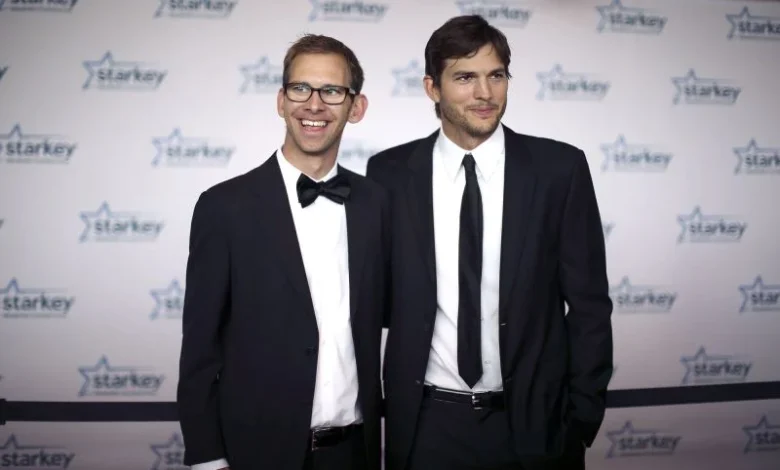
The complex and deeply intertwined lives of twin brothers Ashton and Michael Kutcher have long remained a private matter, shielded from the relentless glare of Hollywood. However, in a rare and emotionally charged joint interview on the Paramount+ docuseries The Checkup with Dr. David Agus, the brothers offered an intimate look at the triumphs, heartbreaks, and inevitable frictions that have defined their lifelong bond. Guided by Dr. David Agus—who also serves as Ashton’s personal physician—the conversation traversed decades of shared history, shedding light on severe childhood illnesses, the psychological toll of fame, survivor’s guilt, and the eventual journey toward mutual respect and equality.
The televised discussion provided a rare platform for the Kutchers to dissect the moments that nearly tore them apart, as well as the profound experiences that ultimately cemented their connection. By addressing subjects ranging from viral myocarditis and cerebral palsy to public misunderstandings and sibling jealousy, the brothers painted a nuanced picture of fraternal love under extraordinary circumstances.
A Childhood Defined by Medical Crises
The early lives of Ashton and Michael Kutcher were heavily shaped by medical adversity. While Ashton developed into a healthy, active child, Michael faced significant developmental and physical hurdles from an early age. Diagnosed with cerebral palsy—a group of disorders that affect movement and muscle tone or posture—Michael experienced the world through a lens of physical limitations that his brother did not share.
However, the most acute crisis of their childhood arrived when the twins were adolescents. Michael contracted viral myocarditis, a condition characterized by the inflammation of the heart muscle. The virus caused his heart to become severely enlarged and ultimately led to heart failure.
During the interview, the brothers recounted the harrowing experience of Michael’s decline and near-death event while Ashton was visiting him in the intensive care unit. Fighting back tears, Ashton described entering the hospital room and immediately recognizing that the situation had deteriorated critically.
"I go in the room and I’m like, ‘Whoa,’" Ashton recalled, visibly emotional. "I’m like… Everything is not okay. And he flatlines in the room, and I know that noise because now I’ve been visiting occasionally."
The gravity of the moment prompted intense psychological distress for the young Ashton. In a display of extreme fraternal devotion, he admitted to contemplating drastic measures to save his brother’s life, even considering jumping from a hospital balcony in the belief that his own healthy heart would serve as a viable transplant match.
Fortunately, such extreme measures were unnecessary. Within 24 hours of his critical decline, a suitable donor heart became available, and Michael successfully underwent a heart transplant. Yet, the medical trials did not end there. Sometime later, a blood clot necessitated additional, high-risk open-heart surgery, compounding the physical and emotional toll on the young family.
Navigating Fame, Survivor’s Guilt, and Sibling Rivalry
While Michael fought for his survival and adapted to living with chronic health conditions, Ashton’s life took a dramatically different trajectory. As a young adult, Ashton embarked on a successful career in modeling and acting, eventually landing a breakthrough role in the hit sitcom That ’70s Show. As his profile rose and he became a household name, Ashton found himself grappling with profound survivor’s guilt.
The actor described wrestling with fundamental questions about fairness and fortune. "How do I get to be this lucky?" he recalled wondering. "For my brother… to be born with cerebral palsy, then have a heart transplant, then have this random blood clot, these things that you’re just like, ‘Who has to go through that?’"
This disparity in their lived experiences inadvertently created an emotional rift between the brothers. Michael candidly admitted to Dr. Agus that envy played a significant role in their drifting apart during Ashton’s early years of fame.
"There was a moment when I viewed him as receiving more attention than I was," Michael explained. "That kind of drove me down to a place where I was jealous."
The dynamic shifted permanently when Michael confronted his brother about his attitude. Ashton shared that Michael explicitly called out the pity he often received from his twin, setting clear boundaries for their relationship.
"He looked at me and he said, ‘Every time you feel sorry for me, you make me less,’" Ashton recalled. "He said, ‘This is the only life I’ve ever known, so stop feeling sorry for the only thing I have.’ And that then created an entire shift back to where I think we are today, which is straight up equals again."
Michael echoed this sentiment, noting that discarding the external noise of fame and public perception allowed him to reconnect authentically with his brother. "Once I took all of the fame and everything out of it, I was able to just, you know, come back to him," Michael said.
Boundaries and Public Revelations
Despite their reconciliation, the brothers faced additional hurdles related to privacy and public disclosure. Early in Ashton’s career, the actor publicly revealed in an interview that his twin brother had cerebral palsy. At the time, Michael had not publicly disclosed his diagnosis, preferring to manage his condition away from the public eye.
During The Checkup, Ashton acknowledged that he had acted without realizing Michael’s desire for privacy regarding his medical history. While the disclosure temporarily created tension, it ultimately redirected Michael toward public advocacy. Today, Michael Kutcher utilizes his platform to champion the rights of individuals with disabilities, transforming a private medical journey into a public mission of awareness and inclusion.
Broader Implications and Public Response
The openness displayed by Ashton and Michael Kutcher resonated deeply with audiences and mental health professionals alike. By addressing topics such as survivor’s guilt, the psychological impact of childhood illness, and the complexities of sibling relationships under the weight of celebrity, the brothers contributed to a broader cultural conversation surrounding vulnerability and family dynamics.
Mental health advocates and medical professionals have frequently noted that siblings of chronically ill children—often referred to in psychological literature as "glass children"—frequently experience unrecognized emotional distress, including anxiety, depression, and survivor’s guilt. Ashton’s public acknowledgment of these feelings provides validation for many families navigating similar circumstances.
Furthermore, Michael’s transition into advocacy highlights the empowering potential of reclaiming one’s narrative after years of medical trauma and public exposure. By establishing themselves as equals, the Kutcher twins have demonstrated that familial bonds can not only survive severe adversity and the pressures of public life, but can ultimately emerge stronger through honest communication and mutual respect.
Related posts: