Kimi Antonelli storms to United States Grand Prix pole position as title destiny beckons in Austin

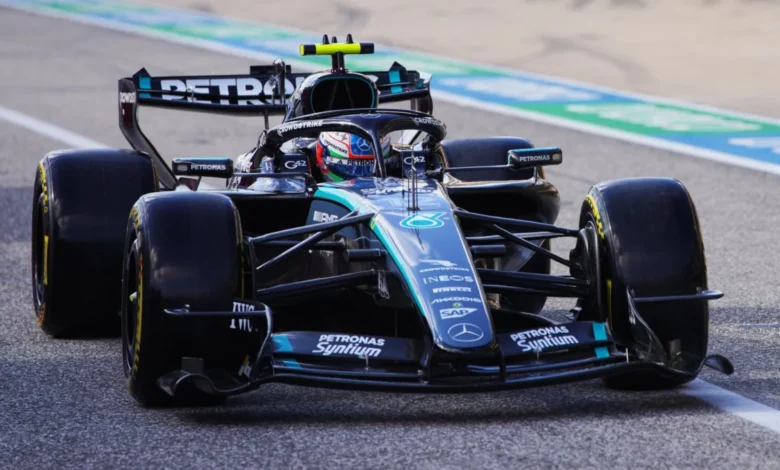
Kimi Antonelli claimed a sensational pole position for the United States Grand Prix at the Circuit of the Americas, delivering a masterclass in qualifying that has brought the young Mercedes prodigy to the cusp of Formula 1 history. The 20-year-old’s seventh pole of the season was arguably his most significant, as he fended off a late-session surge from Red Bull’s Max Verstappen to secure the prime starting position for Sunday’s race.
With the championship narrative reaching a fever pitch, Antonelli’s performance in Austin serves as a stark reminder of his meteoric rise. Having dominated the standings for much of the 2026 campaign, the Italian driver now stands on the brink of becoming the youngest world champion in the history of the sport. A victory on Sunday, combined with specific results from his closest rivals, would mathematically confirm his title with five rounds remaining—a feat that would cement his status as one of the most remarkable talents to ever enter the pinnacle of motorsport.
The Qualifying Narrative: A Late Surge in Texas
The qualifying session at the Circuit of the Americas provided a tactical battle that unfolded under the intense Texan sun. For the majority of the weekend, the narrative centered on a fierce rivalry between Max Verstappen and the Ferrari pair of Charles Leclerc and Lewis Hamilton. Verstappen, seeking to reclaim his standing in the hierarchy, looked comfortable throughout the initial segments, frequently topping the timing sheets and appearing to be the man to beat.
However, the final segment of qualifying (Q3) shifted the momentum. While Verstappen looked set to lock out the front row for Red Bull, Antonelli found a sudden, blistering turn of pace on his final flying lap. His time of 1:34.035 eclipsed Verstappen’s best effort by 0.179 seconds, a margin that underscored the precision required to navigate the technical twists and elevation changes of the Austin circuit.
Behind the front row, the battle was equally intense. Isack Hadjar, in the second Red Bull, matched his career-best qualifying result by securing third place, highlighting the technical strength of the Milton Keynes outfit on this particular track. Ferrari’s Charles Leclerc and Lewis Hamilton were forced to settle for fourth and fifth, respectively, after struggling to extract the final tenth of a second required to challenge the front-runners.
The Mathematics of a Coronation
The stakes for Sunday’s race are uniquely high. George Russell, starting from sixth, remains the primary obstacle between Antonelli and an early coronation. For the title to be decided this weekend, the permutations are specific: Antonelli must win the Grand Prix, and he requires a combination of results from Russell and Hamilton that would mathematically strip them of the ability to catch him in the remaining races.
Russell must finish in the top eight to stave off the celebration, while Hamilton is required to finish no higher than fifth if Antonelli takes the win. Any scenario where these conditions are not met results in the title being pushed to the following round, though the inevitability of an Antonelli championship feels increasingly like a formality rather than a possibility. The pressure on the Mercedes pit wall will be immense, as they look to manage the strategic risks of a high-stakes race while protecting their star driver’s equipment.
Qualifying Timesheet: A Breakdown of the Field
The competitive nature of the 2026 grid was reflected in the tight margins across the field. Below is the official classification following the conclusion of Q3:
| Driver | Team | Time | Gap |
|---|---|---|---|
| 1) Kimi Antonelli | Mercedes | 1:34.035 | – |
| 2) Max Verstappen | Red Bull | 1:34.214 | +0.179 |
| 3) Isack Hadjar | Red Bull | 1:34.250 | +0.215 |
| 4) Charles Leclerc | Ferrari | 1:34.267 | +0.232 |
| 5) Lewis Hamilton | Ferrari | 1:34.311 | +0.276 |
| 6) George Russell | Mercedes | 1:34.476 | +0.441 |
| 7) Oscar Piastri | McLaren | 1:34.803 | +0.768 |
| 8) Lando Norris | McLaren | 1:35.049 | +1.014 |
| 9) Arvid Lindblad | Racing Bulls | 1:36.049 | +2.014 |
| 10) Liam Lawson | Racing Bulls | No Time | – |
The qualifying order was further complicated by off-track penalties. Lando Norris, who initially looked to be in contention for a higher grid slot, saw his final effort deleted for breaching track limits, a mistake that relegated him to eighth. Meanwhile, Arvid Lindblad will start ninth, inheriting the position from his Racing Bulls teammate Liam Lawson due to a five-place grid penalty issued for exceeding his permitted engine component allowance.
Mid-Field Battles and Tactical Realities
The elimination rounds of qualifying (Q1 and Q2) saw a series of departures that highlight the volatility of the mid-field. Notable exits in Q2 included Pierre Gasly and Nico Hulkenberg, who were unable to bridge the gap to the top-eight pace. The Audi team, continuing their development cycle, saw Gabriel Bortoleto finish 13th, while Franco Colapinto’s Alpine rounded out the top 14.
Further back, the struggles of established names provided a stark contrast to the front-runners. Carlos Sainz and Alex Albon, both piloting Williams machinery, were eliminated in Q1, highlighting the significant performance delta that currently exists between the championship contenders and the back of the grid. Sergio Perez and Valtteri Bottas, driving for Cadillac, rounded out the final row, reflecting a difficult qualifying session for the American-linked outfit.
Official Perspectives and Team Strategy
While official team statements remain guarded, the mood in the Mercedes garage is one of cautious optimism. Team Principal briefings have emphasized the need for "clean execution" on Sunday. Given the technical nature of the Circuit of the Americas, tire management will be the primary variable. The high-speed changes of direction in the first sector, followed by the long back straight, require a delicate balance between downforce and straight-line speed.
Max Verstappen, speaking briefly after the session, noted the competitiveness of the Red Bull package but acknowledged the difficulty of overtaking on this circuit without a significant pace advantage. "We are in the mix, and we will look to apply pressure from the start," a sentiment echoed by the Red Bull pit wall as they prepare for a strategic fight against the Mercedes pace-setter.
Broader Implications: The New Generation of F1
The 2026 season has been defined by the emergence of a new generation of drivers. Kimi Antonelli’s dominance represents a shift in the sport’s power structure, marking a transition away from the era of the veteran champions toward a group of drivers who have spent their formative years in high-performance simulation and feeder series environments.
If Antonelli secures the title this weekend, it will not merely be a win for the Mercedes team; it will be a validation of the team’s scouting and development philosophy. The implications for the sport are significant. A young champion creates a new marketing vector for Formula 1, potentially attracting a younger demographic and resetting the competitive expectations for the next five years of regulation cycles.
The Road Ahead: Sunday’s Race Schedule
As the paddock prepares for the race, the anticipation in Austin is palpable. The weather forecasts suggest a warm, dry race day, which will test the thermal stability of the Pirelli tires. The schedule for Sunday is as follows:
- 5:00 PM: F1 Academy Race 3
- 6:30 PM: Grand Prix Sunday: United States GP Build-up
- 8:00 PM: The United States Grand Prix
- 10:00 PM: Chequered Flag: Post-race analysis and reaction
- 11:00 PM: Ted’s Notebook
The race, broadcast live on Sky Sports F1, promises to be a defining moment in the 2026 calendar. Whether Antonelli makes history in the Lone Star State or the chasing pack forces a delay to the celebrations, the United States Grand Prix is set to be a focal point for global motorsport fans. As the lights go out on Sunday, all eyes will be on the front row, where the past, present, and future of Formula 1 will converge for 56 laps of high-stakes racing.