US Open chief Craig Tiley confirms no plans to alter schedule despite record-breaking late-night finishes

The US Open, tennis’s final Grand Slam of the season, is doubling down on its current scheduling format despite mounting pressure from players, fans, and medical professionals regarding the sustainability of extreme late-night finishes. Craig Tiley, the newly appointed CEO of the United States Tennis Association (USTA) and former long-time head of Tennis Australia, has explicitly stated that the tournament will maintain its current framework of two matches during the day session and two in the evening through at least 2027.
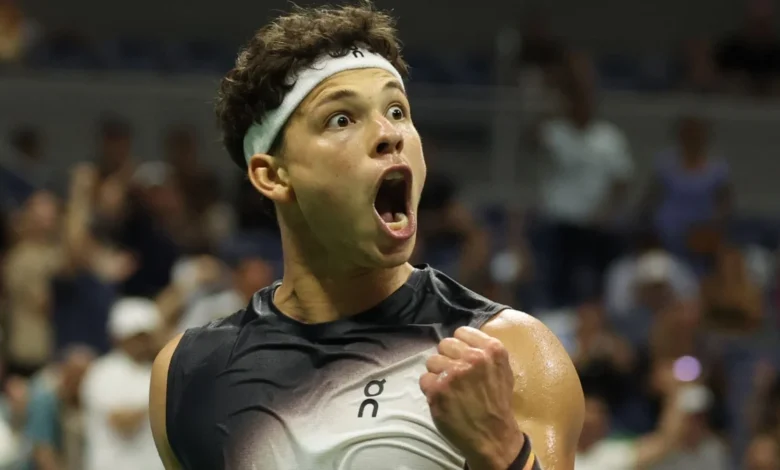
This decision arrives in the wake of significant controversy surrounding the 2026 tournament, most notably the quarter-final clash between American star Ben Shelton and Carlos Alcaraz. The match, a grueling five-set marathon, concluded at 3:33 a.m. local time, leaving the stands at Arthur Ashe Stadium largely vacant and the global television audience struggling to remain engaged as the clock ticked toward dawn.
A Pattern of Midnight Marathon Matches
The incident involving Shelton and Alcaraz was not an isolated anomaly but rather the culmination of a broader trend that has plagued the sport’s major events. During the first six days of the 2026 US Open alone, tournament organizers recorded three matches that extended past 2:00 a.m., with two additional contests pushing beyond 1:00 a.m.
This frequency of late-night scheduling has reignited a fierce debate within the tennis community. Historically, the night sessions at Flushing Meadows were viewed as the pinnacle of the sport—a high-energy, neon-lit spectacle that showcased the world’s best players on the grandest stage in New York City. However, the operational reality of modern tennis, combined with the increasing physical demands placed upon athletes, has transformed this signature feature into a logistical and health-related liability.
Historical Context of Late-Night Finishes
Tennis has long struggled to balance the demands of broadcasters, who prioritize primetime viewership, with the physiological recovery needs of the players. The following data highlights the most extreme instances of late-night finishes in professional singles history:
- Acapulco 2022: Alexander Zverev defeated Jenson Brooksby, finishing at 4:54 a.m.
- Australian Open 2008: Lleyton Hewitt defeated Marcos Baghdatis, finishing at 4:34 a.m.
- Australian Open 2023: Andy Murray defeated Thanasi Kokkinakis, finishing at 4:05 a.m.
- Australian Open 2024: Daniil Medvedev defeated Emil Ruusuvuori, finishing at 3:39 a.m.
- Australian Open 2007: Andreas Seppi defeated Bobby Reynolds, finishing at 3:34 a.m.
- US Open 2026: Ben Shelton defeated Carlos Alcaraz, finishing at 3:33 a.m.
The dominance of the Australian Open in these rankings illustrates that this is a systemic issue across the Grand Slam circuit. While Wimbledon has implemented an 11:00 p.m. local curfew and the French Open has restricted night sessions to a single match to mitigate the risk of extreme delays, the US Open and Australian Open have remained more resistant to such caps, citing the logistical difficulty of navigating massive crowds and the specific demands of their respective urban fanbases.
The Management Perspective: Tiley’s Defense
Craig Tiley, who moved to the USTA after a tenure at Tennis Australia known for its own high-profile late-night finishes, remains steadfast. In a recent interview, he challenged the narrative that tournament scheduling is the primary culprit for these late nights.
"I hear from a lot of people that it finishes too late, and then I say, ‘Okay, and your suggestion is?’ I don’t get anything," Tiley remarked. He argues that the perception of the problem is disconnected from the data. According to Tiley, the average time between points in professional tennis has remained relatively stable over the last decade. He attributes the extended duration of men’s matches not to a lack of efficiency, but to the introduction of the shot clock and the increased use of on-court amenities like towels, which, while necessary, incrementally extend the total match time.
Tiley further emphasized the commercial and fan-experience components of the decision. "We really like the two days and two nights," he noted. "Two full sessions and you get a women’s match and a great men’s match, and that’s what our fans are telling us. They can come out and see three, four, or five hours of entertainment. If it goes really long, that’s a great sporting ticket."
The Player Perspective: Welfare vs. Tradition
The player response to the scheduling has been more nuanced. While many competitors relish the atmosphere of the night sessions, the toll of playing until 3:00 a.m. is becoming impossible to ignore. The debate has merged with a broader push by the Professional Tennis Players Association (PTPA) and top-ranked athletes for improved working conditions and welfare protections.
Frances Tiafoe, a prominent voice on the tour, addressed the possibility of shifting men’s matches to best-of-three sets in early rounds—a solution often floated by critics of the current system. "I think for the men’s, we should stick with three out of five," Tiafoe said. "We’ve seen so many epics in five-setters. Do I love five-setters? Absolutely not. There’s a lot of times where I’m up two sets to love and I’d love to shake hands and go home. But it’s tennis, man."
Tiafoe’s comments underscore the internal conflict many players face: the desire to preserve the historical integrity of the five-set format, which defines the Grand Slam experience, versus the desire for a more predictable and healthy schedule.
Broader Implications and Future Outlook
The US Open’s decision to maintain the status quo is a gamble on the enduring appeal of the "marathon match" as a premium entertainment product. By leaning into the narrative—even using social media to humorously encourage fans to skip work after a late-night thriller—the USTA is attempting to rebrand the inconvenience as a badge of honor for the most dedicated fans.
However, from an operational and medical standpoint, the implications are significant. Sleep deprivation, shortened recovery windows between matches, and the potential for increased injury risk are central concerns for medical staff on the ATP and WTA tours. If a high-profile player were to suffer a tournament-ending injury specifically attributed to fatigue following a late-night match, the USTA could face intense scrutiny regarding its duty of care.
Furthermore, the logistical challenge of moving thousands of fans out of Flushing Meadows in the early hours of the morning presents a growing burden on local New York City transit and security infrastructure. As cities become increasingly sensitive to the impact of major events on local residents, the USTA may eventually find that its autonomy is curtailed by external city regulations, rather than internal policy changes.
Conclusion
For now, the status quo remains. The 2027 US Open will proceed with the same structure that has provided both unforgettable drama and unprecedented fatigue. While the tournament organizers appear confident that their data-driven approach justifies the continuation of current practices, the tension between the sport’s commercial ambitions and the human reality of its athletes continues to simmer.
As the calendar moves toward the next major, the conversation surrounding player welfare and match duration will likely remain at the forefront of the sport’s agenda. Whether this culminates in a change in format or a refinement of the scheduling remains to be seen, but one thing is clear: the demand for tennis as a 24-hour entertainment product is currently colliding with the physical limitations of those who make the sport possible. For the time being, the lights at Arthur Ashe will continue to burn well past midnight, serving as both a beacon for the sport’s popularity and a flashpoint for its future.