Kevin Pietersen embraces role as England white-ball mentor with a mandate to challenge Brendon McCullum

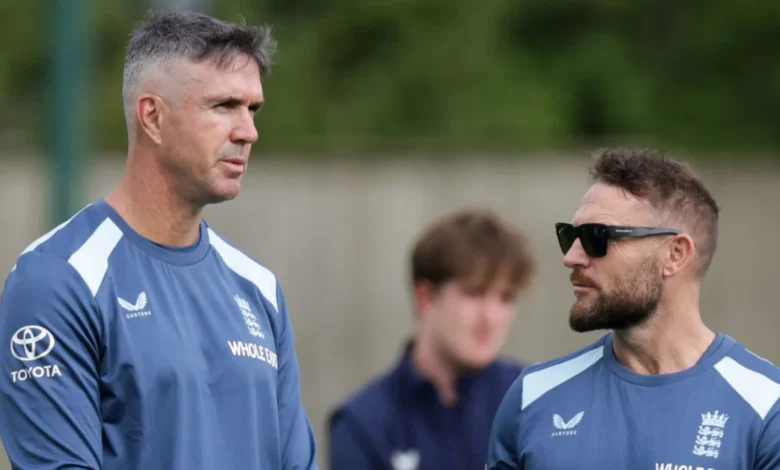
The appointment of former England batting maestro Kevin Pietersen as a specialist mentor for the national white-ball side marks a significant, albeit unconventional, evolution in the team’s coaching structure. Tasked with refining the batting unit’s approach and psychological application, Pietersen has made it clear that his tenure will be defined by rigorous internal debate rather than passive observation. His primary directive, as issued by white-ball head coach Brendon McCullum, is to provide the very critique that once characterized Pietersen’s tenure as an outspoken commentator and analyst.
This strategic partnership began in earnest during the recent series against Sri Lanka, which saw England secure a dominant 3-0 whitewash in the T20 International format, followed by a 2-1 victory in the One Day International (ODI) series. Pietersen’s mandate is scheduled to extend through to the 2027 50-over World Cup, a tournament that serves as the ultimate barometer for the current squad’s trajectory.
A History of Critical Engagement
The dynamic between Pietersen and the England setup has historically been complex. Since his retirement from international cricket in 2014 and his subsequent departure from the professional circuit in 2018, Pietersen frequently occupied the role of an external critic. Notably, during England’s tour of India last January—shortly after McCullum assumed control of the white-ball setup—Pietersen publicly questioned the team’s preparation protocols.
However, rather than viewing this history as a point of contention, McCullum has leveraged it as an asset. When the call was placed to bring the former batsman into the fold, the intention was explicitly to bridge the gap between coaching theory and on-field execution by inviting dissent. Pietersen noted that his initial reaction to the offer was one of trepidation, fearing that his past criticisms had finally caught up with him. Instead, he found an invitation to challenge the status quo, with McCullum encouraging him to identify performance gaps that the existing coaching staff might overlook.
Strategic Objectives and Technical Mentorship
The methodology being introduced by Pietersen centers on "no stone unturned" preparation. During the recent series, his influence was visible in the batting unit’s increased emphasis on the "rotation of strike," a critical component for maintaining momentum in the middle overs of an ODI.
Data from the Sri Lanka series underscores the necessity of this focus. England’s batting performances at The Oval showcased a team capable of high-octane scoring, but also one prone to periods of drift. By focusing on situational awareness, Pietersen aims to temper the inherent "genius" of the squad’s more aggressive players with a more clinical assessment of game states. This is particularly relevant for individuals like Harry Brook, whom Pietersen identifies as a generational talent who occasionally struggles with the perceived ease of the game.
The Rise of Harry Brook as a Tactical Leader
The spotlight remains firmly fixed on Harry Brook, who has emerged as the central figure of this new era. Following the retirement of Ben Stokes from specific formats and the transition of the Test captaincy to Joe Root, Brook has assumed a leadership mantle that goes beyond his vice-captaincy title.
Brendon McCullum’s appraisal of Brook is glowing, describing the Yorkshireman as an "outstanding tactician" who commands immense respect within the dressing room. Statistically, Brook’s impact is undeniable; his 42-ball century in the opening T20I against Sri Lanka stands as the joint-second-fastest in English history. The camaraderie within the team, which McCullum describes as "a group of mates," provides the foundation for this tactical freedom.
Yet, the risk of "brain fade"—a phenomenon both Pietersen and Brook have experienced in their respective careers—remains a concern. Pietersen explains that these lapses often occur because players of such high caliber perceive the game differently, often seeing scoring opportunities that are high-risk but high-reward. His role is not to dampen this flair but to ensure that the timing of such risks aligns with the broader objectives of the match.
Contextualizing England’s White-Ball Ambitions
The broader context of this appointment is England’s ambition to reclaim global dominance in the 50-over format. Since the start of last summer, the T20 side has been formidable, winning 22 of their last 25 completed matches and ascending to the No. 1 spot in the ICC world rankings. The ODI team, currently sitting at sixth, has not enjoyed the same consistency, a reality that McCullum is determined to rectify.
McCullum, who was removed from the England Test coaching role earlier this year, has redirected his full capacity toward the white-ball setup. His goal is to build a "strong, fast, and robust" team capable of maintaining high-octane performance over the duration of a tournament. With the 2027 World Cup to be hosted across South Africa, Zimbabwe, and Namibia, the preparation cycle is now firmly underway. The emphasis on "high-octane speed" suggests a continuation of the aggressive batting philosophy that has come to define England’s recent white-ball evolution, albeit with a more structured approach to situational management provided by mentors like Pietersen.
Implications for the Future of the Coaching Model
The decision to bring in a specialist mentor like Pietersen highlights a shifting trend in elite sports management: the move toward fragmented, high-level expertise. Rather than relying solely on a singular head coach, national setups are increasingly utilizing consultants to address specific psychological and technical barriers.
For England, the implications are twofold. First, it signals an acceptance of accountability. By inviting a critic into the dressing room, the management team is signaling to the players that the environment is one where performance is the only currency that matters. Second, it serves as a long-term developmental strategy. By mentoring players like Brook, Pietersen is essentially helping to shape the next generation of leadership, ensuring that the tactical awareness required to win major ICC trophies is embedded in the players themselves rather than dictated from the balcony.
Chronology of Recent Developments
- January 2024: England’s tour of India highlights deficiencies in white-ball preparation, drawing public criticism from Kevin Pietersen.
- Mid-2024: Brendon McCullum concludes his tenure as England’s Test coach, shifting his primary focus to the white-ball squad.
- August 2024: Pietersen is officially integrated into the coaching setup as a specialist mentor.
- September 2024: England secures a 3-0 T20I whitewash of Sri Lanka, followed by a 2-1 ODI series victory.
- Future Outlook: The team begins a 12-month development cycle leading into the 2027 50-over World Cup, with a focus on tactical consistency and situational awareness.
Looking Toward 2027
As the team looks toward the next World Cup cycle, the partnership between the tactical, data-driven approach of McCullum and the instinctive, high-flair wisdom of Pietersen will be tested. The success of this experiment depends largely on whether the team can maintain its identity—the "high-octane" cricket that has made them a global force—while simultaneously developing the defensive discipline required to navigate long-form tournament play.
The feedback from the dressing room has been overwhelmingly positive, with players noting that the presence of a legend like Pietersen, combined with the clear, modern leadership of McCullum, has created a high-pressure yet supportive environment. If this model holds, England may find the exact balance required to transition from a team that plays "brilliant" cricket in spurts to one that dominates the international landscape with the clinical efficiency of a world-beating unit.
In the final assessment, the appointment of Pietersen is not merely a personnel change; it is a declaration of intent. By fostering an environment where even the most seasoned coaches are open to being challenged, England is attempting to remove the complacency that often follows periods of success. Whether this leads to another World Cup title remains to be seen, but the intent to leave "no stone unturned" is now the defining feature of the team’s internal culture.