Ronald Acuña Jr. Denies Podcast Comments Were Aimed at Former Manager Brian Snitker Amid Social Media Firestorm

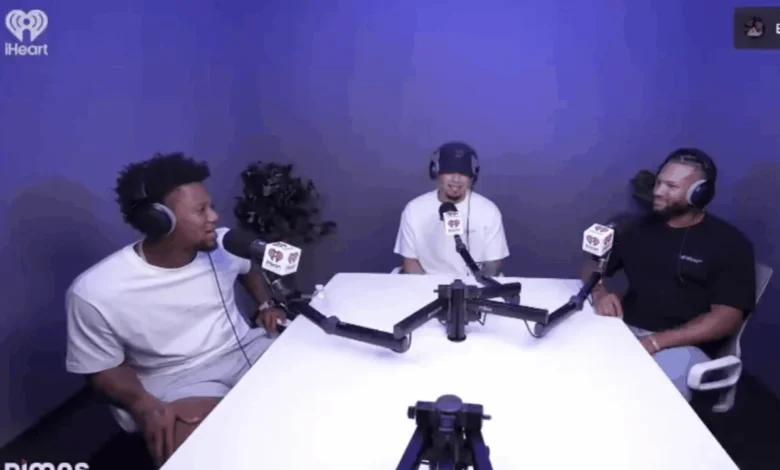
The intersection of modern athlete media ventures and traditional clubhouse privacy collided dramatically this week, forcing Atlanta Braves star outfielder Ronald Acuña Jr. to publicly clarify comments made on his digital podcast, La Bestia. What initially registered across social media platforms as a blistering critique of former Braves manager Brian Snitker has since ignited a complex debate regarding translation accuracy, past organizational tensions, and the delicate boundaries players navigate when launching independent media projects while still active in Major League Baseball.
The controversy originated during Monday’s episode of La Bestia, a Spanish-language podcast hosted by Acuña that features prominent MLB guests. During this particular installment, Acuña was joined by Milwaukee Brewers standouts William Contreras and Jackson Chourio. The conversation drifted toward the Atlanta Braves organization, specifically touching upon the team’s current dynamic following the conclusion of Snitker’s long tenure at the helm. Contreras posed a general query regarding the coaching staff in the first year following Snitker’s departure into an advisory role, without explicitly naming the veteran skipper.
In response, Acuña offered a blunt assessment in Spanish, which was swiftly captured and translated for English-speaking audiences by prominent social media translator Phillip Feliz. According to Feliz’s initial transcription, Acuña remarked, "All good bro. They didn’t bother me again. You know that c—ksucker thought he was the king."
As the clip circulated on X (formerly Twitter), the situation compounded when Contreras added the term "El gerente" shortly into Acuña’s subsequent sentence. While "gerente" literally translates to manager in various business contexts, in baseball terminology it typically refers to a general manager rather than a field manager. Nevertheless, the combination of Acuña’s provocative language, Contreras’ interjection, and the timing—dropping just as the Braves faced elimination in the National League Division Series against the Los Angeles Dodgers—created an immediate firestorm. Speculation instantly fixated on Brian Snitker, who had managed Acuña from his rookie season in 2018 through the 2025 campaign, securing six division titles and a World Series championship along the way.
The Chronology of the Controversy and Defense of Translation

As digital backlash mounted and fans questioned whether the outfielder was taking a malicious parting shot at his former mentor, the translation itself became a secondary battleground. Critics targeted Phillip Feliz, accusing him of misrepresenting the audio or manufacturing controversy for social media engagement ahead of a crucial postseason game.
Feliz fired back aggressively through a video posted to his X account on Tuesday morning, defending the integrity of his work and challenging those questioning his fluency. He emphasized that his primary role as an independent translator is independent of MLB club payrolls unless formally contracted. Feliz further noted that the explosive clip was not uncovered via deep digging or espionage, but rather published willingly by Acuña and his production team on their official podcast feed less than 24 hours prior. Feliz maintained that any listener fluent in colloquial Spanish would recognize the severity and targeted nature of the commentary, regardless of whether a specific title was explicitly uttered in the immediate snippet.
By Wednesday night, following the Braves’ elimination from the postseason at the hands of the Dodgers, Acuña addressed the controversy directly in an interview with The Athletic. Speaking through an interpreter, the 28-year-old outfielder definitively denied that his remarks were directed at Brian Snitker. However, he refused to identify the specific individual he was referencing, citing a strict unwritten code within professional sports clubhouses.
"I’m not going to violate that code," Acuña stated via his interpreter. "We were just talking about the past, even things all the way back to the minor leagues."
Despite his denial, the ambiguity surrounding the identity of the person in question left room for skepticism, given the well-documented history of friction between Acuña and Snitker during their years together in Atlanta.
A Historical Context of Friction Between Star and Skipper

To understand why the public immediately linked Acuña’s remarks to Snitker, observers pointed to several high-profile public disagreements that occurred during their tenure together. Despite their collective success, including the 2021 World Series title, the dynamic between the fiery, generational talent and the old-school manager was periodically punctuated by public disciplinary actions.
One of the most notable incidents occurred on August 18, 2019. During a game against the Dodgers, a then-21-year-old Acuñahanded a routine fly ball hit the right-field wall, failing to run hard out of the batter’s box. Believing the ball was headed out of the park, Acuña settled for a single rather than an aggressive hustle double. Visibly frustrated by the lack of effort, Snitker immediately pulled Acuña from the game in the middle of the inning, a decisive managerial move that made national headlines and underscored Snitker’s zero-tolerance policy regarding hustle.
Similar organizational tensions surfaced intermittently in subsequent seasons. In 2025, outfielder Jarred Kelenic admired a long hit and was thrown out attempting to stretch it into an extra-base hit against the Minnesota Twins. When asked by reporters after the game whether he intended to address the base-running error with Kelenic, Snitker offered a terse response: "Was I supposed to?"
At the time, Acuña was sidelined while rehabbing a torn ACL. He took to social media to voice his opinion on the double standard, posting a pointed remark on X—which was later deleted—stating, "If it were me, they would take me out of the game." Acuña later issued an apology to both Snitker and his teammates, characterizing the post as a product of emotional frustration while recovering from a major injury.
Following the conclusion of the 2025 season, which saw the Braves miss the postseason, Snitker transitioned out of the dugout and into a senior advisory role within the front office. Longtime bench coach Walt Weiss took over managerial duties for the 2026 campaign, leading the club back to the postseason before their eventual elimination in the National League Division Series.
Statistical Decline and Postseason Struggles

The podcast controversy arrived during a difficult period on the field for Acuña, who endured a challenging 2026 campaign characterized by a prolonged recovery timeline and an unusual offensive slump. Across 107 regular-season games, Acuña posted a .255 batting average, hitting 20 home runs and driving in 55 runs.
His struggles carried over into the postseason. During the Braves’ playoff run, Acuña managed just 3 hits in 24 at-bats across seven games, failing to hit a single home run or record an RBI, resulting in a stark .425 OPS. Historical data highlights that Acuña has not hit a home run in postseason play since the 2020 NLDS against the Miami Marlins, having missed the entirety of the Braves’ 2021 championship run due to his first major knee injury.
Broader Implications for Athlete Media Ventures
The incident surrounding La Bestia highlights a growing trend across professional sports: active athletes taking control of their media narratives through podcasts, digital streaming shows, and personal social media channels. While these platforms offer fans unprecedented access to the personalities and unfiltered thoughts of star players, they also present substantial risks for front offices, coaching staffs, and team chemistry.
When athletes step behind a microphone during a demanding pennant race or immediately following a postseason exit, the barrier between casual clubhouse banter and public news breaks down entirely. For the Atlanta Braves organization, the episode serves as a cautionary tale regarding the management of internal player communications in the digital age.
As Acuña looks toward the 2027 season, the primary challenge will be moving past the digital distraction, regaining his elite offensive form, and repairing any lingering perception of organizational friction. Whether the unidentified subject of his podcast remarks ever comes to light remains to be seen, but the episode has permanently altered the conversation surrounding the boundaries of player-led media in Major League Baseball.