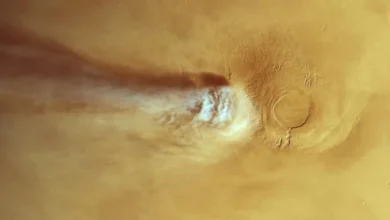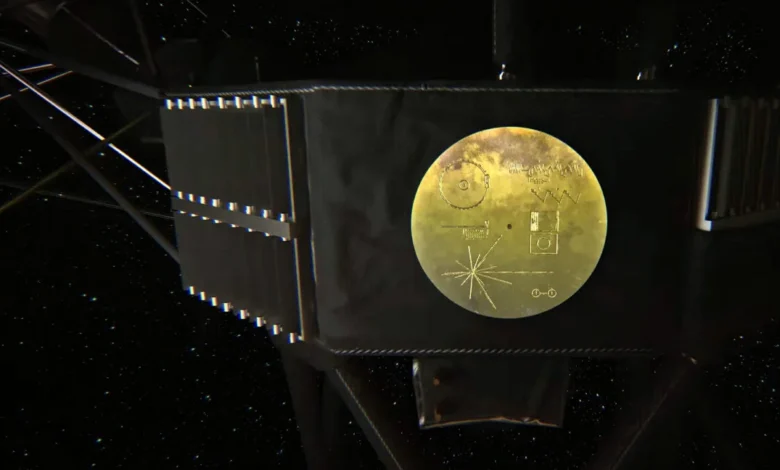
On November 18, 2026, the Voyager 1 spacecraft officially reached a significant milestone in its epic voyage through the cosmos: it is now one light-day away from Earth. This distance, representing the span that a particle of light travels in a 24-hour period—approximately 16 billion miles or 25.9 billion kilometers—serves as a poignant reminder of humanity’s reach into the interstellar medium. As the probe continues its silent transit through the vacuum, space historians are taking this opportunity to re-examine the physical legacy it carries: the Voyager Golden Record. While the contents of the record—the music, sounds, and greetings from Earth—have been extensively documented, recent research by former NASA Johnson Space Center historian Glen Swanson has uncovered long-overlooked details regarding the hardware itself, specifically the protective cover and the duplicate copies distributed across the globe.
A Message in a Bottle: The Genesis of the Golden Record
The Voyager program, which launched in 1977, was initially conceived as a grand tour of the outer planets. However, the vision of Carl Sagan and his team at Cornell University transformed the probes into something more: they became messengers for humanity. The Golden Record, a 12-inch gold-plated copper phonograph disc, was designed to be an archive of terrestrial life, intended to be understood by an extraterrestrial intelligence.
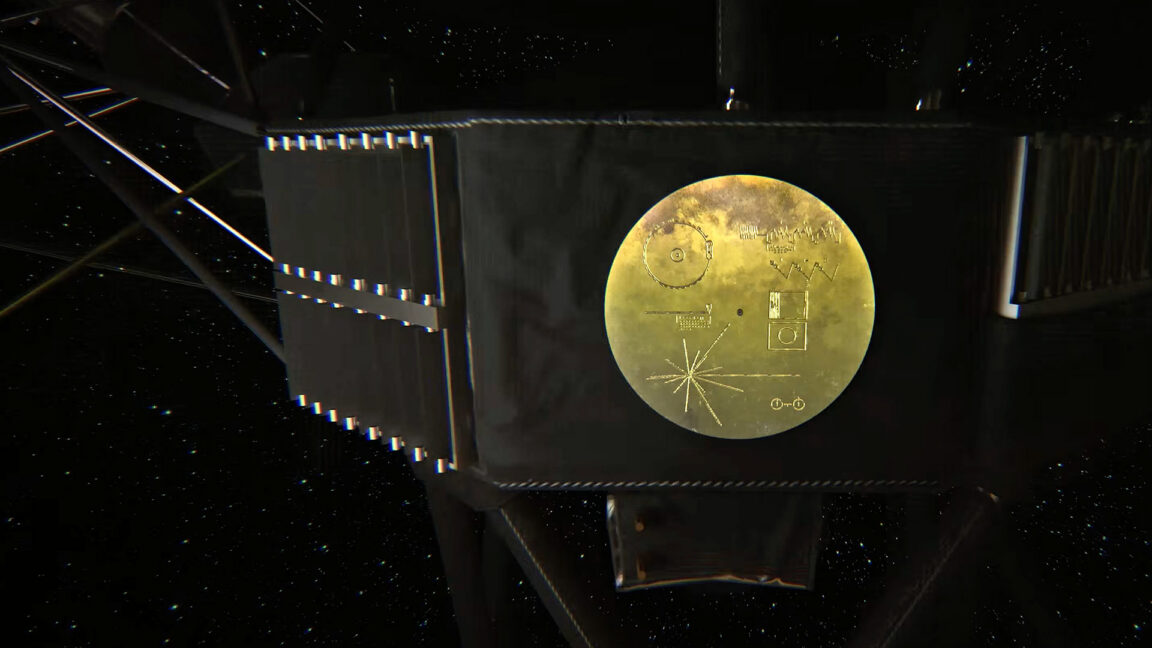
The record contains 115 images, a variety of natural sounds, musical selections from different cultures and eras, and spoken greetings in 55 ancient and modern languages. The physical housing of this record is a protective aluminum cover, electroplated with ultra-pure uranium-238, which acts as a radioactive clock to help a potential finder date the artifact. The exterior of this cover is inscribed with symbols explaining how to play the record, alongside a map of the Sun’s location relative to 14 pulsars.
The Hidden Redundancy: Uncovering the Interior Instructions
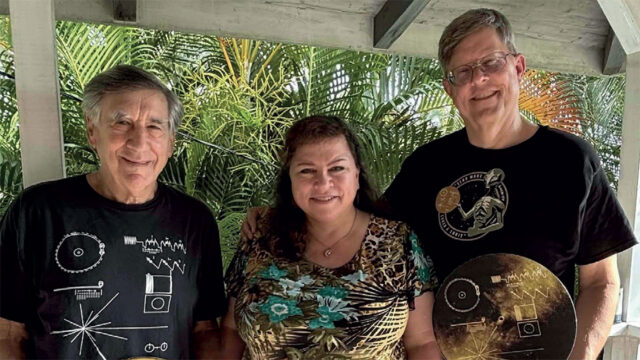
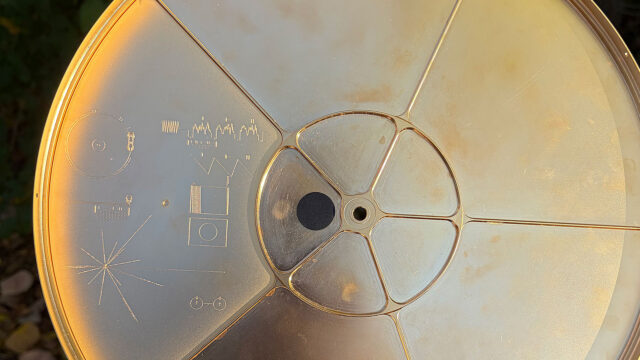
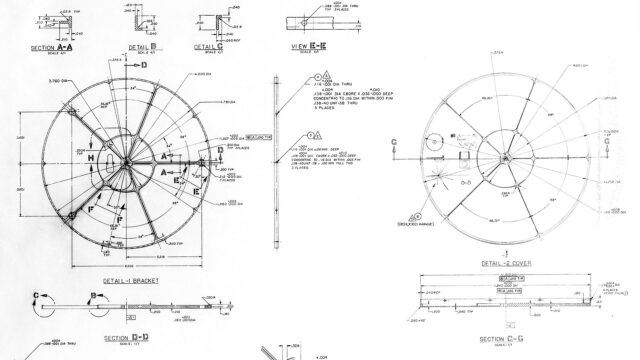
For decades, the focus of historians and the public alike remained on the exterior of the Golden Record’s cover. However, Glen Swanson, while conducting research for his upcoming book titled "Voyager’s Golden Record: An Enduring Reflection," scheduled for release by the University of Chicago Press in August 2027, stumbled upon a technical detail that had been largely forgotten by the public record. Through the examination of original engineering blueprints and technical correspondence, Swanson confirmed that the designers had included a crucial redundancy: a second set of operating instructions etched onto the inside of the protective cover.
This decision reflects a sophisticated approach to long-term engineering. The designers, led by Jon Lomberg, the design director for the project, were acutely aware of the harsh realities of space travel. They understood that the exterior of the probe would be subjected to micrometeorite impacts, cosmic radiation, and dust abrasion over the course of millennia. If the exterior instructions were rendered unreadable by the wear and tear of interstellar transit, the internal, protected instructions would remain pristine, ensuring that a future civilization could still decipher the data contained within.
Swanson’s research clarifies that while there were hints of this internal design in pre-launch photography, the presence of various equipment bags and the limitations of the camera angles at the time obscured the evidence. It was only by reconciling the original schematics with the physical artifacts that the full extent of this "fail-safe" engineering became clear.
A Chronology of the Golden Record’s Dissemination
The production of the Golden Record was a logistical challenge, involving the creation of the original flight copies and a series of duplicates for historical record-keeping. The initial plan called for three records: one for each of the two Voyager probes and a flight-ready spare. However, historical documents indicate that in the months following the 1977 launches, NASA authorized the production of additional copies.
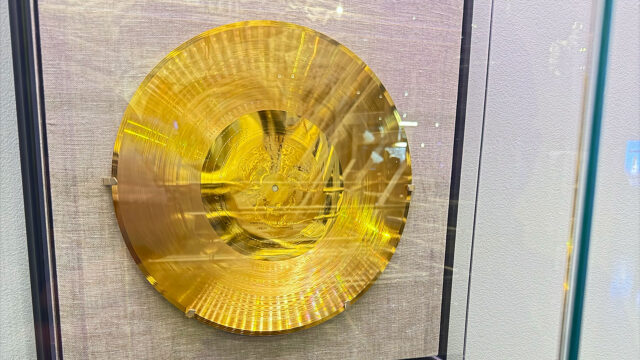
The exact count of these duplicates has been a subject of minor historical debate, with estimates ranging from six to fourteen. Swanson’s rigorous investigation has helped settle much of this confusion. He has verified that official duplicates currently reside in several high-profile institutions, including the United Nations in New York, the Library of Congress, NASA Headquarters, and the Smithsonian National Air and Space Museum. Other copies were distributed to major NASA field centers, such as the Johnson Space Center in Texas, the Kennedy Space Center in Florida, and the Goddard Space Flight Center in Maryland.
The provenance of some of these copies remains a subject of intrigue. For instance, NASA Headquarters did not originally receive a copy in the initial distribution, leading researchers to conclude that the copy eventually held there was likely transferred from the personal collection of former President Jimmy Carter, who was gifted a record during his tenure.
Technical Resilience and the Longevity of the Archive
The durability of the Golden Record is a subject of significant interest for materials scientists. The choice of materials and the method of encoding were deliberate attempts to combat the entropy of space. The record is not merely a piece of metal; it is a time capsule built to survive for up to a billion years. The radioactive isotope U-238, with a half-life of 4.468 billion years, allows any advanced civilization to calculate exactly how long the record has been traveling.
Swanson notes that the confidence in the record’s longevity is based on data regarding the density of the interstellar medium and the probability of high-velocity impacts. While the exterior of the cover will undoubtedly degrade, the internal instructions and the record itself are expected to remain intact, protected by the structural integrity of the assembly.
The Broader Impact: Why the Hardware Matters
The renewed focus on the physical hardware of the Voyager probes provides a vital lesson in the history of space exploration. It shifts the narrative from the "message" (the music and pictures) to the "medium" (the engineering and design philosophy).
By analyzing the redundant instructions and the distribution of the duplicates, researchers are gaining a better understanding of how the 1970s scientific community approached the challenge of long-term communication. The act of duplicating these records and storing them in major government and scientific institutions reflects a desire by the Voyager team to ensure that even if the spacecraft were never found, the knowledge of their mission would persist on Earth.
In recent years, the cultural cachet of the Golden Record has only grown, with various replicas being produced for collectors and enthusiasts. However, as Swanson points out, the value of the original duplicates lies in their role as historical artifacts that bridge the gap between the infancy of our space program and the vast, unknown future.
Looking Ahead: The 50th Anniversary
As the 50th anniversary of the Voyager launches approaches in 2027, the work of historians like Glen Swanson and designers like Jon Lomberg serves to preserve the legacy of a mission that defined an era. The upcoming publication of "Voyager’s Golden Record: An Enduring Reflection" is expected to provide a definitive account of the project, settling long-standing questions about the production numbers and the engineering nuances that have kept the probes communicating with Earth for nearly half a century.
As Voyager 1 continues its journey into the unknown, drifting further into the vast silence of the interstellar medium, it remains the most distant human-made object in existence. It is a monument to human curiosity, carrying with it not just the sounds of our world, but the meticulous care of those who sought to ensure that, should our civilization one day fade, a small, golden reminder of our existence would endure among the stars.