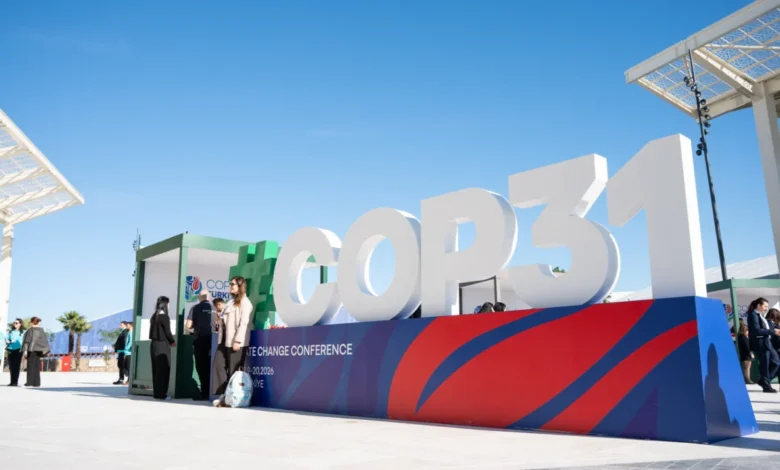
The thirty-first United Nations Climate Change Conference, known as COP31, officially commenced today in Antalya, Türkiye, marking another pivotal chapter in the decades-long international effort to mitigate global warming. As delegates from over 190 nations gather to navigate the complexities of the Paris Agreement, the atmosphere is defined by a dichotomy: the urgent, scientifically backed necessity for aggressive decarbonization and the persistent, often gridlocked nature of geopolitical negotiations. While Türkiye hosts the event, the Australian government assumes the presidency of the negotiations, a unique arrangement that highlights the complex diplomatic maneuvering required to keep climate action on the global agenda.
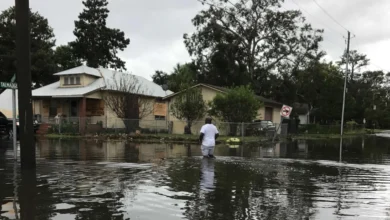
The conference arrives at a moment of profound environmental volatility. Data from the World Meteorological Organization indicates that the ongoing El Niño cycle has pushed global temperatures to unprecedented levels, shattering previous records and exacerbating extreme weather events across the globe. From the catastrophic flooding in Nepal to the accelerating loss of biodiversity in the Amazon basin, the physical manifestations of the climate crisis are no longer theoretical threats but immediate economic and humanitarian realities.
A Chronology of Climate Diplomacy
To understand the stakes of COP31, one must look at the evolution of the United Nations Framework Convention on Climate Change (UNFCCC). Since the adoption of the treaty at the 1992 Earth Summit in Rio de Janeiro, the process has moved from broad, non-binding agreements to the more robust, albeit voluntary, framework established in Paris in 2015.
- 1997: The Kyoto Protocol: The first significant international attempt to set legally binding emissions reduction targets for developed countries. It proved limited in scope and lacked the participation of the world’s largest emitters.
- 2009: Copenhagen (COP15): Widely viewed as a diplomatic failure at the time, it failed to produce a successor to Kyoto. However, historical analysis now suggests it was the turning point that forced the transition toward the "bottom-up" pledge system used today.
- 2015: Paris Agreement (COP21): A landmark consensus where nearly every nation committed to limiting global temperature rise to "well below 2 degrees Celsius," with an aspirational goal of 1.5 degrees.
- 2023: Dubai (COP28): A watershed moment in nomenclature, as for the first time, a UN climate agreement explicitly referenced the need to "transition away from fossil fuels."
- 2025: Belém (COP30): Held in the heart of the Amazon, the conference faced significant criticism for its failure to secure actionable commitments regarding the permanent phaseout of coal, oil, and gas.
The Fossil Fuel Dilemma: Naming the Source
For nearly thirty years, the central driver of the climate crisis—the combustion of fossil fuels—remained largely absent from the formal language of international climate summits. While COP28 finally broke the taboo by acknowledging the need to move away from fossil energy systems, the lack of a defined timeline or mechanism for a global phaseout remains the conference’s most glaring omission.
Economists and climate scientists argue that as long as the discourse focuses on emissions reductions without addressing the supply-side reality of oil, gas, and coal production, the goals of the Paris Agreement remain mathematically impossible to reach. The "fossil fuel gap"—the difference between the amount of carbon we can afford to burn to stay under 1.5 degrees and the amount currently planned for extraction by national governments—continues to widen.
The Absence of the United States
A notable absence hangs over the halls of the Antalya venue: the lack of an official delegation from the United States. For the second consecutive year, the world’s second-largest greenhouse gas emitter has chosen to sit out the formal negotiations. This withdrawal, following the shifting domestic political landscape in Washington, creates a significant vacuum in global leadership.
International observers and former diplomats have expressed concern that the absence of the U.S. weakens the collective leverage of the summit. As former Special Climate Envoy John Kerry noted during previous instances of American withdrawal, the climate crisis is a systemic issue that no single nation can solve in isolation. The vacuum is not just diplomatic; it is financial. The U.S. has historically been a key contributor to climate finance mechanisms meant to assist developing nations in transitioning to green energy. Without this participation, the burden of funding shifts to other major economies, often straining existing alliances.
Supporting Data and Scientific Projections
The urgency of the moment is underscored by the latest findings from the United Nations Environment Programme (UNEP). The 2026 Emissions Gap Report confirms that current Nationally Determined Contributions (NDCs) are insufficient to prevent a breach of the 1.5-degree threshold.
- Current Warming Trajectory: Based on existing policies, the planet is on track for approximately 2.6 degrees Celsius of warming by 2100.
- Renewable Energy Gains: Despite policy failures, the global transition to renewable energy has accelerated, with solar and wind capacity reaching record-breaking expansion rates in 2025 and 2026.
- Public Sentiment: Independent polling consistently shows that between 80% and 89% of the global population supports more aggressive government action on climate, highlighting a growing disconnect between public demand and political output.
The Shift Toward Plurilateralism
While the formal COP process faces stagnation, a new trend is emerging: plurilateral cooperation. In April 2026, over 60 nations met in Santa Marta, Colombia, to discuss a fossil fuel phaseout outside the constraints of the UN’s consensus-based rules. This "coalition of the willing" approach is seen by many analysts as a necessary evolution. By forming smaller, more ambitious blocs, countries can bypass the veto power of fossil-fuel-dependent states, creating a "race to the top" in regulatory standards and green technology investment.
Implications and Future Outlook
The implications of COP31 extend far beyond the two weeks of discussions in Antalya. If the summit produces only vague, aspirational language, it risks deepening the global sense of climate cynicism. However, if the gathered nations can build upon the momentum generated by the Santa Marta process, the conference could serve as a catalyst for a more decentralized, effective model of climate governance.
Johan Rockström, director of the Potsdam Institute for Climate Impact Research, has frequently emphasized that while the window for maintaining a livable climate is "rapidly shutting," it is not yet closed. The challenge for the Australian-led presidency will be to bridge the divide between the entrenched interests of major carbon producers and the existential needs of the most vulnerable nations.
As the proceedings unfold, the world will be watching to see if delegates can move past the rhetorical traps of the past. The history of the UNFCCC shows that while formal summits often fail to provide the "silver bullet" solution that activists hope for, they nonetheless act as a barometer for what is politically possible. The goal for COP31 is not necessarily to finalize a grand, perfect treaty, but to shift the global baseline so that the transition away from fossil fuels moves from an abstract ambition to an inescapable economic reality.
Ultimately, the success of the Antalya summit will be measured not by the length of its final declaration, but by the tangible shifts in national energy policies that follow in the months ahead. The climate crisis has long since moved past the point where it can be managed by summitry alone; it now requires a fundamental restructuring of the global energy economy, a task that remains the most daunting challenge of the 21st century.