In the coastal city of Brunswick, Georgia, the intersection of an industrial past and a climate-impacted future has created a precarious environment for local residents. As rising sea levels and intensifying storm surges become the new reality for the Atlantic coast, the containment of decades-old toxic waste is facing unprecedented challenges. To address these burgeoning risks, a consortium of six major research institutions has announced the launch of Georgia’s first dedicated Superfund research center, backed by a $15 million grant from the National Institute of Environmental Health Sciences (NIEHS). This five-year initiative aims to investigate the health impacts of legacy pollution while modeling how climate change may mobilize hazardous substances currently sequestered in the soil and water of Glynn County.
The initiative comes at a critical juncture for the region. Glynn County is home to four of the nation’s most contaminated industrial sites, designated as Superfund sites by the U.S. Environmental Protection Agency (EPA). For decades, residents in neighborhoods adjacent to these sites have lived with the knowledge that their soil, air, and groundwater harbor dangerous chemicals, including mercury, polychlorinated biphenyls (PCBs), and toxaphene. Now, the added variable of frequent flooding is transforming a localized environmental concern into a broader public health crisis.
The Local Reality: Life Near the Waterfront
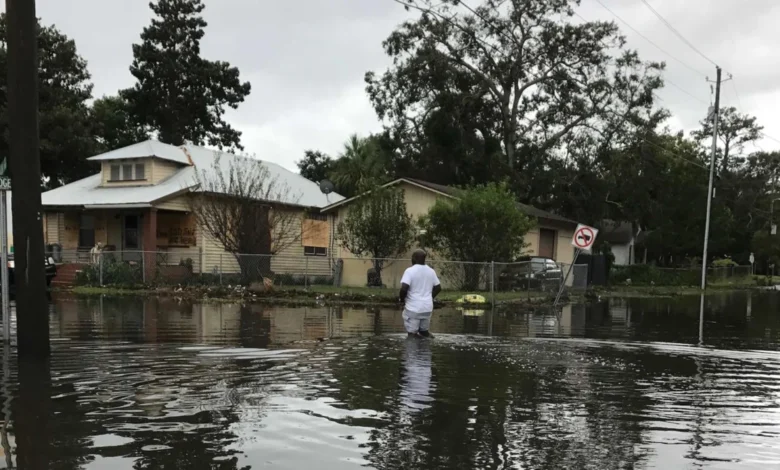
For residents like Semona Holmes, the threat of environmental contamination is not a theoretical abstraction but a daily lived experience. Living just across the road from the Brunswick waterfront, Holmes’ property is frequently inundated. When heavy rains coincide with high tides, her street is transformed into what she describes as a river, with floodwaters occasionally reaching knee-deep. Following major hurricanes, the flooding has been severe enough to require neighbors to navigate the streets by canoe.
While the physical inconvenience of flooding is significant, the primary concern for the community is the composition of the water. Holmes lives approximately half a mile from a former pesticide manufacturing plant, a site that remains a focal point for federal cleanup efforts. The fear is that as water moves across these contaminated landscapes, it picks up and redistributes toxic residues throughout the residential areas. "Everything from that chemical plant has flowed into our community," Holmes noted, reflecting a sentiment of deep-seated anxiety shared by many in Glynn County.
The proximity of sensitive populations to these sites further heightens the stakes. Holmes’ grandchildren attend an elementary school located just blocks from a toxic site. The concern is that children playing on playgrounds or in backyards may be coming into direct contact with contaminated soil or water, leading to long-term health complications that may not manifest for years.
A Multi-Institutional Scientific Response
The newly established Superfund research center represents a massive scaling up of scientific scrutiny in the region. The $15 million project brings together experts from Emory University, the University of Georgia, Georgia Tech, Morehouse School of Medicine, Spelman College, and Texas Tech University. This interdisciplinary team will focus on Glynn County’s four toxic Superfund sites, employing a dual-track approach to research.
According to Noah Scovronick, an assistant professor of environmental health at Emory University’s Rollins School of Public Health and a lead researcher on the project, the mission is twofold. The first objective is to provide a retrospective analysis of the health effects stemming from past chemical exposures. The second is a proactive effort to mitigate future risks. This involves conducting extensive environmental sampling to determine current exposure pathways—how chemicals move from the sites into the air, soil, and local food chains—and modeling how these pathways will change under various climate scenarios.
A central component of the research involves assessing the "climate resilience" of existing remediation measures. Many Superfund sites utilize "caps"—layers of clay, geotextiles, or concrete—to seal in toxic materials and prevent them from leaching. However, these engineering solutions were often designed based on historical weather patterns that did not account for the rapid sea-level rise and increased storm intensity currently observed along the Georgia coast. If a cap is breached by a storm surge or eroded by rising tides, the contained toxins could be released into the surrounding ecosystem.
The Industrial Legacy of Glynn County
To understand the urgency of the new research initiative, one must look at the specific industrial history of Brunswick and the surrounding areas. Glynn County’s economy was historically tied to heavy industry, including chemical manufacturing, wood treatment, and pulp mills. While these industries provided jobs and economic growth, they left behind a legacy of environmental degradation.
The four primary Superfund sites in the county include:
- LCP Chemicals Site: Once a chlor-alkali plant, this site is heavily contaminated with mercury, PCBs, and lead. The contamination affected the salt marshes of Purvis Creek, leading to long-standing fish consumption advisories.
- Hercules 009 Landfill: This site was used for the disposal of toxaphene, a persistent organic pollutant and pesticide. Although the landfill was capped, its proximity to residential areas and the potential for groundwater leaching remain points of concern.
- Terry Creek Dredge Spoil Areas: This site consists of areas where contaminated sediments from Terry Creek were deposited. The primary contaminant here is also toxaphene, resulting from the operations of the nearby Hercules plant.
- Brunswick Wood Preserving: This former wood treatment facility utilized creosote and pentachlorophenol, chemicals known to be harmful to human health. Cleanup has involved the removal of thousands of tons of contaminated soil, but monitoring continues.
The persistence of these chemicals is a major factor in the community’s health concerns. PCBs and mercury, for example, do not break down easily in the environment and can bioaccumulate in the fatty tissues of fish and shellfish, which are a dietary staple for many in the coastal region.
Climate Change as a Threat Multiplier
The research center’s focus on climate change is supported by broader data regarding the vulnerability of toxic sites. A 2019 report by the U.S. Government Accountability Office (GAO) found that approximately 60 percent of non-federal Superfund sites are located in areas that may be impacted by climate change-related hazards, such as flooding, storm surges, and wildfires.
In Georgia, sea levels have risen by approximately 10 inches since 1950, and the rate of rise is accelerating. High-tide flooding, often referred to as "nuisance flooding," has become significantly more frequent in coastal cities like Brunswick and Savannah. For a Superfund site located in a low-lying marshy area, even a minor increase in the water table can push contaminants closer to the surface or into the groundwater system.
The research team plans to use advanced hydrological modeling to predict how different sea-level rise scenarios will impact the structural integrity of the Glynn County sites. By identifying which areas are most at risk of breaching, they hope to provide the EPA and local authorities with the data needed to reinforce these sites before a catastrophic weather event occurs.
Public Health and Community Engagement
A distinguishing feature of this new initiative is its commitment to community-based participatory research. The scientists involved have already begun meeting with residents like Semona Holmes to ensure that their research questions align with the actual concerns of the people living near the sites.
Residents have long called for more comprehensive health monitoring. Many families in the area have already taken self-protective measures, such as refusing to drink tap water or abstaining from eating locally caught seafood. However, without definitive data on their personal exposure levels, they remain in a state of perpetual uncertainty regarding their health and the health of their children.
The research center will conduct toxicological studies to better understand the specific links between the chemicals found in Glynn County and local health outcomes. This includes investigating potential clusters of respiratory issues, developmental delays in children, and certain types of cancer. By documenting these links, the researchers aim to provide a scientific basis for future healthcare interventions and policy changes.
The Path Toward Accountability and Action
For the residents of Brunswick, the $15 million grant represents more than just a scientific endeavor; it is a step toward acknowledgment and potential justice. For decades, many in the community have felt overlooked by the industrial entities that profited while polluting their environment.
Semona Holmes emphasizes that while data and documentation are vital, they must lead to tangible improvements. She argues that the companies responsible for the pollution must acknowledge the impact of their actions on the local population. "It shows that you care about humanity," she said. "And that you are able to acknowledge that, ‘Yeah, by our actions, we have possibly contaminated an entire county.’"
Beyond acknowledgment, the community is looking for "continued action." This includes more aggressive remediation efforts that account for the 21st-century reality of climate change, as well as improved infrastructure to protect residential neighborhoods from the toxic runoff that accompanies flooding.
Broader Implications for Environmental Policy
The work being done in Georgia will likely serve as a model for other coastal communities facing similar challenges. From the Gulf Coast to the Pacific Northwest, legacy industrial sites are increasingly threatened by the effects of a warming planet. The methods developed by the Georgia consortium—integrating climate modeling with toxicological research and community engagement—could provide a blueprint for the EPA’s national Superfund program.
As the five-year study commences, the eyes of the environmental and public health communities will be on Glynn County. The findings will not only inform the local cleanup strategy but will also contribute to a larger national conversation about environmental justice and the long-term costs of industrialization. For the people of Brunswick, the hope is that this influx of scientific resources will finally provide the clarity and protection they have sought for generations, ensuring that their coastal home remains a safe place for their children and grandchildren to live.