Bronx Zoo Rescues Dozens of Parrots Trafficked Through the U.S.-Mexico Border in Illegal Wildlife Trade Crackdown

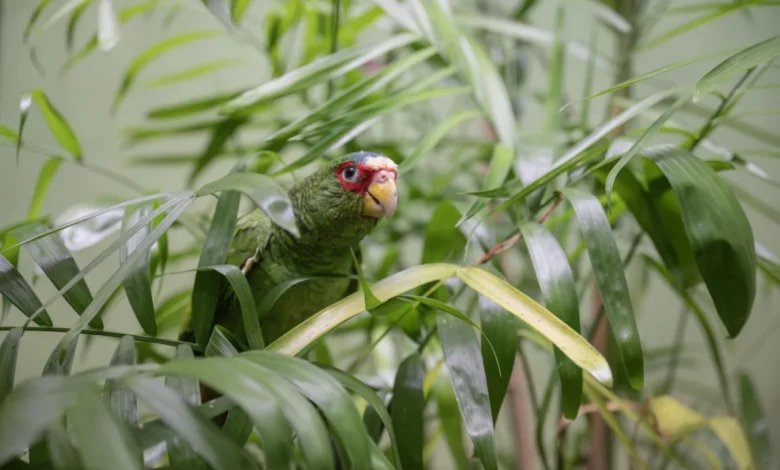
Over the past seventeen months, the Wildlife Conservation Society’s (WCS) Bronx Zoo in New York City has become a critical sanctuary for dozens of exotic parrots intercepted at the United States-Mexico border. These vulnerable birds—predominantly white-fronted Amazons and orange-fronted conures—were torn from their natural habitats in Central America and Mexico to supply the lucrative and destructive international black market for exotic pets.
The successful rescue operations are the result of coordinated efforts between federal law enforcement, specifically the United States Fish and Wildlife Service (USFWS), and specialized wildlife care professionals at the Bronx Zoo. As global wildlife trafficking continues to pressure native bird populations, institutional sanctuaries play a vital frontline role in intercepting, rehabilitating, and securing the futures of confiscated animals.
Chronology of Border Interceptions and Zoo Intake
The enforcement actions unfolded across multiple operations spanning nearly a year and a half. According to WCS records, the USFWS intercepted the group of orange-fronted conures during three distinct enforcement actions at the southern U.S. border over the 17-month timeline. The white-fronted Amazons arrived in subsequent operations over the latter half of that window.
Upon arrival at the Bronx Zoo, the birds enter a rigorous protocol managed by the institution’s veterinary and ornithology departments. Because smuggled animals are frequently transported in cramped, unsanitary, and stressful conditions without adequate food or water, immediate medical evaluation is essential.
Veterinary teams conduct comprehensive health screenings, treat dehydration, malnutrition, and stress-induced illnesses, and monitor the birds through mandatory quarantine periods. Once stabilized, the zoo’s animal care staff works to find long-term placements for birds that cannot safely be returned to the wild—a common fate for trafficked wildlife that have lost their natural survival skills or been exposed to captive pathogens.
Anatomy of the Trafficking Victims: White-Fronted Amazons and Orange-Fronted Conures
The birds rescued at the border represent two distinct, vibrant species native to the tropical and subtropical regions of Mexico and Central America.
The white-fronted Amazon (Amazona albifrons) holds the distinction of being the smallest of all Amazon parrots. Known for their intelligence and complex vocalizations, these birds possess striking plumage. They are also one of the rare parrot species that exhibit sexual dimorphism, meaning males and females can be visually distinguished by their feathers. Both sexes share a white patch on the forehead, bright red skin around the eyes, and yellowish bills, but males feature distinct red shoulders, whereas females sport green shoulders.
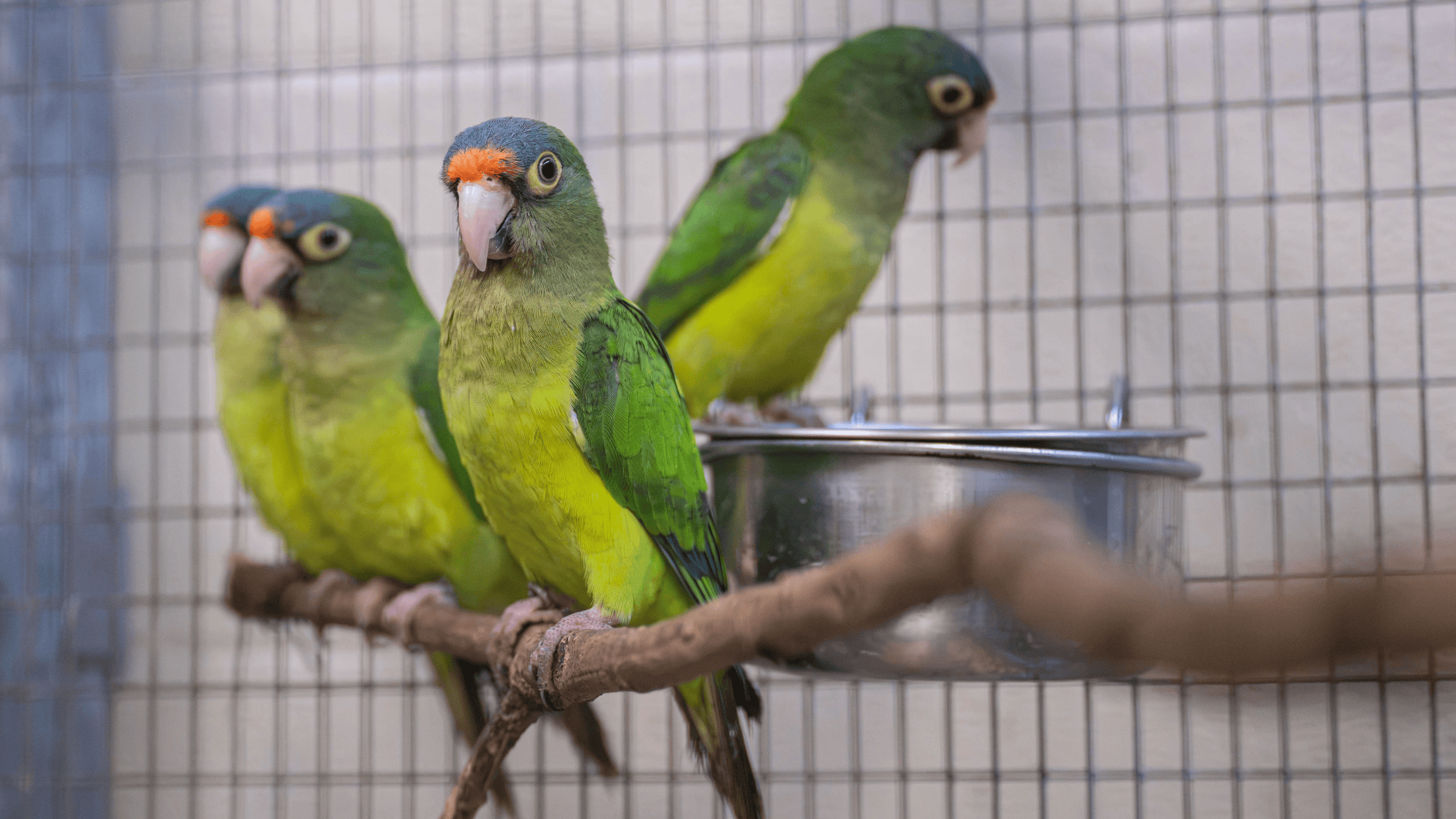
The orange-fronted conures (Eupsittula canicularis), alternatively known as half-moon conures or Petz’s conures, naturally inhabit open woodlands, forest edges, and savanna environments. Sporting brilliant green and blue feathers accented by a distinct orange patch on the forehead, these social birds typically live in tight-knit flocks in the wild.
While the International Union for Conservation of Nature (IUCN) Red List currently classifies both species as of "Least Concern," conservationists emphasize that this status is a baseline, not a guarantee of safety. Rapid habitat loss coupled with relentless poaching for the pet trade threatens to destabilize local populations across their native ranges.
The Mechanics and Scale of the Illegal Wildlife Pet Trade
The illegal wildlife trade is a multi-billion-dollar global enterprise ranking alongside narcotics, arms, and human trafficking in terms of illicit revenue. Birds are uniquely vulnerable to this exploitation due to high consumer demand for exotic pets, colorful plumage, and mimicry capabilities.
According to conservation organizations, smugglers routinely capture wild parrots using nets, glue traps, or by cutting down nesting trees to harvest chicks. During transit across international borders, birds are frequently subjected to horrific conditions—stuffed into tubes, taped inside luggage, or hidden beneath vehicle floorboards. Mortality rates during transit are extraordinarily high, often exceeding 75 percent due to suffocation, shock, thermal stress, and disease.
For the fraction of animals that survive the smuggling pipeline, confiscation by border authorities is merely the first step toward recovery. Agencies like the USFWS rely heavily on accredited zoological institutions—such as the Bronx Zoo—which possess the veterinary infrastructure, specialized diets, and avian expertise required to rehabilitate traumatized wildlife.
Official Perspectives and Institutional Responsibility
Chuck Cerbini, the WCS Bronx Zoo Curator of Ornithology, emphasized the moral and operational imperative of stepping in to aid trafficked fauna.
"These animals were stolen from the wild and are victims of the illegal wildlife pet trade, and our responsibility is to give them the best possible chance for a healthy future," Cerbini stated. "Working with the U.S. Fish and Wildlife Service, our veterinary and animal care teams provide specialized expertise to assess, treat, and care for confiscated wildlife."
Beyond immediate medical intervention, accredited zoos serve an essential educational function. Many of the rescued white-fronted Amazons have found permanent homes in exhibits such as the Bronx Zoo’s World of Birds, where they act as ambassadors for their wild counterparts. By educating the public on the realities of the exotic pet trade, institutions hope to diminish consumer demand for wild-caught animals.
Broader Implications for Conservation and Border Enforcement
The ongoing rescue of parrots at the U.S.-Mexico border highlights broader systemic challenges in international wildlife enforcement. While border patrols and environmental agencies dedicate significant resources to interdicting contraband, the root drivers of the trade—poverty in source countries, weak enforcement of environmental laws, and persistent consumer demand in destination markets—remain formidable obstacles.
Environmental policy experts note that combating the illegal pet trade requires a multi-pronged approach: strengthening domestic and international laws, increasing penalties for wildlife smugglers, enhancing border security intelligence, and raising public awareness to ensure prospective pet owners verify the legal and ethical provenance of their animals.
As the rehabilitated parrots settle into their new environments at the Bronx Zoo, their survival serves as both a testament to modern veterinary science and a stark reminder of the hidden human toll exacted on global biodiversity by the illegal wildlife trade.