Robert Pattinson Officially Cast as James Bond 007, Calling the Iconic Role a Dream Come True After Years of Speculation

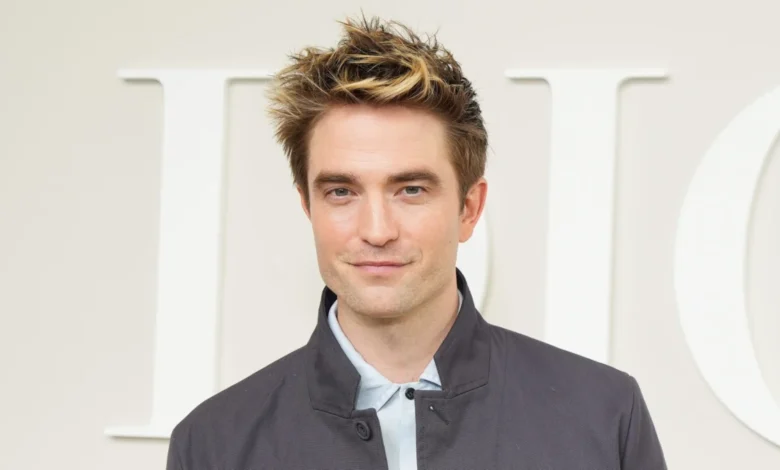
The cinematic landscape of the 21st century has undergone yet another seismic shift as Amazon MGM Studios formally announces that acclaimed actor Robert Pattinson has been cast as the legendary British secret agent James Bond. The announcement brings an end to years of rampant speculation, casting rumors, and industry-wide debate regarding who would inherit the iconic tuxedo following Daniel Craig’s definitive departure from the franchise in 2021’s No Time to Die. For Pattinson, stepping into the role of 007 marks a monumental milestone in a career that has successfully bridged the gap between independent arthouse critical darlings and massive, globally recognized blockbuster franchises.
In a formal statement released today, Pattinson expressed his profound gratitude and unbridled enthusiasm for the historic casting. "James Bond is one of the most legendary characters in cinema, and to be entrusted with 007 is the honour of a lifetime," the actor stated. He went on to acknowledge the key creative forces steering the franchise’s next chapter, adding, "I’m deeply grateful to Denis, Amy, David, Tanya, and everyone at Amazon MGM Studios for their belief in me. To say this role is a dream come true is an understatement. I couldn’t be more excited about this partnership and the work ahead with this fantastic team."
The announcement immediately sent ripples through the entertainment industry, sparking intense analysis from film critics, pop culture commentators, and devoted fans of the Ian Fleming literary creation. As Amazon MGM Studios prepares to chart a new course for the world’s longest-running film franchise, the selection of Pattinson signals a distinct creative direction—one that leans into established prestige acting talent, psychological depth, and a mature, world-weary interpretation of the world’s most famous spy.
A Historical Look Back: Pattinson’s Past Ambitions for the Franchise
Long before his name topped the official casting sheets at Amazon MGM Studios, Pattinson had openly discussed the prospect of entering the James Bond universe. His relationship with the franchise, at least in the court of public commentary, spans more than a decade and a half, reflecting how his perspective on blockbuster filmmaking has matured alongside his career.
Back in 2010, while undertaking rigorous promotional duties for the romantic drama Remember Me, Pattinson was asked by entertainment outlet Fandango about his potential interest in joining the storied film series. Rather than positioning himself as the quintessential, smooth-talking titular hero at that early stage, the then-young heartthrob offered a characteristically left-field response. "I’d quite like to play a villain in a Bond film. That would be fun. Or maybe play… kind of play a male, like, Bond girl. A Bond boy," he remarked with characteristic wit.
Later that same year, while walking the red carpet in London for the premiere of the same film, journalists pressed him further on whether he could ever envision himself holding the Walther PPK as 007. At the time, seemingly daunted by the colossal cultural footprint left by previous incumbents such as Sean Connery, Pierce Brosnan, and the then-reigning Daniel Craig, Pattinson responded cautiously: "Ooh, I don’t know. That’s quite big shoes to fill."
However, as Pattinson’s filmography expanded to include daring, boundary-pushing collaborations with auteur directors—transitioning away from his global teen idol status in the Twilight Saga toward gritty independent and blockbuster projects like David Cronenberg’s Cosmopolis, Robert Eggers’s The Lighthouse, Christopher Nolan’s Tenet, and Matt Reeves’s The Batman—his stance on playing Bond evolved significantly.
By 2012, in an interview with the United Kingdom’s Shortlist magazine, a more assured Pattinson addressed the possibility with a mixture of pragmatic career calculation and characteristic dry humor. Asked directly if he would ever want to play Bond, he answered affirmatively, albeit with a caveat regarding timing: "Yeah definitely, but more like [in] 20 years."
Expanding on his vision for how the character should be handled after the gritty, brutal realism of the Daniel Craig era, Pattinson offered a remarkably astute critique of modern franchise casting. "I think there’d be nothing worse than, like, ‘Let’s get a fresh-faced Bond!’ That would be the worst idea in the world," he asserted at the time. "After Daniel Craig, you have to have some baggage. It would be ridiculous to reinvent [him] as some young posh kid. Or, if [he] was, I’d have to get so tortured in the first few scenes. I’d have to do the first film with one arm or something."
Breaking the Mold: Age, Experience, and the Post-Craig Era
Pattinson’s historical preference for a mature, battle-tested secret agent aligns intriguingly with the direction Amazon MGM Studios has ultimately chosen. For months, industry insiders and betting markets buzzed with speculation that Amazon—following its multi-billion-dollar acquisition of MGM in 2022—might pursue a much younger actor to reboot the franchise for a digital-native, Gen Z audience, theoretically extending the lifespan of the IP across a multi-decade arc.
Instead, the studio opted for maturity and gravitas. Pattinson is set to turn 41 next May. By the time his inaugural James Bond film hits global theatrical screens, he will likely stand as the second oldest actor to debut in the titular role in the franchise’s illustrious history. That demographic milestone places him just behind Sir Roger Moore, who was 45 years old when Live and Let Die premiered in 1973.
This deliberate casting choice directly addresses the "baggage" Pattinson spoke of more than a decade ago. Following Daniel Craig’s physically demanding, psychologically grueling five-film tenure—which redefined 007 as a mortal, bleeding, emotionally vulnerable operative—introducing an untested, youthful newcomer could have felt like a jarring tonal regression. By casting Pattinson, Amazon MGM Studios ensures that the next iteration of James Bond carries the cinematic weight, intense screen presence, and lived-in weariness required to follow in Craig’s heavy footsteps.
The Post-Craig Vacuum and the Business of 007
The search for the next James Bond has been one of the most closely watched executive dramas in Hollywood history. Ever since No Time to Die concluded with the unprecedented, definitive demise of Daniel Craig’s iteration of the character, producers Barbara Broccoli and Michael G. Wilson, alongside the corporate leadership at Amazon, faced the monumental task of re-envisioning a property that has grossed billions of dollars globally since Dr. No premiered in 1962.
The landscape of cinematic intellectual property has transformed dramatically over the past decade. Traditional studio franchises face unprecedented saturation, audience fatigue, and shifting global distribution models. For Amazon MGM Studios, James Bond represents the crown jewel of its legacy catalog—a multi-platform asset requiring careful stewardship to maintain its cultural relevance while expanding into potential television spin-offs, immersive experiences, and modernized cinematic universes.
Selecting Robert Pattinson indicates a sophisticated commercial and artistic strategy. Pattinson possesses rare "quad-rant" appeal: he is a proven box-office draw who commands deep respect within the critical establishment and commands massive dedicated fandoms across multiple demographics. His recent turn as the Dark Knight in Matt Reeves’s The Batman proved conclusively that he can shoulder the financial and cultural expectations of a premier studio tentpole without sacrificing artistic integrity or distinct character interpretation.
Implications and What Lies Ahead for Franchise Production
With Pattinson officially locked in as James Bond, pre-production on the next chapter of the 007 franchise is expected to accelerate rapidly. While plot details, director announcements, and supporting cast lists are currently being kept under strict wraps by Amazon MGM Studios, the creative framework is clearly falling into place.
The inclusion of visionary collaborators hinted at in Pattinson’s statement suggests that the studio is assembling an elite, prestige-driven creative team to shepherd the spy thriller into a new era. Industry analysts note that Pattinson’s involvement will likely attract top-tier auteur directors, premium screenwriters, and elite acting talent eager to engage with a more psychological, character-driven espionage narrative.
Furthermore, Pattinson’s casting serves as a definitive bridge between classic cinematic tradition and modern Hollywood prestige. As the franchise prepares to celebrate decades of espionage history, the choice of an actor who once joked about playing a "Bond boy" or a complex villain underscores how drastically the perception of the character has shifted. James Bond is no longer merely a sleek fantasy of cold-war escapism; under Pattinson, 007 promises to remain a canvas for complex, morally ambiguous, and deeply human storytelling.
As global audiences await the first official promotional imagery, costume reveals, and teaser trailers, the confirmation of Robert Pattinson as the next cinematic guardian of the license to kill marks the dawn of an exhilarating new chapter for international cinema. The tuxedo has found its next owner, and the world of international espionage will never be quite the same.