Spring Awakening Off Broadway Extends Run Through April After Overwhelming Demand

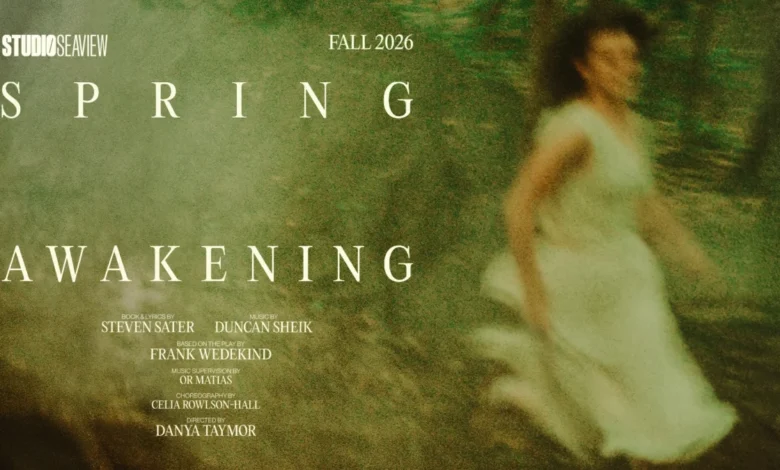
The highly anticipated off-Broadway revival of the landmark musical Spring Awakening has announced a major extension of its engagement, driven by what producers are calling unprecedented public demand. Originally scheduled to conclude its limited run at Studio Seaview on Valentine’s Day, the production will now continue performances through Sunday, April 4. This robust commercial and critical response highlights the enduring cultural footprint of the musical, which first redefined contemporary theatre nearly two decades ago.
Previews for the production are slated to begin on November 27, culminating in an official opening night performance on December 17 at Studio Seaview. The decision to lengthen the engagement months before the first preview performance underscores the intense anticipation surrounding this specific staging, which is helmed by acclaimed director Danya Taymor.
A Testament to Enduring Artistry
The announcement of the extended run arrives as the theatrical community continues to mourn and celebrate the legacy of composer Duncan Sheik, who passed away on September 17 at the age of 56. Sheik, alongside book writer and lyricist Steven Sater, crafted the seminal rock musical that left an indelible mark on both Broadway and the broader American musical theatre landscape.
Reflecting on the overwhelming public response, the Chief Executive Officer of Seaview released a formal statement addressing the extension.
"The response to Danya Taymor’s production of Spring Awakening has been incredible," the Seaview CEO stated. "It is a testament to the enduring power of Duncan Sheik and Steven Sater’s seminal work and the way this musical continues to resonate with audiences. We are thrilled by the unprecedented demand for this production and could not be more pleased to extend its life with this incredible cast and company."
The production’s creative team, led by Taymor, has promised a fresh perspective on the material while maintaining the raw emotional core that made the original run a cultural phenomenon. The rapid ticket sales signal that contemporary theatergoers remain deeply connected to the themes of youthful angst, repression, and self-discovery that anchor the narrative.
Historical Background and Cultural Genesis
To understand the weight of the current revival, one must examine the rich history of Spring Awakening. The musical is adapted from Frank Wedekind’s controversial 1891 German play of the same name. Wedekind’s original text was a scathing critique of late-19th-century bourgeois morality, specifically targeting the rigid, repressive educational and domestic systems that kept adolescents entirely ignorant of human sexuality and emotional health. Because of its frank depiction of masturbation, abortion, homosexuality, and suicide, the play faced heavy censorship and was frequently banned or heavily edited for decades following its publication.
When Steven Sater and Duncan Sheik transformed the dark, expressionist drama into a rock musical, they preserved the late-19th-century German setting while infusing the score with an anachronistic, high-energy alternative rock vocabulary. This stylistic choice bridged a crucial generational gap: the characters speak in the formal, stilted cadence of Victorian-era youth, but when their internal emotional lives overwhelm them, they pick up invisible microphones and belt out contemporary rock anthems.
The original Broadway production, directed by Michael Mayer and choreographed by Bill T. Jones, opened at the Eugene O’Neill Theatre in December 2006. It quickly transformed into a critical darling and a commercial juggernaut, serving as a launchpad for a generation of emerging talent. The star-studded original cast featured Jonathan Groff as Melchior Gabor, Lea Michele as Wendla Bergmann, and John Gallagher Jr. as Moritz Stiefel, alongside actors who would later build substantial careers in film, television, and theatre.
The 2006 production dominated the awards season, culminating at the 61st Tony Awards in 2007 where it received a staggering eleven nominations and won eight leading trophies. Among its victories were Best Musical, Best Original Score for Duncan Sheik, Best Book of a Musical for Steven Sater, Best Direction of a Musical for Michael Mayer, and Best Featured Actor in a Musical for John Gallagher Jr. The show ran for 859 regular performances before closing on January 18, 2009.
The Legacy of Duncan Sheik
The current off-Broadway revival carries an added layer of emotional resonance following the untimely passing of co-creator Duncan Sheik in September. Sheik was already an established voice in the pop music world prior to his theatrical debut. He achieved massive mainstream success with his 1996 self-titled debut album, which featured the ubiquitous hit single "Barely Breathing." The track became a defining pop-rock ballad of the late 1990s, spending an astonishing 55 consecutive weeks on the Billboard Hot 100 chart and earning Sheik a Grammy nomination for Best Male Pop Vocal Performance.
Transitioning to musical theatre with Spring Awakening proved to be a career-defining pivot. Sheik demonstrated a rare ability to write theatrical pop-rock that advanced narrative and character development without feeling like standard commercial radio filler dropped into a script. His work on the show earned him two Tony Awards—Best Original Score and Best Orchestrations—cementing his status as a formidable composer in the theatrical space. Over the subsequent decades, Sheik continued to contribute to the stage, working on projects such as Alice By Heart, American Psycho, and Whisper House.
His passing at age 56 prompted an outpouring of grief and tributes from across the entertainment industry, with collaborators and fans highlighting his gentle demeanor, unique melodic sensibilities, and profound impact on modern musical theatre. The extension of this Spring Awakening revival serves as a living monument to his artistic contributions.
Previous Revivals and Evolution of the Work
The upcoming Studio Seaview engagement marks the second major high-profile revival of the musical in the United States. In 2015, the property experienced a groundbreaking reimagining courtesy of Deaf West Theatre, under the direction of Michael Arden.
The 2015 revival integrated deaf and hearing actors seamlessly into the narrative, utilizing American Sign Language (ASL) alongside spoken English. In this innovative staging, hearing characters voiced the lines while signing, and deaf actors performed physical and signed interpretations of the roles, with characters like Moritz and Melchior shared between speaking/singing performers and sign-language actors. The production transferred to Broadway’s Brooks Atkinson Theatre, where it received critical acclaim and three Tony Award nominations, including Best Revival of a Musical.
The Deaf West mounting proved that the DNA of Spring Awakening is remarkably flexible. Because the core themes of the musical—miscommunication between generations, the suppression of identity, and the urgent need for emotional expression—are universal, the show can be reinterpreted through various artistic lenses without losing its potency. Danya Taymor’s current off-Broadway direction aims to unpack these timeless themes for a new generation of theatergoers navigating a vastly different cultural and technological landscape than the audiences of 2006.
Broader Implications and Economic Impact
The unprecedented demand for tickets to the Studio Seaview engagement highlights several broader trends within the current theatrical ecosystem:
- The Power of Nostalgia and Discovery: Shows that premiered in the mid-2000s are now entering a historical sweet spot. Audiences who discovered Spring Awakening as teenagers or college students during its original run are now adults with disposable income, eager to revisit formative artistic experiences. Simultaneously, younger audiences discovering the cast recordings online view the show as a contemporary classic.
- Off-Broadway Scalability: While major musical revivals traditionally target large Broadway commercial houses, staging Spring Awakening in an intimate off-Broadway venue like Studio Seaview allows for a more visceral, immediate theatrical experience. The economic success of this run proves that high-demand intellectual property can achieve massive commercial viability outside of Broadway’s traditional footprint.
- The Continuing Relevance of Youth Mental Health Themes: As society experiences heightened awareness regarding adolescent mental health, autonomy, and the psychological costs of repression, Sater and Sheik’s exploration of teenage angst and institutional failure feels urgently contemporary. The themes of the 1891 play continue to mirror modern discussions surrounding youth advocacy and mental health support.
As rehearsals progress toward the late-November preview window, the production team is well-positioned to capture the energy of an eager fanbase. With the run now secured through April 4, Spring Awakening is poised to be one of the defining theatrical events of the upcoming season, offering both a poignant tribute to the late Duncan Sheik and a vital, re-energized staging of a modern classic.
Related posts: