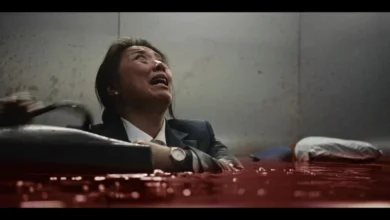
Ke Huy Quan recalls the life-changing surprise of his first six-figure residual check for Indiana Jones and the Temple of Doom

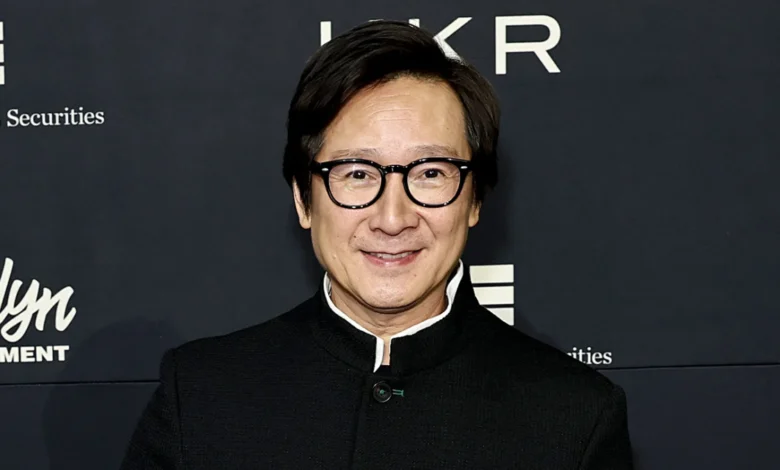
The cinematic trajectory of Ke Huy Quan is a narrative defined by profound highs, extended periods of professional uncertainty, and a triumphant, Oscar-winning resurgence. Central to this story is his debut as a child actor in Steven Spielberg’s 1984 blockbuster, Indiana Jones and the Temple of Doom. In his newly released memoir, Never Say Die, the actor provides an intimate account of his early years in Hollywood, specifically detailing the moment he realized that his involvement in the Indiana Jones franchise extended far beyond his initial base salary. According to the memoir, the young actor was stunned to receive a residual check for nearly $100,000—a financial windfall that served as a defining moment for his family and a testament to the mentorship of Steven Spielberg and George Lucas.
The Genesis of a Hollywood Career
In 1984, Ke Huy Quan was just 12 years old when he stepped onto the global stage as Short Round, the spirited sidekick to Harrison Ford’s iconic adventurer. At the time, the film industry was a vastly different landscape, particularly for young actors of Asian descent. Quan’s casting was not merely a breakthrough for his personal career; it was a rare instance of prominent representation in a major studio production.
However, as a child, Quan remained largely shielded from the complexities of talent contracts and backend profit participation. He had already been paid his base salary for his work on the production, believing that his financial compensation was concluded. The revelation that he was entitled to additional funds—residuals—came as a profound shock, not only to the child but to his parents as well.
“One afternoon, I walked into the kitchen and found my parents standing together at the table,” Quan recounts in Never Say Die. “Mom was holding an envelope with my name printed across it. Dad had the papers that had been inside.” The scene, as described, underscores the gravity of the moment. For a family navigating the pressures of the entertainment industry, the arrival of a check from Lucasfilm for nearly $100,000 represented a significant shift in their economic stability.
Understanding Residuals and Backend Participation
To understand the significance of this check, one must consider the historical context of talent compensation in the 1980s. Residuals are payments made to performers for the reuse of their work, such as television broadcasts or home media releases. While standard under modern Screen Actors Guild (SAG-AFTRA) agreements, receiving a share of a film’s total profits—often referred to as "points"—was, and remains, an elite privilege.
In the mid-1980s, profit participation was almost exclusively reserved for top-tier stars, directors, and producers. For a debut child actor to be granted a financial interest in the film’s performance was an anomaly. Quan describes this as “a quiet gesture from Steven and George,” suggesting that Spielberg and Lucas purposefully looked after their young protégé in a way that defied standard industry practices of the era.
“Back then, almost no actors got a piece of a movie’s profits,” Quan notes. “Even today, only the biggest stars do. That a kid like me, making his first film, would be included in something like that was unheard of.” This generosity was compounded by the fact that Temple of Doom was a highly anticipated follow-up to the 1981 smash hit Raiders of the Lost Ark. The film was projected to be a commercial juggernaut, making the decision to include a child actor in its backend earnings a deliberate act of mentorship.
A Chronology of a Resilient Career
The timeline of Ke Huy Quan’s career is marked by distinct phases: his meteoric rise in the 1980s, a decades-long retreat from the screen, and his recent return to the spotlight.
- 1984: Quan makes his acting debut in Indiana Jones and the Temple of Doom. The film grosses over $333 million worldwide, establishing him as a recognizable talent.
- 1985: He stars as Data in the cult classic The Goonies, further cementing his status as a prominent young actor.
- 1990s–2010s: Following a lack of substantial roles for Asian actors in Hollywood, Quan pivots to behind-the-scenes work, serving as a stunt choreographer and assistant director. During this period, he grapples with the fear that his peak achievements occurred in his childhood.
- 2022: Quan returns to acting in Everything Everywhere All at Once. The film earns critical acclaim and massive box-office success.
- 2023: Quan wins the Academy Award for Best Supporting Actor, marking one of the most celebrated comebacks in cinematic history.
Throughout these decades, the influence of his early mentors remained constant. Even during his years away from the camera, Quan maintained a deep sense of gratitude for the opportunities afforded to him by Spielberg, often citing the director as a pivotal figure in his life.
The Broader Impact of Mentorship in Film
The financial gesture described by Quan highlights the importance of institutional support for emerging talent. In an industry notorious for its volatility, the stability provided by that initial $100,000 check did more than just assist a family; it provided a sense of validation for a young actor who was essentially navigating a foreign professional environment.
While the monetary value of the check was substantial, the psychological impact was perhaps more significant. By including him in the film’s success, Spielberg and Lucas signaled that Quan was a valued member of the creative team, not merely a transient child performer. This foundation of self-worth likely played a role in sustaining his passion for the industry, even when he spent years working in roles that kept him away from the camera.
When Quan accepted his Golden Globe in 2023, he explicitly thanked Spielberg, acknowledging the director’s role in his initial success. "As I grew older, I started to wonder if that was it, if that was just luck," Quan admitted during his speech. "For so many years, I was afraid I had nothing more to offer. No matter what I did, I would never surpass what I achieved as a kid."
Implications for Industry Standards
The story of the Temple of Doom residuals serves as a case study in how industry veterans can foster longevity in young talent. While modern labor unions and standardized contracts have codified the rights of actors, the human element of mentorship remains a critical factor in talent development.
From an economic perspective, the inclusion of a minor in profit-sharing is an extreme outlier, even in today’s landscape. Studios generally resist expanding profit participation pools. However, the legacy of the Indiana Jones production demonstrates that when established power players utilize their influence to provide for their cast, it can create long-term loyalty and professional goodwill that transcends the lifespan of a single film.
For Ke Huy Quan, the memory of that check is synonymous with the start of a journey that eventually led him to the summit of the industry. It serves as a reminder that the impact of a film production extends beyond the box office and into the lives of those who inhabit the characters on screen. As his memoir Never Say Die continues to reach readers, the story of his first residual check stands as a testament to the enduring relationship between those who offer opportunity and those who seize it with both hands.
The intersection of financial security and creative encouragement created the environment necessary for Quan to eventually return to the craft he loved. By sharing this story, he offers a rare glimpse into the mechanics of 1980s Hollywood, revealing that behind the legendary spectacle of blockbuster films were human gestures that helped shape the career of one of the most beloved actors of the current generation. Whether through the lens of a historical industry curiosity or a personal coming-of-age story, the revelation of the $100,000 check provides valuable context to the ongoing narrative of Ke Huy Quan’s extraordinary life in film.
Related posts: