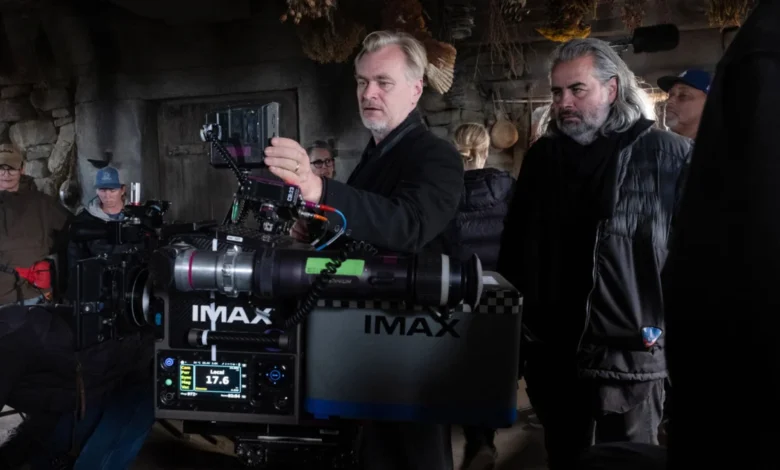
Christopher Nolan’s ambitious cinematic adaptation of Homer’s epic poem, The Odyssey, is not only dominating the global box office, but it is also pushing the boundaries of filmmaking, as revealed by the acclaimed director himself. While the film’s colossal financial success is undeniable, Nolan has cautioned audiences against anticipating his next directorial venture in the immediate future. He indicated in a recent interview that a minimum of three years will elapse before his next project graces the silver screen, a pace that aligns with his established career trajectory.
A Deliberate Pause After an Epic Endeavor
The revelation comes as The Odyssey garners widespread critical acclaim and a thunderous reception from moviegoers worldwide. Nolan, known for his meticulously crafted narratives and groundbreaking visual techniques, has consistently maintained a roughly three-year interval between his major releases. This pattern is evident in his filmography, with Oppenheimer premiering in 2023, Tenet in 2020, Dunkirk in 2017, and Interstellar in 2014. Nolan’s statement to Today confirms that this three-year gap will serve as a baseline, if not a minimum, for the gestation of his subsequent work.
The immense scale and creative demands of bringing The Odyssey to life as a writer, director, and producer have evidently taken a significant toll on Nolan and his production team. He candidly shared his experience with the NBC morning show, stating, “I definitely hit the limits of my own stamina and everybody’s stamina, I think. I mean, it’s The Odyssey, of course it should be difficult. We’re not doing the job right making a film of The Odyssey if it doesn’t seem difficult.” This admission underscores the profound commitment and arduous effort involved in translating such a monumental and historically significant literary work into a contemporary cinematic experience.
Pioneering IMAX 70mm for an Ancient Epic
Nolan’s dedication to immersive storytelling is further exemplified by his decision to shoot The Odyssey entirely on IMAX 70 millimeter film. This bold choice, a rare feat in modern filmmaking, was driven by a desire to capture the grandeur and scope befitting the legendary tale. “I went to IMAX, and I said, ‘Look, if ever we are going to fulfill this dream of shooting the entire movie that way, this is the one. This is The Odyssey,’” Nolan explained, highlighting the perfect synergy he perceived between the epic narrative and the unparalleled visual fidelity of the IMAX format. This commitment to the format not only enhances the viewing experience but also positions The Odyssey as a landmark achievement in cinematic presentation.
Box Office Triumphs and Stellar Ensemble Cast
The gamble on IMAX 70mm has paid off handsomely at the box office. The Odyssey has opened to an astonishing $257 million+ worldwide, marking Nolan’s most successful global opening since The Dark Knight Rises in 2012, which debuted with $249 million. This remarkable performance is a testament to Nolan’s directorial prowess and the enduring appeal of his ambitious projects. The film’s success suggests that audiences are eager for grand-scale cinematic events that offer both artistic merit and commercial viability.
The film boasts an exceptionally star-studded cast, assembling a veritable constellation of Hollywood talent to bring Homer’s iconic characters to life. The ensemble includes Matt Damon, Anne Hathaway, Lupita Nyong’o, Robert Pattinson, Tom Holland, Zendaya, and Charlize Theron, among many others. The sheer caliber of actors involved signals the immense prestige associated with Nolan’s projects and the gravity with which this particular adaptation was approached. Their performances, combined with Nolan’s directorial vision and the technical innovation of IMAX filming, have undoubtedly contributed to the film’s widespread appeal and critical acclaim.
Context and Significance of The Odyssey Adaptation
The decision to adapt Homer’s The Odyssey is a significant undertaking. The ancient Greek epic poem, attributed to Homer, chronicles the ten-year journey of the Greek hero Odysseus as he attempts to return home to his kingdom of Ithaca after the Trojan War. It is a foundational text of Western literature, exploring themes of heroism, loyalty, temptation, divine intervention, and the enduring human desire for home. Adapting such a culturally resonant and complex narrative for a modern audience presents unique challenges and opportunities.
Nolan’s previous works, such as Inception, The Dark Knight trilogy, Interstellar, and Oppenheimer, have consistently demonstrated his ability to tackle ambitious themes and intricate narratives with a distinctive visual style and intellectual depth. His approach to The Odyssey likely involves a reinterpretation that bridges the ancient world with contemporary sensibilities, potentially exploring timeless human struggles through a fresh lens. The film’s success suggests that Nolan has managed to capture the essence of the epic while making it accessible and compelling for a 21st-century audience.
The Nolan Production Cycle: A Look at the Numbers
Christopher Nolan’s directorial career has been characterized by a consistent release schedule, averaging a new film approximately every three years. This rhythm allows him the necessary time for development, pre-production, extensive shooting, and meticulous post-production that his complex films demand.
- 2014: Interstellar – A science fiction epic exploring space travel, relativity, and humanity’s survival.
- 2017: Dunkirk – A critically acclaimed war film depicting the evacuation of Allied soldiers from the beaches of Dunkirk during World War II.
- 2020: Tenet – A mind-bending espionage thriller that plays with the concept of time inversion.
- 2023: Oppenheimer – A biographical drama detailing the life of J. Robert Oppenheimer, the theoretical physicist credited as the "father of the atomic bomb."
- [Current Year]: The Odyssey – Nolan’s latest, a grand cinematic adaptation of Homer’s epic poem.
This consistent three-year cycle is not merely a personal preference but likely a strategic necessity given the scale and technical complexity of his productions. Each of his films involves significant research, intricate planning, often groundbreaking visual effects, and a commitment to practical filmmaking techniques, all of which require substantial lead time. The "at least" three-year gap for his next project suggests that The Odyssey was a particularly demanding endeavor, pushing even Nolan’s formidable stamina to its limits.
Industry Reactions and Broader Implications
The phenomenal box office performance of The Odyssey further solidifies Christopher Nolan’s status as one of Hollywood’s most bankable and influential directors. His ability to consistently draw massive audiences to theaters, even in an era of evolving media consumption, is a rare commodity. The success of The Odyssey is likely to embolden studios to invest in large-scale, original cinematic experiences, rather than solely relying on established franchises.
Furthermore, Nolan’s commitment to the IMAX format has significant implications for the future of cinematic exhibition. His advocacy and successful implementation of shooting and presenting films in IMAX 70mm can inspire other filmmakers to explore this premium format, potentially leading to a resurgence of interest in high-fidelity theatrical presentations. This could, in turn, encourage exhibitors to invest in upgrading their IMAX capabilities.
The prolonged development period for Nolan’s subsequent films, while perhaps disappointing for eager fans, also signals a dedication to quality and artistic integrity. In an industry often driven by rapid turnaround and immediate results, Nolan’s deliberate approach prioritizes the creation of impactful and enduring cinematic works. This patient strategy allows for the development of original concepts and the meticulous execution required to bring them to fruition.
While specific details about Nolan’s next project remain undisclosed, the anticipation is palpable. His consistent track record suggests that whatever he chooses to embark upon next will be a cinematic event of considerable magnitude, meticulously crafted and undoubtedly pushing the boundaries of storytelling and technical innovation. The pause following The Odyssey is not a sign of creative drought but rather a testament to the depth of commitment required for his ambitious endeavors, promising that when his next film does arrive, it will have been worth the wait.
Related posts: