A Definitive Guide to the Regional Diversity and Historical Evolution of Chinas Most Essential Culinary Traditions

China possesses one of the most complex and geographically diverse food landscapes in the world, making the task of identifying a single "best" dish an exercise in futility. From the subarctic temperatures of the north to the tropical humidity of the south, the nation’s culinary output is categorized into the "Eight Great Traditions": Lu (Shandong), Chuan (Sichuan), Yue (Cantonese), Min (Fujian), Su (Jiangsu), Zhe (Zhejiang), Xiang (Hunan), and Hui (Anhui). For the international traveler or the domestic gourmet, understanding these essential eats provides more than just a meal; it offers a window into the migration patterns, imperial histories, and agricultural innovations that have shaped Chinese civilization over millennia.
The Imperial Legacy and Northern Staples
The culinary journey often begins in the north, where wheat-based staples and imperial refinements dominate. Peking Duck (Beijing Kaoya) stands as the preeminent symbol of Chinese culinary diplomacy. While synonymous with the capital, the dish’s origins are rooted in Nanjing, the seat of ancient imperial regimes. When the Ming Dynasty relocated the capital to Beijing in the 1400s, the imperial chefs brought their specialized roasting techniques with them. The modern preparation involves air-drying the duck to separate the skin from the fat, followed by roasting in a closed or hung oven using fruitwood, such as pear or date, to impart a subtle sweetness. The ceremony of slicing the duck at the table and wrapping the crispy skin and succulent meat in thin pancakes with sweet bean sauce remains a pinnacle of fine dining.

In contrast to the refinement of the capital, the city of Xi’an offers a glimpse into ancient street food through Rou Jia Mo. Often referred to as the "Chinese hamburger," this dish dates back to the Qin Dynasty (221–206 BC). The meat—typically pork belly—is braised for hours in a complex "master stock" containing over 20 spices, including star anise, cinnamon, and ginger. The bread, known as Mo, must be toasted to achieve a specific pattern described by Shaanxi locals as "iron ring, tiger’s back, and chrysanthemum’s heart," signifying a perfect balance of crunch and chew.
Tianjin, a coastal neighbor to Beijing, contributes Jian Bing Guozi to the national breakfast table. This savory crepe, made from a batter of mung bean flour and eggs, is cooked on a flat griddle and stuffed with "Guozi" (deep-fried dough sticks or crisps). The dish reflects the northern preference for hearty, portable meals that can withstand the region’s harsh winters.
The Heat of the Heartland: Sichuan and Hunan
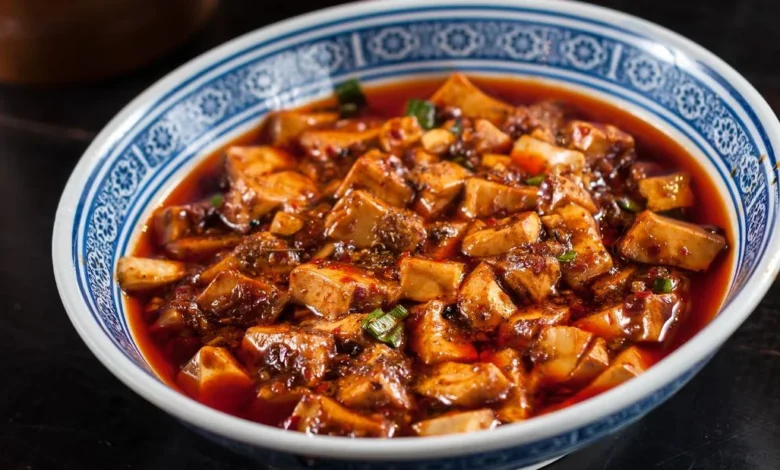
The central provinces of Sichuan and Hunan are defined by their bold use of chilies, though their philosophies differ significantly. Sichuan cuisine is famous for "Ma La"—a combination of numbing (ma) and spicy (la) flavors. Mapo Tofu is the quintessential example of this balance. Authentic versions require Hanyuan peppercorns and fermented broad bean chili paste (Doubanjiang) from the Pidu district. The dish, named after a legendary pock-marked woman who served it to laborers in the 19th century, represents the democratic nature of Sichuanese food: inexpensive, intensely flavored, and deeply satisfying.

Dan Dan Noodles (Dan Dan Mian) further illustrate Sichuan’s street-food heritage. Named after the "Dan Dan" poles used by 19th-century street vendors to carry the ingredients, the dish features thin noodles tossed in a sauce of preserved vegetables, chili oil, Sichuan pepper, and minced pork. While variations exist between dry and soup-based versions, the inclusion of "Rou Saozi"—pork pan-fried in lard until crispy—is considered non-negotiable by purists.
Hunan cuisine (Xiang), represented by Steamed Fish Head with Chopped Salted Chili (Duo Jiao Yu Tou), eschews the numbing sensation of Sichuan in favor of "Gan La" (dry spicy) or "Suan La" (sour spicy). The "Duo Jiao" relish, made from chilies fermented with salt and ginger, provides a sharp, acidic heat that cuts through the richness of the fish. This dish exemplifies the Hunanese adage: "It doesn’t count as a dish if there is no chili."
The Precision of the Pearl River Delta: Cantonese and Chaozhou
In the south, the Yue (Cantonese) tradition emphasizes the preservation of the ingredient’s original flavor, a philosophy known as "Qing." This is best observed in Cantonese Steamed Fish. The technique requires a mastery of timing; the difference of thirty seconds can determine whether the flesh remains tender or becomes unpleasantly firm. Finished with a drizzle of sweetened soy sauce and hot oil over ginger and scallions, it is a testament to the region’s access to fresh seafood.

Cantonese roast meats, or Siu Mei, including Char Siu (barbecue pork) and Roasted Goose, represent another pillar of southern excellence. The best Roasted Goose is prepared in wood-fired ovens, often using lychee wood to provide a distinct smoky aroma. The skin must be glass-like in its crispness, while the meat beneath remains moist and infused with five-spice powder.
The Cantonese Dim Sum culture is perhaps the region’s most famous export. More than just a meal, "Yum Cha" (drinking tea) is a social ritual involving dozens of small plates, from the translucent skins of Har Gow (shrimp dumplings) to the fluffy exterior of Char Siu Bao. Parallel to this is the tradition of therapeutic herbal soups. Cantonese households use seasonal ingredients like snow fungus, goji berries, and winter melon to "balance the body’s internal heat," reflecting the deep integration of Traditional Chinese Medicine (TCM) into daily gastronomy.
Nearby, the Chaozhou (Teochew) style offers a unique sub-sect of southern cooking. Known for Cold Crab and Cold Fish, Teochew chefs lightly salt and steam seafood before cooling it to room temperature. This process concentrates the umami flavors, which are then enhanced by fermented soybean pastes. Teochew beef balls, beaten by hand until they achieve a "bouncy" texture, are so prized that they are frequently shipped across China as gourmet gifts.

East China’s Subtle Sophistication: Shanghai, Jiangsu, and Fujian
The eastern provinces, particularly around the Yangtze River Delta, are known for a penchant for sweetness and intricate preparation. Xiaolongbao, the famous soup dumplings of Shanghai and Suzhou, are a marvel of culinary engineering. The "soup" is actually a gelatinized meat aspic that melts into a rich broth when steamed. The thinness of the wrapper—traditionally requiring at least 18 pleats—is a measure of the chef’s skill.
In Hangzhou, Dongpo Rou pays homage to the 11th-century poet Su Dongpo. This square of pork belly is braised in Shaoxing wine, soy sauce, and rock sugar until it reaches a "melt-in-the-mouth" consistency. The dish reflects the "Su" (Jiangsu) tradition’s focus on slow-cooking and rich, dark sauces.
Fujian’s Min cuisine is represented by Lychee Pork, a sweet and sour dish where the pork is scored to resemble the skin of a lychee fruit. Another Fujian specialty, Rouyan, features dumplings where the "wrapper" itself is made of pounded pork mixed with flour, creating a uniquely chewy texture. For dessert, the region offers Taro Paste (Yu Ni), a silky mash of Fuding yams mixed with lard and sugar, garnished with candied fruits.

Regional Specialties and National Comfort Foods
Beyond the major traditions, specific regional specialties have gained national fame. Yunnan’s Cross-the-Bridge Noodles (Guoqiao Mixian) are served as a deconstructed soup. A layer of chicken fat keeps the broth at a scalding temperature, allowing the diner to cook thin slices of raw meat and vegetables at the table. The dish is accompanied by a romantic legend of a devoted wife who devised the method to keep her husband’s lunch warm as she crossed a bridge to reach his study.
Hainan Island, though famous for Hainanese Chicken Rice abroad, is the true home of Wenchang Chicken. The local poultry is prized for its thin skin and sweet meat, usually served with rice cooked in chicken fat and a dipping sauce of ginger, garlic, and calamansi juice.
On the streets of Nanjing, Duck Blood Vermicelli Soup utilizes every part of the bird. The broth is made from duck bones, filled with "blood curds" (a firm tofu-like jelly made from duck blood), liver, and gizzards. It is a prime example of China’s "nose-to-tail" eating philosophy, ensuring no part of the animal is wasted.

Finally, Congee (rice porridge) and Fried Rice (Chao Fan) serve as the universal comfort foods of the nation. Whether it is the millet-based porridges of the north or the seafood-laden congees of the south, these dishes are the primary choice for breakfast or recovery from illness. Fried rice, meanwhile, is the ultimate test of a chef’s "Wok Hei" (breath of the wok)—the ability to imbue the rice with the flavor of a searingly hot pan without burning it.
Broader Impact and Global Significance
The global spread of Chinese cuisine has historically been dominated by Cantonese flavors due to early migration patterns. However, the last two decades have seen a surge in the international popularity of Sichuanese and Northern styles. This shift has not only changed global palates but has also driven a new era of culinary tourism within China.
The preservation of these dishes is increasingly viewed through the lens of cultural heritage. Many techniques, such as the preparation of Pidu bean paste or the roasting of Peking duck, are protected under provincial or national intangible cultural heritage lists. As China continues to urbanize, these culinary traditions serve as a vital link to the country’s agrarian past and regional identities.

In conclusion, the Chinese culinary landscape is a living map of the nation’s history. To eat these dishes is to consume the stories of emperors, poets, and street vendors. From the precision of a Cantonese steam basket to the fiery woks of Chengdu, the diversity of Chinese food remains its greatest strength, offering an inexhaustible array of flavors for those willing to explore.