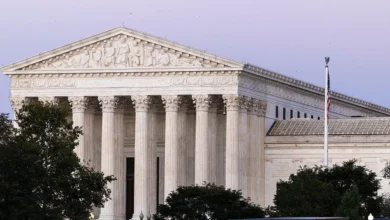
Hawaii Supreme Court Justice Unleashes Scathing Critique of Roberts Court, Accusing It of Weakening Rights and Advancing Political Agenda


In a rare and unusually forceful dissent from a state bench, Hawaii Supreme Court Justice Todd Eddins has delivered a blistering rebuke of the United States Supreme Court under Chief Justice John Roberts, accusing the nation’s highest judicial body of systematically weakening constitutional rights, damaging democratic institutions, and advancing a partisan political agenda. This extraordinary critique was embedded within a 91-page majority opinion overturning a decades-old criminal conviction, transforming a routine appellate ruling into a platform for a profound constitutional debate.
The primary case, State v. Granillo, centered on a 1990 conviction for kidnapping and sexual assault on Maui. The Hawaii Supreme Court ordered a new trial, concluding that critical hair and fiber evidence presented by an FBI expert at the original trial relied on forensic science that has since been widely discredited. While the core of the opinion focused on this evidentiary issue, Justice Eddins dedicated approximately eight pages to an expansive and deeply critical assessment of the U.S. Supreme Court’s recent jurisprudence and its implications for state constitutional interpretation.
An Unprecedented Judicial Broadside
Justice Eddins’ critique is highly unusual in the annals of American jurisprudence. While state supreme courts often engage in what is known as "new judicial federalism"—interpreting their state constitutions to provide broader protections than those found in the federal Constitution—direct and sustained attacks on the legitimacy, methodology, and perceived political motivations of the U.S. Supreme Court are exceedingly rare. Eddins explicitly argued that Hawaii’s courts should no longer look to the Roberts Court for guidance when interpreting the state constitution, asserting that the federal judiciary has abandoned landmark civil rights principles.
"When six justices walk away from those they are supposed to protect, state constitutions hold the line," Eddins wrote, referring to the U.S. Supreme Court’s conservative supermajority. "That is not defiance. That is the design." This statement encapsulates the core of his argument: that state constitutions serve as essential bulwarks against what he perceives as a retrenchment of rights at the federal level, empowering state courts to act as guardians of individual liberties. This concept of state courts as independent arbiters of rights, even when the federal judiciary narrows them, has historical roots but rarely manifests in such an openly confrontational manner.
A Critique of Originalism and Historical Parallels

A central pillar of Eddins’ critique targets the Roberts Court’s embrace of constitutional originalism, a judicial philosophy that interprets the Constitution based on the original public meaning of its text at the time of its adoption. While originalism is a legitimate and widely debated method of constitutional interpretation, Eddins argued that the Roberts Court’s application of it mirrors historically discredited judicial approaches.
"The Court that now defines federal due process does not honor the work of 1954," Eddins wrote, referring to Brown v. Board of Education, the landmark 1954 decision that declared state-sponsored segregation in public schools unconstitutional. "It revives the work of 1857. The work of 1896." These dates are highly symbolic and charged in American legal history. The 1857 reference points to Dred Scott v. Sandford, the infamous ruling that denied citizenship to Black Americans and held that Congress could not prohibit slavery in federal territories. The 1896 reference is to Plessy v. Ferguson, which upheld racial segregation under the "separate but equal" doctrine, effectively legalizing Jim Crow laws for decades.
By drawing these parallels, Eddins suggested that the Roberts Court’s originalist methodology, particularly as applied by its conservative majority, is not merely a different interpretive approach but one that risks producing outcomes as morally and constitutionally problematic as those of the pre-Civil Rights era. He contends that the current Court’s "hubristic originalists use the same method to control modern life," implying a selective and outcome-driven application of originalism that undermines progress on civil rights and democratic principles. This is a profound accusation, suggesting a fundamental disagreement not just with specific outcomes but with the very jurisprudential foundation of the current U.S. Supreme Court.
Specific Rulings as Evidence of Retreat
Justice Eddins buttressed his argument by citing a litany of consequential decisions by the Roberts Court, presenting them as concrete evidence of a systemic weakening of constitutional protections and a bias towards powerful interests. Among the cases he highlighted were:
- Dobbs v. Jackson Women’s Health Organization: The 2022 decision that overturned Roe v. Wade, eliminating the federal constitutional right to abortion and returning regulatory authority to individual states. Eddins views this as a profound rollback of individual autonomy and privacy rights.
- Citizens United v. FEC: The 2010 ruling that held that corporations and unions have the same First Amendment rights as individuals, striking down limits on independent political spending. Eddins likely sees this as expanding the influence of wealthy interests in elections and undermining democratic processes.
- Rucho v. Common Cause: The 2019 decision that declared partisan gerrymandering to be a political question beyond the reach of federal courts, leaving states to address the issue. For Eddins, this decision effectively condones practices that distort democratic representation.
- Trump v. United States: While a final ruling on the scope of presidential immunity for actions taken while in office is still evolving at the U.S. Supreme Court, Eddins’ mention underscores concerns about the potential for expanding executive power and shielding officials from accountability, a theme echoed in the broader context of executive power discussions from the recent term.
- New York State Rifle & Pistol Association v. Bruen: The 2022 decision that significantly expanded Second Amendment protections by requiring states to justify gun control laws based on historical tradition. Eddins views this as reducing the ability of states to regulate firearms effectively and prioritize public safety.
Beyond these specific cases, Eddins also critiqued the Roberts Court’s "colorblind" approach to the Equal Protection Clause of the Fourteenth Amendment. He argued that this interpretation, which often rejects race-conscious policies, ignores the amendment’s original purpose of protecting formerly enslaved Black Americans. "The Roberts Court sees only white," he wrote, "It refuses to acknowledge who the Equal Protection Clause was written to protect." This is a direct challenge to the Court’s stance on affirmative action and other race-related policies, implying a failure to address historical and ongoing racial inequality.
In summation, Eddins asserted, "The Court overrides what Congress passed. It overrides what the people chose. All to serve its own ends. What this Court has done to constitutional rights, democratic institutions, and the rule of law explains why Hawaiʻi’s Constitution takes no instruction from it." This powerful statement signals a deliberate judicial strategy: Hawaii’s courts will chart an independent course, interpreting their state constitution to provide robust protections, even if it means diverging sharply from federal precedents set by the current U.S. Supreme Court.

Legal Community’s Reaction: Shock and Criticism
The Hawaii Supreme Court’s opinion quickly reverberated through legal circles, drawing swift and sharp criticism for its unprecedented tone and scope. Legal observers widely noted the highly unusual nature of a state supreme court opinion dedicating so much space and vitriol to lambasting the nation’s highest court.
Eric Wessan, Iowa Solicitor General, reacted strongly on social media, writing, "The Court issues an unhinged attack on the legitimacy of the Supreme Court. I haven’t ever seen something like this. And it’s not good." This sentiment highlights the perceived breach of judicial decorum and the potential for undermining institutional respect.
Jonathan Turley, a prominent law professor at George Washington University, similarly described the opinion as "devoid of judicial restraint and decorum." He further elaborated on social media, stating, "The Hawaii Supreme Court just issued a truly shocking opinion that unleashed a torrent of rage and recrimination against the majority of the United States Supreme Court, including suggesting that they are de facto racists." Turley’s comments underscore the severity of Eddins’ accusations and the discomfort they generated within the legal community, particularly the implication of racial bias in the federal Court’s rulings.
Critics argue that while substantive legal disagreement is a hallmark of the judiciary, such an openly condemnatory and politically charged critique from a lower court risks politicizing the judicial process further and eroding public trust in the impartiality of both federal and state benches. The professional standard often emphasizes respectful disagreement within the confines of legal arguments, rather than personal or institutional broadsides.
Broader Context: A "Very Big Year" for the Supreme Court
Justice Eddins’ opinion comes at a time when the U.S. Supreme Court has concluded what many observers, including Fox News commentators Paul Gigot and John Yoo, have termed a "very big year," marked by major decisions on issues ranging from birthright citizenship to executive power. The Roberts Court’s conservative majority has been consistently focused on containing the administrative state and restoring constitutional originalism, including principles related to the Bill of Rights and federalism, often drawing significant criticism from the left. This broader context of a highly active and ideologically driven U.S. Supreme Court likely fueled Justice Eddins’ decision to speak out so forcefully.
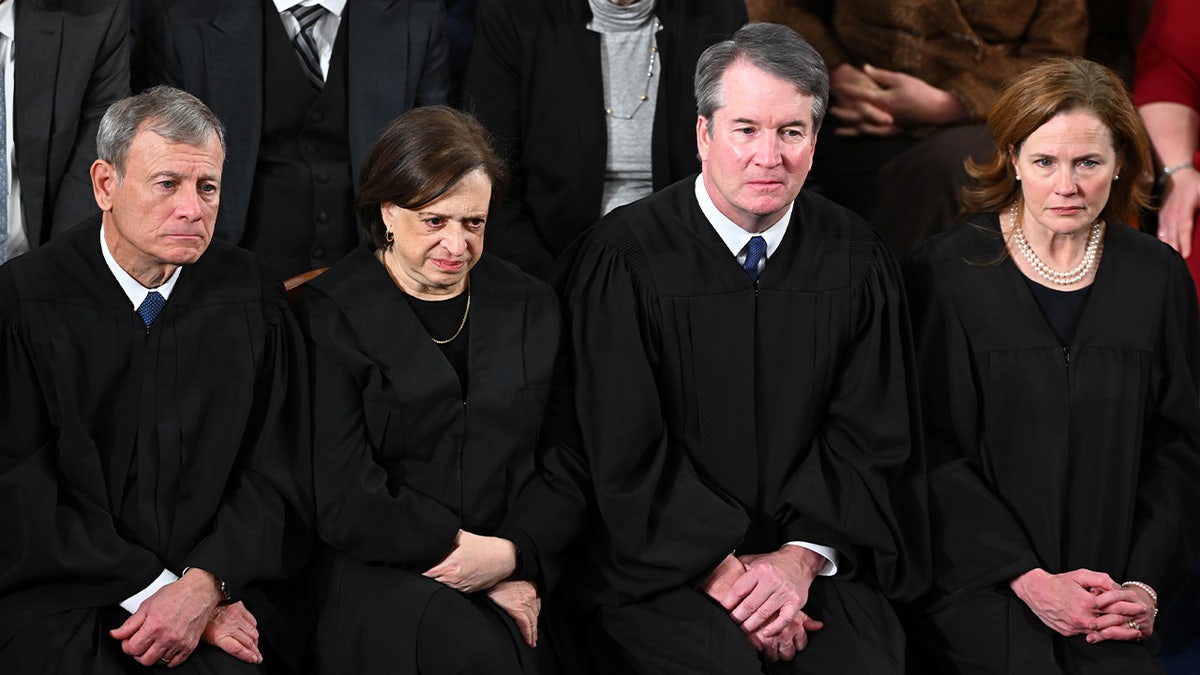
Just weeks before the Granillo opinion, the U.S. Supreme Court handed Hawaii a significant loss in Wolford v. Lopez. In a 6-3 decision, the Court struck down Hawaii’s "vampire rule," which required gun owners to obtain a property owner’s permission before carrying a firearm into businesses and other private property open to the public. This ruling, expanding Second Amendment protections, directly impacted Hawaii’s regulatory framework and likely contributed to the state judiciary’s sense of divergence from federal constitutional interpretation. Justice Eddins, appointed to the Hawaii Supreme Court in 2020 by then-Democratic Governor David Ige, reflects a progressive judicial philosophy that stands in stark contrast to the current federal majority.
Implications for Federalism and Judicial Dialogue
The Hawaii Supreme Court’s outspoken opinion signals a potentially growing trend of state courts explicitly challenging the U.S. Supreme Court’s direction. While the concept of "new judicial federalism" has been around for decades, allowing state courts to interpret their own constitutions to grant greater rights than the federal Constitution, the directness and intensity of Eddins’ critique represent a notable escalation.
This episode highlights the ongoing tension in the American legal system, particularly as ideological divisions deepen within the judiciary. It raises questions about the future of federal-state judicial relations, the decorum expected in inter-court dialogue, and the ultimate impact on public perception of judicial impartiality. As the U.S. Supreme Court continues to issue decisions that reshape fundamental rights and governmental powers, state courts like Hawaii’s may increasingly position themselves as independent guardians of liberties, potentially leading to a more fragmented and complex landscape of constitutional law across the nation.
The debate sparked by Justice Eddins’ opinion transcends the specifics of State v. Granillo or even the individual cases he cited. It delves into fundamental questions about judicial philosophy, the role of courts in a democracy, the interpretation of foundational constitutional principles, and the delicate balance of power between federal and state judiciaries. This judicial broadside from Hawaii may well serve as a bellwether for increasing tensions and divergent constitutional interpretations as state courts grapple with the implications of the Roberts Court’s evolving jurisprudence.