Senate Antitrust Subcommittee Chair Demands Paramount CEO Ellison Testify on Warner Bros. Discovery Merger Amidst Growing Scrutiny

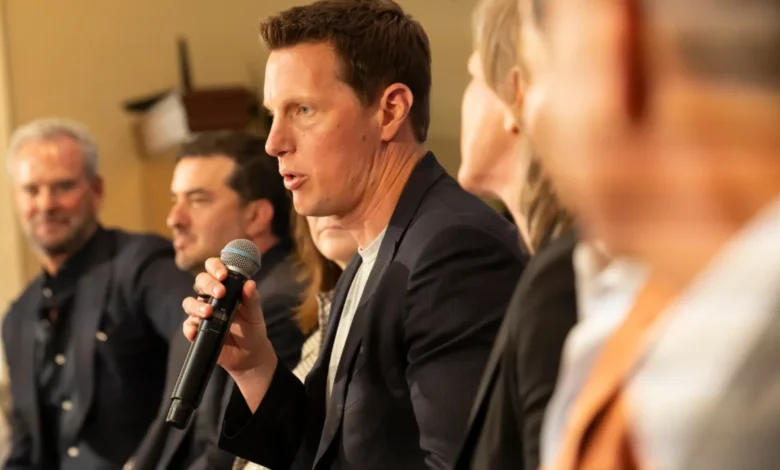
Senator Cory Booker, the leading Democrat on the Senate antitrust subcommittee, has issued a forceful invitation to Paramount CEO David Ellison, demanding his testimony regarding the proposed merger with Warner Bros. Discovery. The summons comes as significant concerns mount over the potential anticompetitive implications of this transformative deal, which, if successful, would reshape the landscape of Hollywood and the broader media industry. Senator Booker’s latest move underscores a deepening engagement by Congress in scrutinizing the consolidation of major entertainment and news entities, highlighting a pattern of increasing regulatory attention on the power dynamics within the global media ecosystem.
The invitation, detailed in a letter viewed by The Hollywood Reporter, explicitly addresses Ellison’s prior refusal to appear before a congressional hearing. Booker emphasized that this continued unwillingness to engage with oversight is, in itself, a matter of public concern, particularly for the leader of a company orchestrating one of the most substantial media mergers in American history. The hearing, scheduled for Wednesday, aims to dissect the potential fallout from the convergence of two of Hollywood’s five largest studios and two major news networks, a move that critics fear could stifle creativity and reduce opportunities for industry professionals.
Escalating Congressional Scrutiny of Media Consolidation
This latest development is not an isolated incident but part of a broader trend of congressional oversight focusing on the consolidation of media power. The proposed merger between Paramount and Warner Bros. Discovery has emerged as a focal point for lawmakers concerned about market concentration and its impact on competition, content diversity, and labor. Senator Booker’s subcommittee has been actively investigating potential antitrust violations across various sectors, and the media industry, with its intricate web of intellectual property, distribution channels, and talent dependencies, presents a particularly complex area for review.
The hearing on Wednesday is set to feature a diverse panel of witnesses, including acclaimed director David Borenstein, known for his work on "Mr. Nobody Against Putin," Michael Isaac, the director of legal services for WGA East, prominent lawyer and political commentator Katie Phang, and Mara Verheyden-Hilliard, executive director of the Partnership for Civil Justice Fund. Verheyden-Hilliard’s involvement is particularly noteworthy, as she is also a steering committee member for Jane Fonda’s Committee for the First Amendment, an organization that has been vocal in its opposition to the merger.
A United Front Against the Deal
The invitation to Ellison follows a significant public outcry from within the creative community. Just days prior, on Monday, a letter signed by over 1,000 writers, actors, and directors was released by Fonda’s group, articulating strong opposition to Paramount’s bid for Warner Bros. Discovery. This broad coalition of industry professionals expressed grave concerns that the merger would inevitably lead to "fewer opportunities for creators, fewer jobs across the production ecosystem, higher costs and less choice for audiences in the United States and around the world." This collective voice from the ground level of content creation amplifies the regulatory concerns, suggesting that the potential negative impacts are not merely theoretical but deeply felt by those whose livelihoods depend on the health and diversity of the industry.
In his letter to Ellison, Senator Booker directly referenced Paramount’s counterarguments to these concerns. The company has reportedly asserted that the merger will, in fact, provide "more avenues for their work, not fewer" and that the combined entity will be positioned to "greenlight more projects." Booker framed these statements as significant commitments, emphasizing that the congressional hearing offers a crucial platform for Ellison to make these promises directly to lawmakers and, more importantly, to the "workers, journalists, and creators whose livelihoods depend on whether those promises are kept." This framing positions the hearing as a critical accountability mechanism, moving beyond abstract policy discussions to tangible impacts on individuals.
A History of Congressional Engagement on Media Mergers
This is not the first time Senator Booker has expressed frustration with Paramount’s leadership regarding this proposed merger. During a February hearing examining Netflix’s substantial proposed acquisition of Warner Bros. Discovery (a deal that ultimately did not materialize in the way initially discussed, highlighting the fluidity of these complex transactions), Booker openly criticized Ellison’s decision not to testify on behalf of Paramount. This pattern of seeking direct testimony from key executives indicates a determined approach by the subcommittee to elicit transparency and accountability from major players in the media industry.
The hearing scheduled for Wednesday is part of a broader congressional initiative to understand and potentially shape the future of media consolidation. It follows a separate hearing convened by Senator Adam Schiff, which focused on building support for federal tax incentives aimed at encouraging the repatriation of production jobs to the United States. This suggests a multi-pronged approach by Congress: addressing potential antitrust concerns while simultaneously exploring strategies to bolster domestic production and employment within the entertainment sector.
The Economic and Creative Stakes of the Paramount-Warner Bros. Discovery Deal
The potential merger between Paramount Global and Warner Bros. Discovery is a monumental undertaking with far-reaching economic and creative implications. Warner Bros. Discovery, itself a product of a recent major merger between WarnerMedia and Discovery, Inc., possesses a vast portfolio of iconic film and television studios, including Warner Bros. Pictures, HBO, DC Studios, CNN, and Discovery Channel, among others. Paramount Global, with its legacy brands like Paramount Pictures, CBS, Showtime, and MTV, represents another pillar of the entertainment industry. The combination of these entities would create an unparalleled media conglomerate, wielding significant influence over content creation, distribution, and audience engagement across linear television, streaming services, and theatrical releases.
Background Context: The media landscape has been in a state of flux for over a decade, driven by the disruptive force of digital technology and the rise of streaming. Traditional media companies have grappled with declining advertising revenues from linear television and the challenge of competing with tech giants like Netflix and Amazon in the streaming space. Mergers and acquisitions have become a prevalent strategy for these companies to achieve economies of scale, expand their content libraries, and gain a competitive edge in the increasingly crowded market. The Paramount-Warner Bros. Discovery proposed deal is a prime example of this trend, reflecting an attempt to build a more robust and resilient entity capable of navigating these turbulent waters.
Timeline of Key Developments (Inferred):
- Early 2023 – Present: Reports and speculation surrounding potential strategic reviews and merger discussions involving Paramount Global and Warner Bros. Discovery begin to surface. These discussions are often driven by financial pressures and the desire to consolidate market position.
- Late 2023 – Early 2024: Specific details and potential deal structures begin to emerge, indicating a serious pursuit of a merger. Discussions are reported to involve significant financial players and potential acquisition offers.
- February 2024: Senator Booker’s antitrust subcommittee holds a hearing on the broader media landscape, including the proposed Paramount-Warner Bros. Discovery transaction. David Ellison reportedly declines to testify at this earlier hearing, drawing criticism from Senator Booker.
- March 2024: Jane Fonda’s Committee for the First Amendment, along with other advocacy groups, mobilizes to oppose the merger, gathering significant industry support.
- April 2024 (Early): The Partnership for Civil Justice Fund, represented by Mara Verheyden-Hilliard, plays a role in organizing industry opposition and raising awareness about potential anticompetitive impacts.
- April 2024 (Mid-Week): Senator Booker formally invites David Ellison to testify at an upcoming hearing specifically dedicated to examining the competitive implications of the Paramount-Warner Bros. Discovery deal. A letter detailing these concerns is released.
- Wednesday, April 24, 2024: The Senate antitrust subcommittee hearing is scheduled to take place, featuring a panel of experts and industry representatives, with the expectation that David Ellison will be pressed to attend or explain his absence.
Analyzing the Potential Implications
The potential merger of Paramount and Warner Bros. Discovery raises several critical questions that Senator Booker’s hearing aims to address:
- Reduced Competition: Combining two of the six major Hollywood studios could significantly reduce competition in film and television production, potentially leading to fewer independent projects being greenlit and a narrowing of creative voices. This consolidation could also impact the bargaining power of talent and creative guilds.
- Impact on Labor: Fears of widespread job losses and reduced opportunities for writers, actors, directors, and below-the-line crew members are central to the opposition’s concerns. Mergers often lead to streamlining operations and eliminating redundancies, which can result in workforce reductions.
- Audience Choice and Pricing: A larger, more consolidated entity might have greater leverage in negotiating content licensing and distribution deals, potentially leading to higher subscription prices for consumers and less diverse content offerings. The ability of audiences to access a wide range of programming could be curtailed.
- News Media Concentration: The inclusion of major news networks like CNN within Warner Bros. Discovery adds another layer of complexity. The consolidation of news outlets under a single corporate umbrella can raise concerns about journalistic independence, editorial diversity, and the potential for concentrated influence over public discourse.
- Innovation and Disruption: Critics argue that such large-scale mergers can stifle innovation by creating entrenched incumbents that are less susceptible to disruption from smaller, more agile competitors. The focus may shift from groundbreaking content creation to maximizing existing assets and controlling market share.
Paramount’s Stance and the Path Forward
Paramount’s defense, as highlighted by Senator Booker, centers on the argument that the merger will create synergies and opportunities, rather than diminishing them. The company’s assertions about providing more avenues for creators and greenlighting more projects will be put to the test during the congressional hearing. The success of these promises hinges on the combined entity’s strategic vision and its commitment to fostering a vibrant and inclusive creative ecosystem.
The upcoming hearing represents a crucial moment for both regulatory oversight and industry accountability. The testimony of the invited experts, coupled with any statements or appearances by David Ellison, will provide valuable insights into the potential future of one of the world’s most influential media conglomerates. The outcome of this scrutiny could influence not only the fate of this specific merger but also shape the broader regulatory environment for media consolidation in the years to come. The public’s access to the proceedings via livestream underscores the increasing transparency sought by lawmakers in addressing these significant market shifts. The implications for creators, consumers, and the very fabric of media consumption are substantial, making this a development of considerable national and international interest.
Related posts: