The American political arena is undergoing a profound and rapid transformation, characterized by sharp ideological divides within both major parties, high-stakes legislative gridlock, and intense electoral battles stretching from local mayoral races to the halls of Congress. At the center of this shifting landscape is the CNN Political Briefing podcast, hosted by CNN Political Director David Chalian. Through candid interviews with key policymakers, veteran strategists, and top-tier journalists, the program offers an illuminating window into the mechanics of contemporary governance, the brewing friction within congressional leadership, and the strategic calculations shaping the path toward the 2026 midterm elections.
As the political establishment looks past recent federal budget standoffs and prepares for the next electoral cycle, a series of critical developments—ranging from internal Republican discontent with House leadership to shifting voter dynamics in major metropolitan centers—have redefined the national conversation. Understanding these developments requires a comprehensive examination of the key players, the underlying policy disputes, and the historical precedents driving modern American politics.
Internal Strife and Leadership Challenges in the House
The Republican conference in the House of Representatives has experienced significant turbulence, highlighted by mounting frustrations among rank-and-file lawmakers regarding legislative strategy and institutional direction. A prime example of this intra-party friction came to light when California Republican Representative Kevin Kiley joined David Chalian to discuss the state of party leadership. Kiley, representing a competitive district in a state heavily influenced by Democratic maneuvers, did not shy away from critiquing House leadership, asserting that Speaker Mike Johnson had "failed to lead" during critical legislative moments.
This public critique underscores a broader "vibe shift" currently underway within the GOP caucus. As the party prepares for the 2026 midterms and contemplates a future political horizon beyond Donald Trump, lawmakers are grappling with how to balance legislative productivity with the demands of their respective bases. Compounding these pressures for lawmakers like Kiley are aggressive redistricting efforts at the state level—such as those advanced in California under Democratic Governor Gavin Newsom—which threaten to reshape the electoral map and force incumbents into entirely new political calculations.
Simultaneously, the administration of President Donald Trump has faced its own unique set of political headwinds. While Trump maintains a formidable and deeply loyal base, recent months have exposed rare moments of friction within the MAGA movement. Observers have noted minor fissures stemming from high-profile policy reversals, such as shifts in handling sensitive federal disclosures, alongside mounting voter anxiety over inflation, consumer prices, and the cost of living. Political analysts, including POLITICO’s Jonathan Martin, have pointed out that while foreign affairs frequently dominate the executive branch’s messaging, everyday economic concerns remain the primary vulnerability for the governing party as the midterms approach.
Legislative Gridlock: Anatomy of a Government Shutdown
Few events test the resilience of the American legislative process quite like a federal government shutdown. Throughout the autumn of 2025, Washington found itself mired in a protracted funding impasse that paralyzed federal agencies and sparked an intense public relations war between Capitol Hill Democrats and Republicans.
The mechanics of the shutdown revealed deep ideological fault lines. Progressive Democrats, such as California Representative Ro Khanna, articulated a firm stance on what was negotiable and what remained strictly off the table regarding federal spending priorities. Khanna argued that progressive resistance was essential to protecting core social safety nets, even as the economic and administrative costs of the standoff mounted week by week.
Conversely, moderate and battleground Republicans viewed the shutdown through the lens of fiscal discipline and political strategy. Representative Mike Lawler, representing a competitive district in New York, argued that Democrats had miscalculated their shutdown calculus, predicting that voters would ultimately hold the opposition responsible for the disruption in public services. Meanwhile, Democratic congressional campaign strategists, led by Democratic Congressional Campaign Committee Chair Suzan DelBene of Washington, viewed the standoff as a mobilizing tool to energize their base and build a sustainable path toward reclaiming the House majority in 2026.
The eventual resolution of the shutdown did little to heal the underlying political divisions; instead, it served as a prelude to a fierce electoral season. Veteran Democratic figures like former Virginia Governor Terry McAuliffe weighed in on the aftermath, suggesting that disciplined messaging centered on economic populism and public governance remains the party’s most effective weapon against the current administration.

Urban Politics and the New Electoral Playbook
While Capitol Hill was consumed by fiscal battles, municipal and gubernatorial elections across the country provided a testing ground for innovative political strategies. The 2025 election cycle featured high-stakes showdowns in New York City, New Jersey, and Virginia, offering a preview of the electoral dynamics that will define the national landscape.
In New York City, the mayoral race shattered traditional political orthodoxies. Zohran Mamdani, a once little-known state assemblyman representing the progressive wing of the Democratic Party, rewrote the playbook in Gotham, securing a historic victory that propelled him into the national spotlight. Spectrum News NY1 Political Anchor Errol Louis analyzed Mamdani’s ascent, noting that his campaign successfully mobilized urban voters by focusing on housing affordability, tenant rights, and economic inequality—issues that resonated deeply across diverse neighborhoods.
Mamdani’s victory came against a complex backdrop of established political heavyweights and alternative candidates. Former Governor Andrew Cuomo, seeking a political resurrection following his departure from office years prior, and Republican standard-bearer Curtis Sliwa both mounted aggressive campaigns. Sliwa, running in a city where registered Democrats outnumber Republicans by a six-to-one margin, faced intense pressure from within his own party to step aside but nevertheless used his platform to highlight urban safety and economic management.
CNN correspondents Jeff Zeleny and Eva McKend, who tracked the campaign trail across New York, New Jersey, and Virginia, reported that local issues consistently superseded national rhetoric in driving voter turnout. These races demonstrated that candidates who successfully address tangible local concerns—such as infrastructure, public education, and regional taxation—can defy broader national trends.
Legal Precedents and the American Justice System
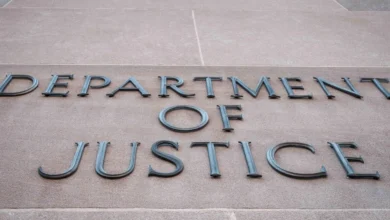
Beyond electoral politics and legislative maneuvering, the intersection of the executive branch and the judicial system has produced extraordinary chapters in modern American history. The Department of Justice’s handling of high-profile investigations has continually tested institutional norms.
A notable focal point of these discussions has been the prosecution of former FBI Director James Comey—an unprecedented development that legal scholars and historians view as a watershed moment for federal law enforcement and executive accountability. Legal analyst and former prosecutor Elie Honig, author of When You Come at the King: Inside DOJ’s Pursuit of the President, From Nixon to Trump, has emphasized the need to view these modern legal battles through a strict historical context. Honig’s analysis underscores how institutional friction between the White House and federal investigative agencies has evolved over the decades, setting profound precedents for the independence of the Department of Justice.
Broader Impact and Implications for the 2026 Midterms
The convergence of internal congressional fractures, executive branch policy debates, shifting urban electorates, and historic judicial proceedings paints a picture of a nation in political transition. As the United States looks forward to the 2026 midterm elections, both major parties face distinct strategic imperatives.
For the Republican Party, the challenge lies in maintaining party unity amidst internal disagreements over leadership and legislative efficacy. Bridging the gap between the populist wing and establishment conservatives, while addressing voter concerns regarding economic affordability, will determine whether the GOP can retain its legislative leverage.
For the Democratic Party, the objective is to harness the momentum generated by unexpected municipal victories and legislative standoffs. By focusing on grassroots organizing, economic populism, and capitalizing on voter fatigue with institutional gridlock, Democrats aim to construct a viable coalition capable of recapturing majorities in Congress.
Programs like the CNN Political Briefing podcast, led by David Chalian and supported by executive producer Steve Lickteig, technical director Dan Dzula, and producer Dan Bloom, serve as essential chronicles of this dynamic era. By bringing firsthand perspectives from lawmakers, strategists, and journalists directly to the public, these discussions provide the clarity and depth necessary to understand the forces shaping the future of American democracy.