Cannes-Winning ‘Tiger Stripes’ Producer Backs Taiwanese Coming-of-Age Drama ‘Uncle’ at Busan Asian Project Market

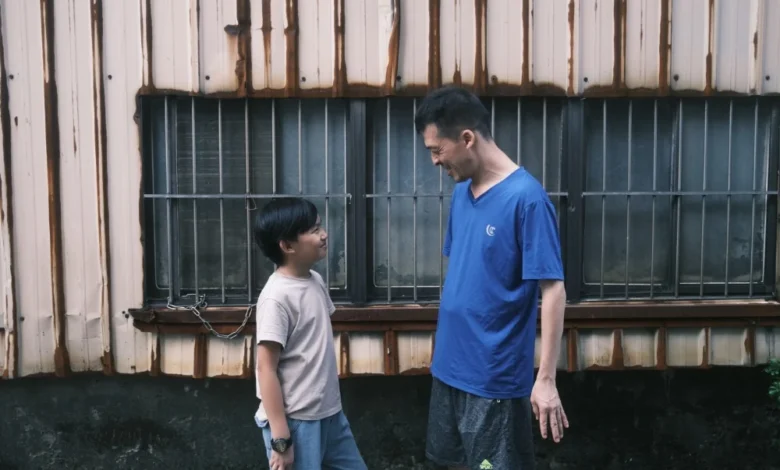
The project, which is currently seeking international co-production partners, is a centerpiece of the Asian Project Market (APM) at the Busan International Film Festival’s Asian Contents & Film Market (ACFM). It offers an intimate, semi-autobiographical examination of a young boy’s maturation against the backdrop of Taiwan’s seismic political and social shifts between 1997 and 2000.
A Portrait of Transition: The Narrative Arc
Set in a rural enclave, the film centers on 10-year-old Wen and his inseparable companion, his uncle A-Tsik, who lives with an intellectual disability. Their domestic life is defined by the unconventional and often harsh environment of their grandfather’s illegal gambling den, located on the ground floor of their home.
As Wen transitions into adolescence, the narrative explores the "curdling" of his once-pure affection into profound embarrassment—a common, if painful, rite of passage that Yen treats with unflinching honesty. The film highlights the systemic powerlessness of individuals with disabilities within a traditional family structure, particularly as the family attempts to exert control over A-Tsik’s behavior and romantic desires.
The film serves as a microcosm of Taiwan’s own evolution during the late 1990s. This period was marked by the historic 2000 democratic transition—the first peaceful transfer of power in the nation’s history—and the lingering, literal and figurative, tremors of the 1999 Jiji earthquake. As the nation pivots toward modernization and globalization, Wen finds himself drawn to the promises of the city and a life outside his rural home, while A-Tsik remains tethered to the static environment of their childhood.
The Personal Genesis: From Memory to Screen
For director Yen Hao-hsuan, the project is the culmination of an 18-year lived experience. Having grown up alongside his uncle, Yen’s creative process has been a slow maturation of perspective. He initially avoided documenting his uncle in his early short films, fearing he might blur the line between honest representation and emotional indulgence.
"Making those short films and the time that has passed since have given me enough distance to see him as a person, not only as a relative or as material for a film," Yen explained. The director’s previous works have already garnered significant critical acclaim, signaling a rising talent in Taiwanese cinema. His 2022 short, On Another’s Sorrow, debuted at the Golden Horse Film Festival, while his 2024 short, Caged Dog, earned a prestigious nomination in the Live Action Short category at the Golden Horse Awards.
Yen’s objective is not to portray his uncle as a saint or a caricature of disability, but as a fully realized human being with agency. "He is loving, funny, stubborn, and difficult. He has sexual desires, falls in love, makes mistakes, and can hurt people," Yen noted. By humanizing these traits, the director aims to challenge the binary labels of "normal" and "abnormal" that society imposes on individuals like A-Tsik.
Production and Industry Context
The production of Uncle brings together an experienced team of industry professionals, led by producer Patrick Mao Huang of Flash Forward Entertainment, alongside producer Sung Chin-hsuan. Huang, known for his work on the Cannes Critics’ Week Grand Prize-winning film Tiger Stripes (2023), views the project as a universal story of human development.
"To grow up is also to abandon something," Huang remarked, emphasizing that while the setting is distinctly Taiwanese, the emotional core of the film—the tension between personal progress and familial obligation—is a global phenomenon. The production is supported by the Taiwan Creative Content Agency (TAICCA) and was further refined through the New Director Workshop at the Taipei Film Festival.
The project’s inclusion in the Busan International Film Festival’s APM is a strategic move to secure international financing. The producers are currently courting partners from South Korea, Japan, and Europe. This search for co-production is not merely financial; it is designed to protect the integrity of Yen’s vision and the specific cultural texture of the film.
Socio-Political Implications of "Progress"
At its heart, Uncle poses a provocative question: What is the true cost of progress? As Taiwan raced toward the new millennium, the push for economic and democratic development became a defining feature of the national identity. Yen argues that this relentless pursuit of "betterment" often leaves behind those who cannot or do not conform to the metrics of modern productivity.
The film challenges the audience to consider who is left behind when a society prioritizes structural growth over the welfare of its most vulnerable members. By contrasting the protagonist’s trajectory—moving away from the "backwardness" of his hometown—with his uncle’s forced stagnation, Yen invites a critique of how "worth" is measured in contemporary society.
The Landscape of Taiwanese Cinema
The film arrives at a pivotal moment in the Taiwanese film industry. Following the democratization of the 1990s, Taiwanese cinema has increasingly focused on the "ordinary" person’s struggle against historical forces. The film’s inclusion in the Tokyo Gap-Financing Market further underscores its potential to resonate with global arthouse audiences who are increasingly interested in regional narratives that bridge the gap between personal intimacy and national history.
The technical preparation for the film is currently in a high-intensity phase. Yen is finalizing a new draft of the screenplay while simultaneously establishing the visual language of the piece. His background in short-form filmmaking, characterized by a refined command of sound, image, and performance, suggests a film that will rely heavily on atmospheric storytelling rather than overt exposition.
Future Outlook and Industry Reception
As the project moves through the festival circuit, the reception at the Asian Contents & Film Market will be a primary indicator of its future distribution trajectory. Given the pedigree of the producers—specifically Huang’s track record of navigating international festival circuits—Uncle is well-positioned to find a home in major global festivals.
The broader implications for the film lie in its potential to influence public discourse regarding disability in Taiwan. While the country has made strides in inclusive legislation, the cultural stigma surrounding intellectual disability remains a pervasive issue. By presenting a protagonist who is both flawed and deeply loved, and who exists as an equal rather than a subject of pity, Yen hopes to bridge the communicative gap between the "normal" world and those who are often relegated to the margins of society.
Ultimately, Uncle is a film about the bittersweet nature of independence. It captures the moment a child realizes that their growth requires leaving, and the subsequent realization that their departure is a form of betrayal. As Yen continues to develop the script, the film stands as a testament to the power of cinema to transform memory into a lens through which to re-examine the structural inequities of the past and the enduring bonds of family.