The Truth Behind Carnivorous Plants: Evolution, Biology, and the Real Science of Nature’s Deadliest Flora

Popular culture has long fascinated audiences with fictional depictions of predatory vegetation, most notably the blood-thirsty, human-eating Audrey II from the 1986 musical comedy Little Shop of Horrors. While cinematic adaptations stretch imagination by presenting towering plants that snap shut on humans, real-world carnivorous flora do exist, albeit on a much smaller and strictly non-human scale. Ranging from tiny, sub-millimeter aquatic suction traps to pitcher plants capable of occasionally digesting small rodents, these predatory organisms occupy a specialized ecological niche. To understand how and why these plants evolved to consume animal matter, botanists and nursery experts study the complex evolutionary pathways that transformed ordinary leaves into lethal nutritional traps.
Main Facts and Botanical Definition
Carnivorous plants are scientifically classified as predatory flowering organisms that actively or passively attract, capture, and digest animal prey to supplement their nutritional intake. Fundamentally, these plants are both autotrophs and heterotrophs. Like standard vegetation, they undergo photosynthesis, utilizing sunlight, water, and carbon dioxide to synthesize sugars for structural growth and energy. However, because they predominantly inhabit nutrient-deficient environments, they rely on heterotrophic mechanisms to acquire essential minerals—primarily nitrogen, phosphorus, and potassium—that are otherwise absent from the surrounding soil.
According to Kenny Coogan, owner of the North Carolina-based nursery Carnivorous Plants by Kenny Coogan, these organisms use photosynthesis for their primary energy needs while turning to insect prey for vital micronutrients. These plants do not consume bugs for caloric energy; instead, they extract the chemical building blocks necessary for cellular function and reproduction.
Geographically, carnivorous plants thrive on every continent except Antarctica. They are most commonly found in sun-drenched, waterlogged ecosystems characterized by extremely poor, highly acidic, and nutrient-stripped soils. Prime habitats include the bogs, swamps, and marshes of the United States Southeast, particularly in North Carolina and the Florida Panhandle. The Venus flytrap, for example, is endemic exclusively to the Carolinas, while species such as Tracy’s sundew and various North American pitcher plants populate the coastal wetlands of Florida.
Not all vegetation in these harsh environments employs carnivory to survive. Other plant species, such as the wiregrass prominent in the southeastern United States, have developed extensive root systems that establish symbiotic relationships with mycorrhizal fungi. These fungal networks assist the plants in extracting scarce nutrients from sandy soils, demonstrating that evolution provided multiple pathways for flora to adapt to identical ecological pressures.
Evolutionary Origins and Convergent Evolution
The evolutionary history of carnivorous plants spans millions of years, illustrating one of the most striking examples of convergent evolution in the natural world. Botanists estimate that there are currently between 800 and 860 recognized species of carnivorous plants worldwide, with new species continuing to be documented by researchers. Although flowering plants have existed for more than 140 million years, carnivory has evolved independently at least a dozen times across completely different plant lineages.
Rather than inheriting meat-eating traits from a single common ancestor, modern carnivorous plants developed specialized trapping structures—including sticky mucilage surfaces, snap traps, and hollow pitfall cavities—between eight and 72 million years ago. This convergent evolution means that entirely unrelated plant families arrived at the exact same predatory solutions in response to similar environmental constraints.

A prominent example of this phenomenon is found in pitcher plants. Low-growing Australian pitcher plants share a closer genetic lineage with everyday crops like roses, beans, and broccoli than they do with Asian tropical vine pitcher plants or upright North American trumpet pitchers. Despite vast genetic differences, all three lineages independently developed hollow, tube-shaped leaves designed to function as pitfall traps.
Recent biochemical research reveals that carnivorous plants achieved this adaptation by repurposing ancient self-defense mechanisms into offensive digestive tools. Non-carnivorous plants traditionally utilize enzymes known as chitinases to defend against fungal pathogens by breaking down fungal cell walls. Carnivorous plants co-opted these exact enzymes to break down the tough, chitin-rich exoskeletons of trapped insects. By transforming a protective defense mechanism into an active digestive secretion, these plants unlocked the ability to dissolve prey and absorb essential elemental nutrients.
Ecological Interactions and Relationships with Larger Organisms
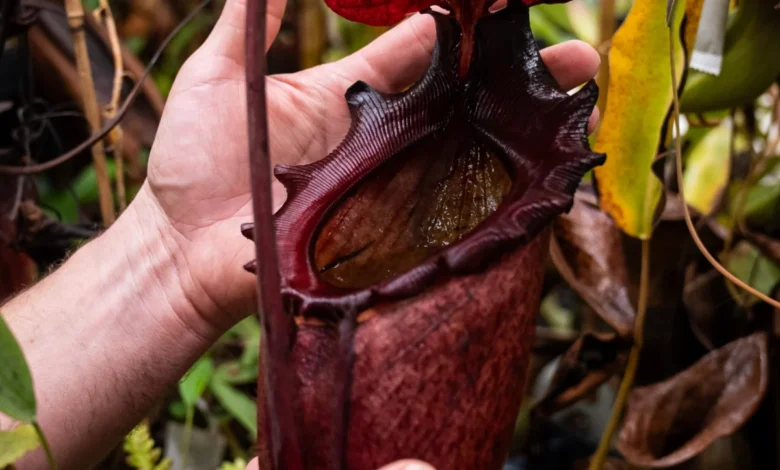
Despite sensationalized depictions in media, the vast majority of carnivorous plants pose no threat to humans, pets, or larger wildlife. The vast majority of species feed exclusively on small invertebrates, including flies, mosquitoes, ants, and spiders. However, a select group of large-scale tropical pitcher plants engage in complex, mutually beneficial relationships with small vertebrates.
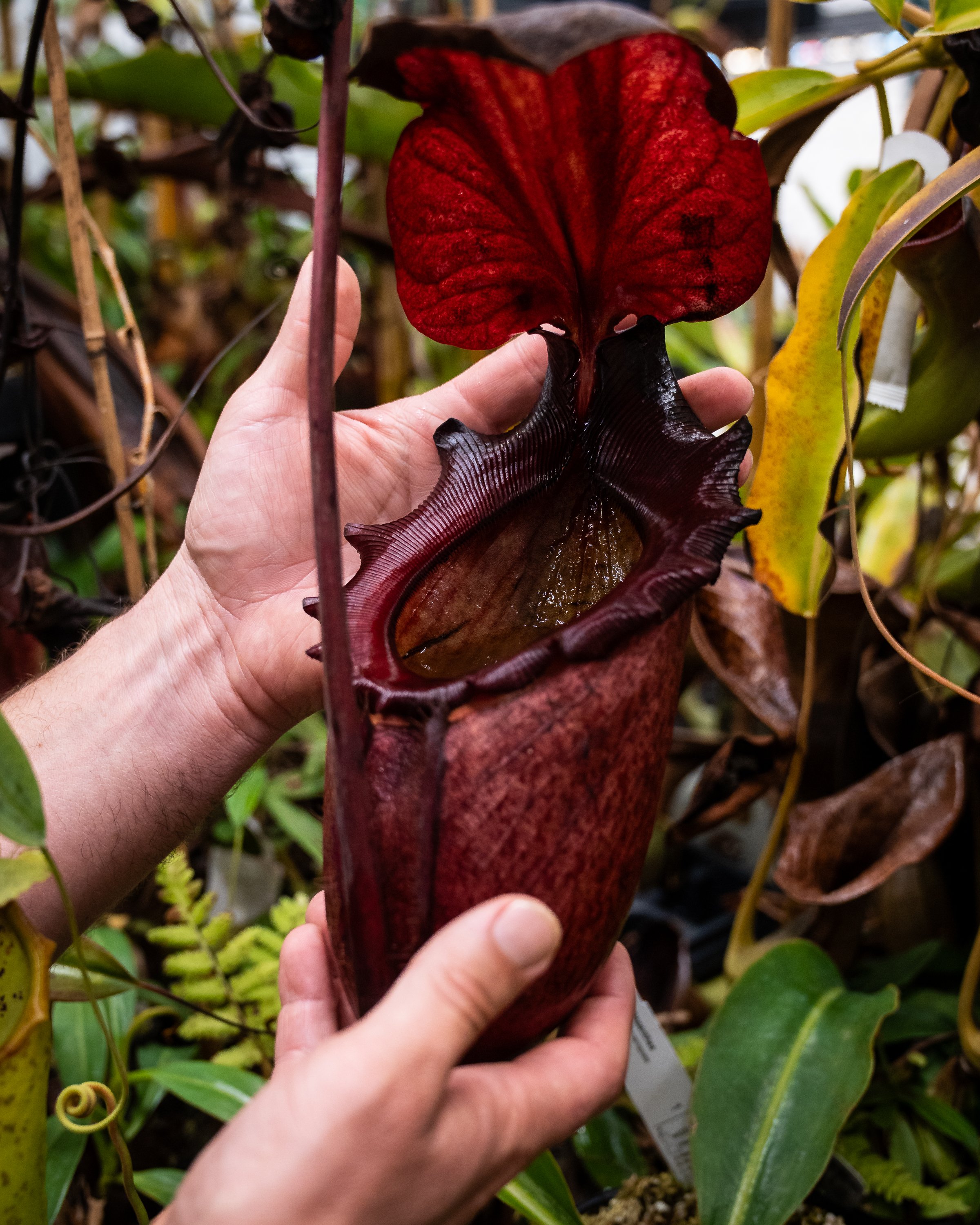
Certain giant montane pitcher plants, native to regions such as Malaysian Borneo, have evolved traps large enough to interact with small mammals like rats and shrews. Rather than purely acting as lethal traps, these large species have forged mutualistic relationships. The plants secrete a thick, sweet nectar along the underside of their pitcher lids. Small mammals are attracted to this exudate and often perch on the plant to feed. While feeding, the animals frequently defecate directly into the pitcher cavity. The plant absorbs rich nitrogen and phosphorus deposits straight from the droppings, securing a steady nutrient supply without expending energy to digest animal tissue. If a small animal accidentally loses its footing and falls into the fluid-filled interior, however, the plant’s acidic digestive enzymes will consume it.
Diversity of Trapping Mechanisms
Carnivorous plants exhibit a remarkable variety of predatory designs, categorized primarily by their trapping mechanics:
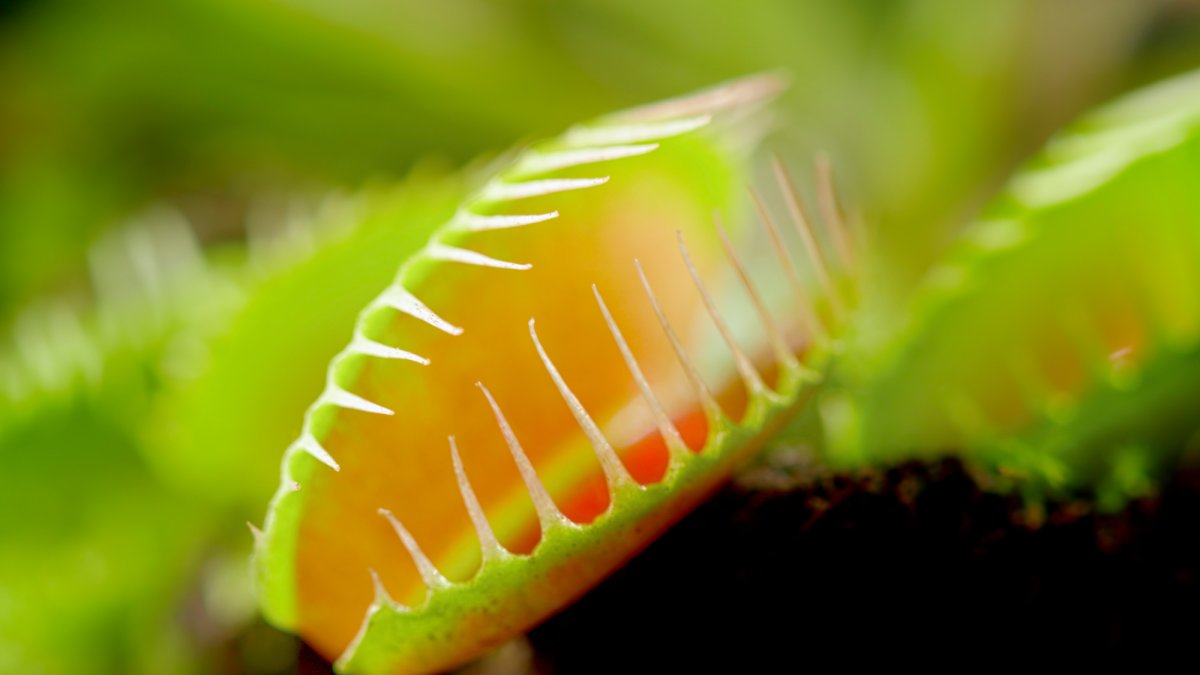
- Snap Traps: Exemplified by the Venus flytrap (Dionaea muscipula), these plants utilize rapid leaf movements triggered by sensitive trigger hairs. When an insect touches multiple hairs within a specific timeframe, electrical impulses cause the leaf lobes to snap shut rapidly, enclosing the prey.
- Pitfall Traps: Found in pitcher plants (Sarracenia, Nepenthes), these hollow, fluid-filled leaves feature slippery interior walls and downward-pointing hairs that prevent trapped insects from escaping.
- Sticky Traps (Flypaper): Utilized by sundews (Drosera) and butterworts (Pinguicula), these plants secrete glistening, viscous droplets of mucilage on their leaves. Insects are lured by the scent, become immobilized in the sticky substance, and trigger slow leaf curling to maximize digestive contact.
- Suction Traps: Employed by aquatic and terrestrial bladderworts (Utricularia), these microscopic bladder structures maintain a negative internal pressure. When prey touches trigger hairs, a trapdoor opens instantaneously, sucking in water and prey in less than one millisecond—ranking among the fastest movements in the plant kingdom.
- Corkscrew Plants (Genlisea): These semi-aquatic organisms possess subterranean leaves shaped like twisted corkscrew tunnels, which draw microscopic soil-dwelling organisms inward toward a digestive stomach.
Conservation Status and Broader Implications
As botanical research advances, scientists emphasize the importance of preserving the natural habitats of carnivorous plants, which face increasing threats from climate change, habitat fragmentation, and illegal poaching. Environmental studies indicate that a significant percentage of carnivorous plant species are currently at risk of extinction due to human encroachment on sensitive wetland ecosystems.
Beyond their ecological novelty, carnivorous plants provide valuable insights into plant physiology, genetic adaptation, and biochemical evolution. Their ability to thrive in extreme environments offers modern agriculture and biotechnology researchers a window into how plants process nutrient scarcity and defend against pathogens. While they may not pose the cinematic dangers imagined in science fiction, the true biological mechanisms of carnivorous flora continue to demonstrate the remarkable adaptability of life on Earth.