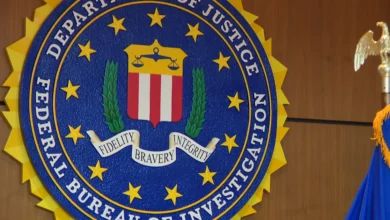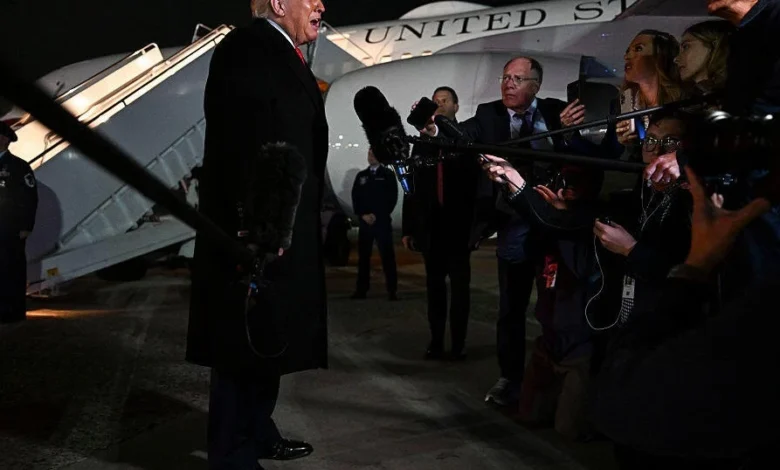
The United States Department of Justice has launched an inquiry into whether major television networks, including CBS, engaged in anti-competitive behavior by briefly suspending the television press pool system last month. The suspension was a coordinated response to President Trump’s decision to revoke the White House press credentials of three prominent news organizations: CNN, MSNOW, and Politico. According to a statement issued by Justice Department spokesperson Emily Covington, federal regulators are scrutinizing the collective action to determine if it constitutes a prohibited group boycott under the Sherman Antitrust Act.
The investigation marks a significant escalation in the ongoing tension between the Trump administration and the mainstream media. While the Department of Justice has not detailed the specific legal mechanisms it plans to employ, the Sherman Act—the foundational pillar of American antitrust law—prohibits contracts, combinations, or conspiracies in restraint of trade. Federal officials are now tasked with assessing whether the networks’ decision to pull their resources from the White House press pool represents a legitimate exercise of editorial independence or an illicit restraint on the competitive landscape of news gathering.
A Chronology of the Dispute
The roots of this legal and political standoff trace back to mid-September 2026, when the White House took the unprecedented step of stripping credentials from journalists representing CNN, MSNOW, and Politico. The administration justified the move by citing concerns over the outlets’ reporting standards, characterizing their coverage as "fake news."
In formal letters sent to the affected organizations, the White House alleged that specific reports—covering sensitive topics such as the construction of a new White House ballroom, the administration’s military strategy regarding the conflict with Iran, and activities at the Republican midterm convention—constituted threats to national security. Furthermore, the administration argued that these outlets had breached established protocols regarding "professionalism and decorum."
In a show of solidarity, the five major networks that comprise the television press pool—ABC, CBS, CNN, Fox, and NBC—collectively opted to halt their participation in the pool. This protest occurred during a high-stakes diplomatic period, specifically coinciding with the state visit of Chinese President Xi Jinping. By suspending the pool, which provides the primary video feed for the global press corps, the networks effectively limited the visual record of the summit.
The press pool issued a joint statement at the time, asserting, "The public has a vital interest in receiving accurate, independent information about its government. No administration should reject a news organization because it objects to its reporting."
Legal Battles and Court Interventions
Following the revocation of their credentials, CNN, MSNOW, and Politico sought immediate judicial relief. U.S. District Judge Timothy Kelly presided over the emergency filings, eventually granting a temporary restraining order that compelled the White House to reinstate the credentials of the affected reporters. Judge Kelly emphasized that the administration’s actions raised serious constitutional questions regarding due process and the freedom of the press.
However, the situation remains fluid. While the restraining order forced the physical return of credentials, the White House has reportedly maintained a policy of exclusion for CNN and Politico, barring their correspondents from high-access areas such as the Oval Office and from traveling on Air Force One. The restraining order was originally slated to expire on a Thursday, but Judge Kelly extended the mandate to the following Tuesday to allow for further deliberation on the merits of the case.
The Scope of the Antitrust Inquiry
The Justice Department’s pivot to an antitrust investigation adds a layer of economic complexity to a dispute that has primarily been viewed through the lens of the First Amendment. The Sherman Act is typically reserved for cases involving price-fixing, market allocation, or predatory behavior in the private sector. Legal scholars note that applying these statutes to the news industry is rare and fraught with difficulty.
"The government faces a high bar in proving that a temporary, protest-driven withdrawal from a shared service like a press pool constitutes an antitrust violation," said one constitutional law expert who requested anonymity. "The fundamental question is whether the networks acted to restrict market competition or to protect the integrity of their editorial functions."
The investigation comes at a time of significant consolidation in the media landscape. Notably, CBS News and CNN are now part of the same corporate entity, Skydance, following the finalization of the merger between Paramount and Warner Bros. Discovery earlier this week. The Justice Department is likely to examine whether this corporate alignment played a role in the speed and coordination of the networks’ protest.
Implications for Media Access and Democracy
The broader implications of this investigation are being felt across Washington. Media watchdog groups have expressed concern that the DOJ inquiry could be used as a tool to chill future collective actions by journalists. If the government succeeds in labeling a protest by news organizations as an illegal "boycott," it could theoretically restrict the ability of media outlets to stand in solidarity when individual members of the press are targeted by the executive branch.
Conversely, supporters of the administration’s position argue that the press pool is a monopoly in its own right, and that its members should not be permitted to dictate the terms of access to the White House. The White House has consistently maintained that its credentialing process is a matter of administrative discretion, intended to ensure that those who interact with the president adhere to established standards of conduct.
Data and Contextual Analysis
The White House press pool is an essential mechanism for modern journalism. It ensures that, even during times of limited space or logistical constraints, the public is provided with a record of the president’s activities. Historically, the pool has been managed by the White House Correspondents’ Association (WHCA) in partnership with the administration. Any disruption to this system creates a vacuum in the historical and public record.
As the legal proceedings continue, the Department of Justice will likely request internal communications from the five networks to determine if there was an explicit agreement to engage in a "group boycott." The networks, in turn, are expected to defend their actions as a necessary, short-term measure taken in response to what they perceive as an unconstitutional attempt by the executive branch to manage the composition of the press corps.
Current Status of the Investigation
The investigation is currently in its early stages. The New York Times, which first broke the news of the inquiry, reported that investigators are in the process of reviewing the timeline of the networks’ communications leading up to their decision to pull out of the pool.
Spokespeople for the major networks have generally declined to comment on the record, citing the ongoing litigation and the sensitivity of the regulatory inquiry. As the deadline for the extension of the restraining order approaches, all eyes remain on Judge Kelly’s courtroom. The intersection of antitrust regulation and media freedom represents a defining moment for the relationship between the federal government and the press in the 21st century.
Whether this inquiry leads to formal charges or serves as a warning against future coordinated protests remains to be seen. What is clear, however, is that the administration’s efforts to regulate the flow of information from the White House have fundamentally altered the landscape of the federal press corps, setting the stage for a protracted legal battle that will likely reach the appellate courts before the year is out. With the White House continuing to restrict access despite court orders, the constitutional crisis appears far from resolved.