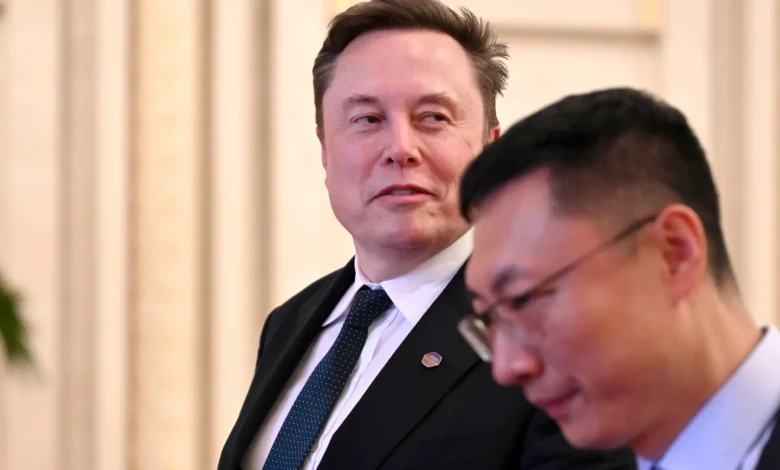
The intensifying commercial rivalry between two of the world’s most prominent technology and industrial leaders has spilled dramatically into the public eye. Elon Musk, the billionaire chief executive of SpaceX and Tesla, has ratcheted up his criticism of Indian industrialist Mukesh Ambani, mockingly dubbing him the "prime minister" of India. The provocative remarks underline Musk’s growing frustration over prolonged regulatory delays that continue to block SpaceX’s satellite internet subsidiary, Starlink, from commencing commercial operations in the world’s most populous nation.
The friction between the two mega-billionaires highlights the high-stakes battle for dominance in India’s lucrative digital landscape. While Musk seeks to break into a massive untapped market with over a billion internet users, he finds himself up against deeply entrenched domestic titans. Ambani’s conglomerate, Reliance Industries, operates Reliance Jio, India’s largest telecommunications provider, which commands immense influence across the country’s economic and political spheres.
Musk’s Public Outbursts on Social Media
The latest war of words erupted on social media platform X, formerly known as Twitter. Musk directly targeted Ambani, accusing the billionaire of leveraging outsized political and economic influence to stifle foreign competition and protect a domestic monopoly.
"Naturally, you would prefer to maintain your monopolistic exploitation of the great people of India, but would you nonetheless consider allowing Starlink to compete?" Musk wrote in a post directed at the Reliance chairman.
This followed a series of escalating online jabs earlier in the week, during which Musk claimed that unnamed "oligarchs" were colluding behind the scenes to obstruct Starlink’s deployment. Pushing his rhetoric further, Musk posted a direct query to his millions of followers: "Is Ambani the real boss of India?"
The public attacks mark a distinct escalation in a regulatory struggle that has persisted for years, raising questions about how foreign tech giants navigate emerging markets heavily guarded by domestic corporate heavyweights.
The Regulatory Roadblock: Where Things Stand
Despite Musk’s characterization of a targeted blockade, Indian authorities and telecom regulators maintain that Starlink is simply navigating a standardized administrative process alongside competitors.
India’s Ministry of Communications swiftly rejected Musk’s monopoly allegations, issuing a formal statement asserting that the nation’s regulatory framework for satellite communications is entirely "fair and non-discriminatory." Indian Telecom Minister Jyotiraditya Scindia reinforced this stance, stating unequivocally that the government "does not allow a monopoly in any sector."
According to the communications ministry, Starlink—alongside two other licensed satellite operators—is currently undergoing mandatory security assessments. These evaluations must be successfully completed before the government can allocate crucial satellite spectrum. Officials emphasized that all three prospective service providers are positioned at broadly the same regulatory stage, directly contradicting claims that Starlink is being singled out or intentionally delayed.
A Complex Partnership and Historical Tensions
The animosity between Musk and Ambani is particularly striking given the complex nature of their corporate engagements in the region. In a surprising twist last year, SpaceX struck formal distribution agreements with both Reliance Jio and Bharti Airtel—India’s second-largest telecom operator—to facilitate the rollout of Starlink once regulatory hurdles were cleared.
However, corporate diplomacy has frequently given way to competitive friction. Long before Musk’s recent social media tirades, Starlink and Reliance Jio engaged in a fierce policy debate over how satellite spectrum should be allocated in India.
The core disagreement centered on the method of assignment:
- SpaceX and Starlink advocated for an administrative allocation process, arguing it is the global standard for satellite spectrum and speeds up deployment.
- Reliance Jio strongly pushed for a competitive auction process, contending that administrative assignment would create an uneven playing field for terrestrial telecom operators who paid billions for their spectrum through traditional auctions.
Ultimately, New Delhi sided with the administrative approach, embedding provisions in the telecommunications bill that allowed for administrative assignment. Despite winning that policy battle, Starlink remains stranded in regulatory limbo, awaiting the final security clearances required to launch.
Broader Economic Implications: The Tesla Struggle in India
The challenges facing Starlink in India mirror the difficulties Musk has encountered in expanding his electric vehicle venture, Tesla, into the South Asian subcontinent.
After years of intense speculation and prolonged negotiations with federal officials over import tariffs and local manufacturing requirements, Tesla officially entered the Indian market last year. However, the commercial reality has fallen significantly short of initial expectations. Industry data cited by automotive reports indicates that Tesla registered a meager 699 vehicles during its first 12 months of deliveries.
The primary impediment has been pricing. Steep import duties imposed by New Delhi on completely built-up units have inflated the retail price of vehicles like the Model Y to nearly double their cost in the United States. Although Tesla implemented price cuts earlier this year in an effort to stimulate demand, the vehicles remain prohibitively expensive for the vast majority of Indian consumers, cementing the notion that breaking into the Indian market requires navigating severe structural and regulatory hurdles.
The Broader Satellite Internet Landscape in India
As SpaceX attempts to secure its foothold, the race to deliver space-based broadband across India is intensifying. The market represents a colossal prize: connecting hundreds of millions of people residing in rural and remote regions where traditional fiber-optic infrastructure is economically unviable.
Competitors are moving aggressively to capture this demographic:
- Reliance Jio has established a joint venture with Luxembourg-based satellite giant SES, aiming to deliver high-speed broadband via orbit.
- Bharti Airtel stands as a major shareholder in Eutelsat OneWeb, which has steadily built out its regulatory credentials and infrastructure to offer commercial satellite connectivity across the country.
Both domestic giants view satellite broadband not as a replacement for their existing mobile networks, but as a critical extension to capture enterprise clients, remote schools, government facilities, and underserved rural households.
Analyst Perspectives and Future Outlook
Industry analysts suggest that Musk’s aggressive public posture could be a calculated high-risk strategy to pressure Indian regulators into fast-tracking approvals. By appealing directly to the public and framing the delay as a denial of educational and economic opportunities for children and small businesses, Musk is attempting to leverage public opinion against bureaucratic delays.
However, political economy experts warn that public insults directed at powerful national figures and government allies could backfire. Prime Minister Narendra Modi’s administration maintains a close, symbiotic relationship with major domestic conglomerates like Reliance Industries and the Adani Group, viewing them as essential partners in achieving national economic growth, infrastructure development, and technological self-reliance.
As the security assessments proceed, the timeline for Starlink’s commercial debut remains uncertain. What is clear, however, is that India’s digital frontier will not easily yield to foreign disruption without a fierce defense from the nation’s domestic corporate titans.