Meet Kayrasaurus changliensis: The Newly Discovered Herbivorous Dinosaur That Breaks All Anatomical Molds

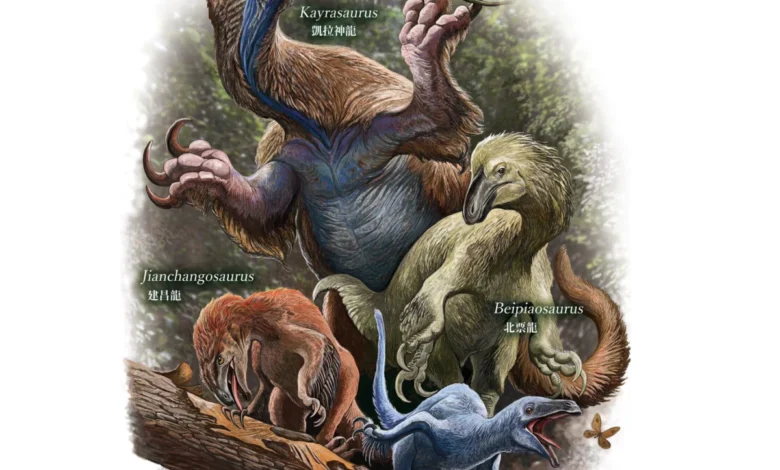
The prehistoric world continues to defy expectations as paleontologists unveil one of the most anatomically extraordinary discoveries in recent decades. Described in a study recently published in The Journal of Systematic Paleontology, a research team has introduced the scientific community to Kayrasaurus changliensis, a remarkably preserved specimen classified within the Therizinosauria clade. While therizinosaurs have long fascinated researchers due to their bizarre morphology and possession of what are believed to be the longest claws of any creature in Earth’s history—exceeding three feet in length—this newly unearthed species shatters previous size boundaries and dental configurations known for the group.
Uncovered within the fossil-rich strata of the Lower Cretaceous Yixian Formation in northeastern China, K. changliensis lived approximately 100 million to 65 million years ago during the Late Cretaceous epoch. This region, often celebrated by paleontologists as a treasure trove for remarkably preserved feathered dinosaur fossils, has once again yielded critical insights into the closing chapters of the Mesozoic era. The discovery provides an unprecedented look at a lineage of theropod dinosaurs that abandoned carnivory in favor of herbivory, developing an array of bizarre physical adaptations that set them apart from both their predatory relatives and contemporary plant-eaters.
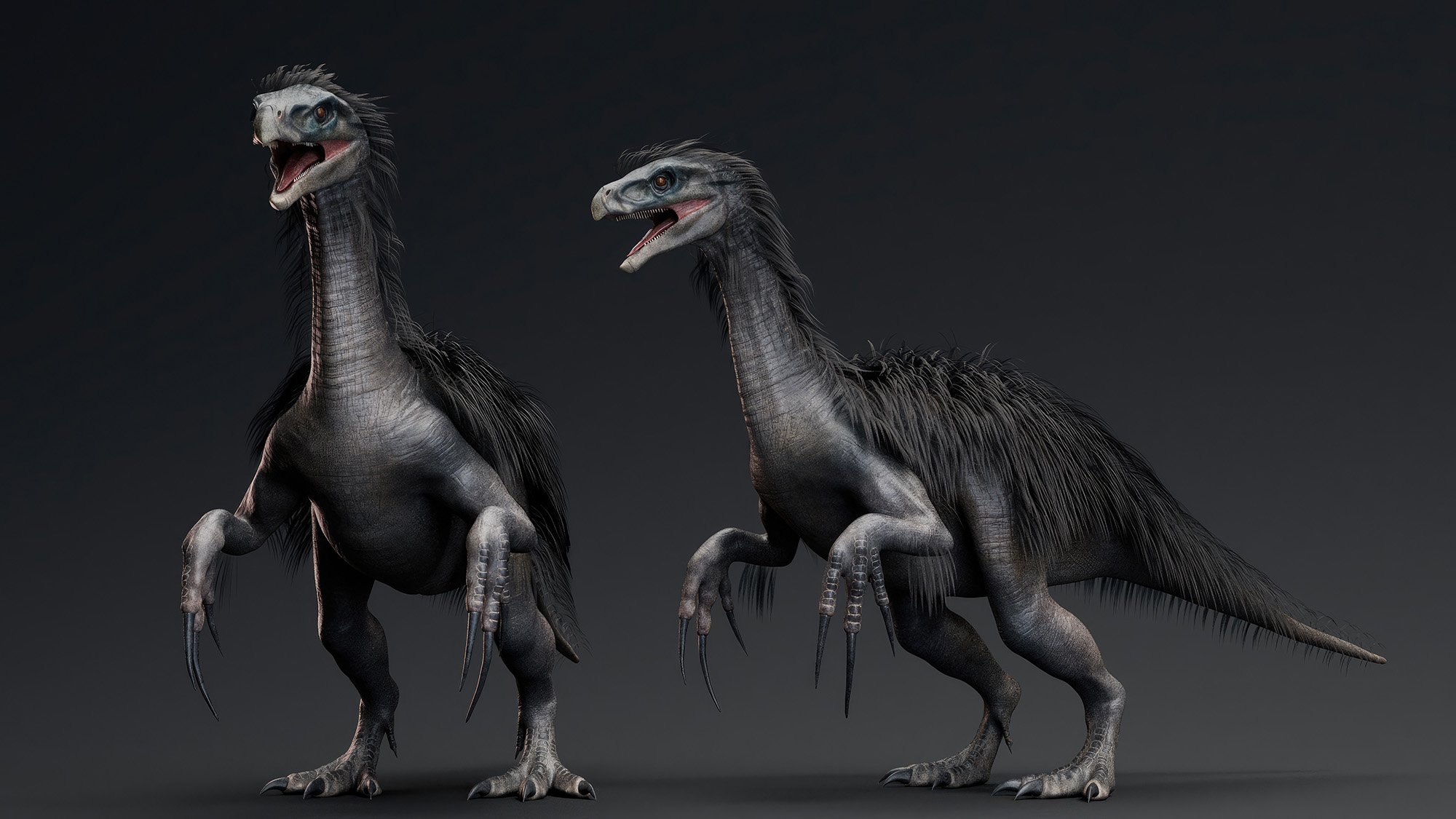
Unprecedented Scale and Physical Proportions
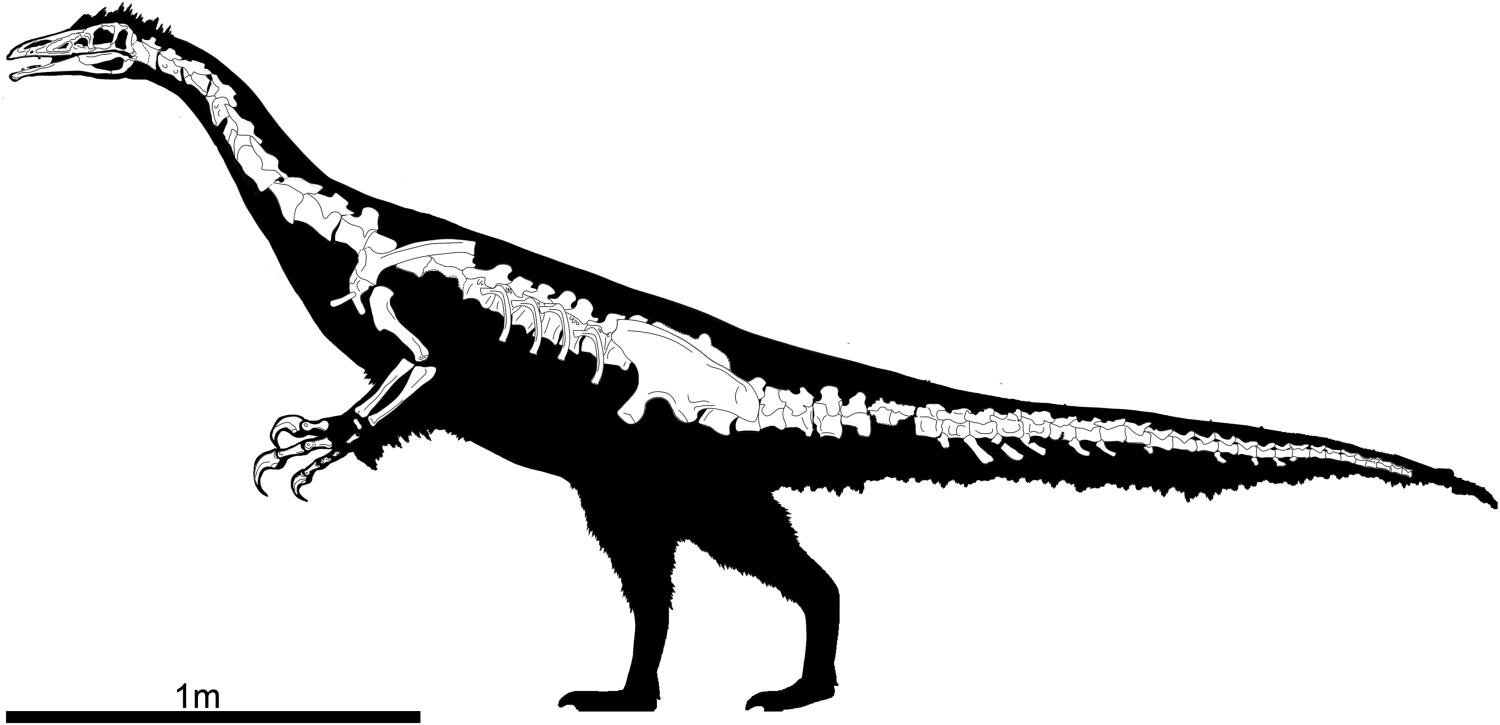
The specimen recovered from the Yixian Formation represents a juvenile individual that was still actively growing, yet its skeletal dimensions already surpass those of its closest known relatives. According to the research team—comprising Chun-Chi Liao, William J. Freimuth, Lindsay E. Zanno, and Xing Xu—K. changliensis measured nearly 12 feet in length, roughly equivalent to the size of a small moving truck. Estimates place its weight between 250 and over 600 pounds, making the young dinosaur comparable in mass to an adult grizzly bear.
Most notably, K. changliensis is calculated to be approximately 1.6 times larger than Beipiaosaurus inexpectus, the previous record-holder for the largest therizinosaur discovered in China. Because the analyzed specimen was not yet fully mature, paleontologists project that a fully grown adult K. changliensis would have attained significantly greater mass and length, cementing its status as a titan among its clade.
Despite their classification as theropods—a broad taxonomic group that includes undisputed carnivores like Tyrannosaurus rex and Velociraptor—therizinosaurs evolved a profoundly different ecological strategy. K. changliensis possessed the signature blueprint of its clade: a long neck, a relatively small head, a prominent potbelly, and a bipedal stance covered in a dense coat of primitive feathers. However, its heavy, robust skeletal architecture indicates that it was built for stability and specialized feeding rather than the rapid, agile running observed in smaller relatives like ornithomimosaurs.
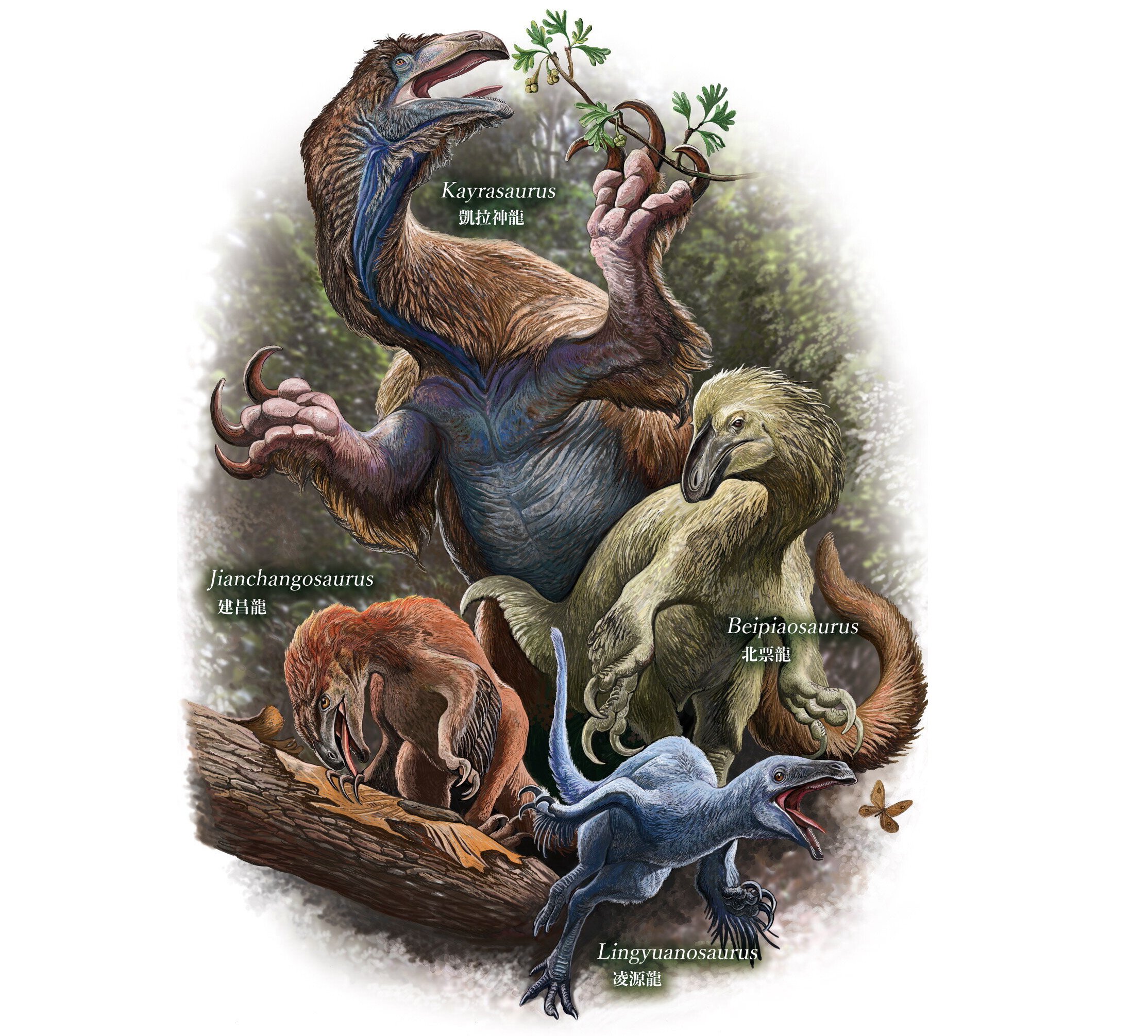
A Radical Dental Architecture
One of the most striking revelations of the study centers on the dental and cranial anatomy of K. changliensis. While standard therizinosaurs typically featured modest dental equipment suited for browsing vegetation, this new species possessed an exceptionally dense and specialized array of teeth, coupled with a pronounced underbite.
The lower jaw of K. changliensis accommodated 45 tightly packed teeth, while the upper jaw contained 32 teeth. This high tooth count far exceeds the threshold of any previously documented large therizinosaurus, none of which featured more than 40 teeth in either jaw. Furthermore, the skull morphology included distinct structural openings: a triangular fenestra on the side of the lower jaw and a large opening near the snout on the upper jaw. While the exact physiological or biomechanical functions of these openings remain under investigation, they highlight the highly specialized nature of the animal’s feeding apparatus.
Researchers noted that the jaw structure and dense dentition of K. changliensis bear a striking resemblance to anatomical features found in entirely distinct herbivorous dinosaur clades. This adaptation suggests that the species occupied a unique ecological niche, utilizing its powerful jaws to process tough plant material in a manner distinct from contemporaneous ornithischian herbivores.
Geological Context and the Chronology of Discovery
The discovery of K. changliensis reinforces the scientific importance of the Yixian Formation, a geological formation in northeastern China nestled between Beijing and the Korean Peninsula. Often referred to by paleontologists in the context of exceptional fossil preservation due to ancient volcanic activity—frequently likened to a Chinese Pompeii—the Yixian Formation has consistently provided pristine specimens that preserve soft tissues, feather impressions, and intricate skeletal details.
The chronology of therizinosaur research spans several decades, transitioning from early, fragmented discoveries in the mid-20th century to a modern renaissance driven by finds in East Asia and North America. Therizinosaurs emerged during the Cretaceous period and persisted until the Cretaceous-Paleogene extinction event approximately 65 million years ago, which wiped out non-avian dinosaurs globally. The addition of K. changliensis to the fossil record refines the evolutionary timeline of late-stage therizinosaurs, demonstrating that these bizarre animals continued to diversify and scale up in size right up until the end of the Mesozoic era.
Broader Implications and Pop Culture Versus Science
The unveiling of K. changliensis offers vital data for evolutionary biologists seeking to understand how theropod dinosaurs diversified into herbivorous niches. The coexistence of multiple specialized plant-eating groups during the Cretaceous highlights complex ecosystems where niche partitioning prevented direct competition among large herbivores.

The animal’s discovery also reignites public interest in the group, which gained mainstream prominence following appearances in major media franchises, most notably a memorable sequence in the 2022 film Jurassic World Dominion. While popular culture frequently casts therizinosaurs as aggressive, predatory threats capable of launching attacks with their three-foot-long scythe-like claws, paleontological consensus firmly positions these adaptations within a defensive or foraging context. The massive claws were likely utilized to pull down high branches, strip bark, or deter predators, rather than to hunt prey.
As researchers continue to clean and analyze the fossil material from the Yixian Formation, K. changliensis stands as a testament to the boundless morphological diversity of the dinosaurian world. Future histological analyses of the specimen’s bones will likely yield precise age data at the time of death, offering further projections on the ultimate size limits of the largest therizinosaur ever to walk the Earth.