The Holy Grail of Baseball Cards: 1909-11 T206 Honus Wagner Smashes Bidding Milestones at Heritage Auctions

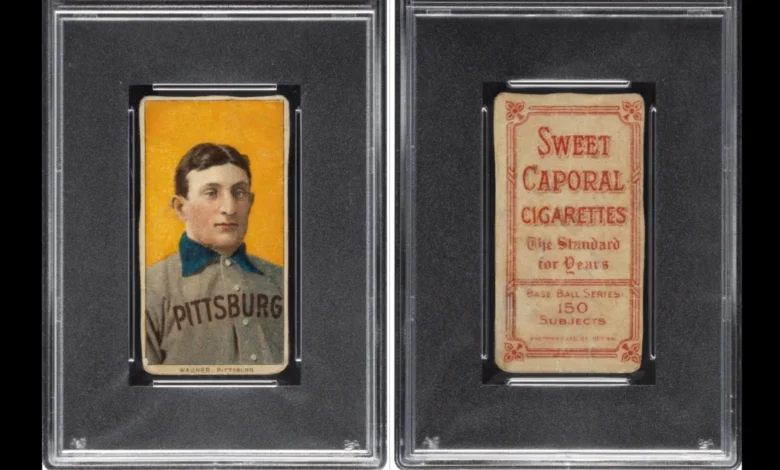
The market for high-end sports memorabilia continues to reach unprecedented heights as one of the most elusive and legendary collectibles in existence commands global attention. The artifact in question—officially cataloged as the 1909-11 T206 White Border Sweet Caporal 150/25 Honus Wagner PSA Authentic (Restored)—has once again captured the imagination of historians, investors, and die-hard sports fans alike. With bidding currently open through October 25, the artifact has already surpassed the coveted $1 million threshold, with auction house experts projecting a final sale price that could challenge multi-million-dollar historical precedents.
Revered universally as the “Holy Grail” of baseball card collecting, the T206 Honus Wagner stands alone at the apex of sports hobby culture. Its blend of scarcity, historical mystique, and the legendary status of the player depicted on its cardboard canvas has transformed a simple promotional item from the early 20th century into a multi-million-dollar asset class. As the countdown to the final hammer approaches, the auction serves as a striking reminder of how cultural artifacts intersect with modern financial investments.
Main Facts and Current Auction Dynamics
The ongoing auction, hosted by Heritage Auctions as part of their Fall Sports Catalog Event, highlights the enduring allure of pre-war baseball cards. While the formal title of the piece—1909-11 T206 White Border Sweet Caporal 150/25 Honus Wagner—is a mouthful for casual observers, collectors recognize the asset instantly by its pedigree.
Current bidding on the card has already climbed to $1,025,000 with days remaining before the lot closes. Representatives from Heritage Auctions anticipate that robust competitive bidding will ultimately push the final transaction figure north of $3,000,000. While a seven-figure sum is extraordinary for most commodities, it aligns comfortably with the historical performance of authenticated T206 Wagners. Earlier this year, a comparable 1909-11 T206 Piedmont Honus Wagner carrying an SGC Authentic grade successfully hammered for an astounding $5.8 million, setting a high bar for the asset category.
This specific offering marks only the sixth time in corporate history that Heritage Auctions has brought a verified T206 Wagner to the public block. The extreme rarity of the item ensures that whenever a copy emerges from a private collection or estate, it instantly becomes a major news event within the global collecting community.
Historical Context and the Legend of Honus Wagner
To understand why a piece of cardboard is valued in the millions, one must examine the legacy of Johannes Peter "Honus" Wagner and the era in which he played. Born in 1874 to German immigrant parents in Carnegie, Pennsylvania, Wagner rose from humble beginnings—including working alongside his father and brothers in local coal mines—to become one of the greatest athletes in American sports history.
Nicknamed the "Flying Dutchman" due to his astonishing speed on the basepaths and German heritage, Wagner spent the vast majority of his storied career as the premier shortstop for the Pittsburgh Pirates from 1900 through 1917. Over the course of his 21-season major league career, he captured eight National League batting titles, batted above .300 for fifteen consecutive seasons, and finished with a career batting average of .327. Ty Cobb, a fierce competitor and contemporary, famously remarked that Wagner was "the closest thing to a perfect player" the game had ever seen.
When the National Baseball Hall of Fame opened its doors in Cooperstown, New York, in 1937, Wagner was elected as part of its inaugural class alongside luminaries such as Babe Ruth, Ty Cobb, Christy Mathewson, and Walter Johnson.
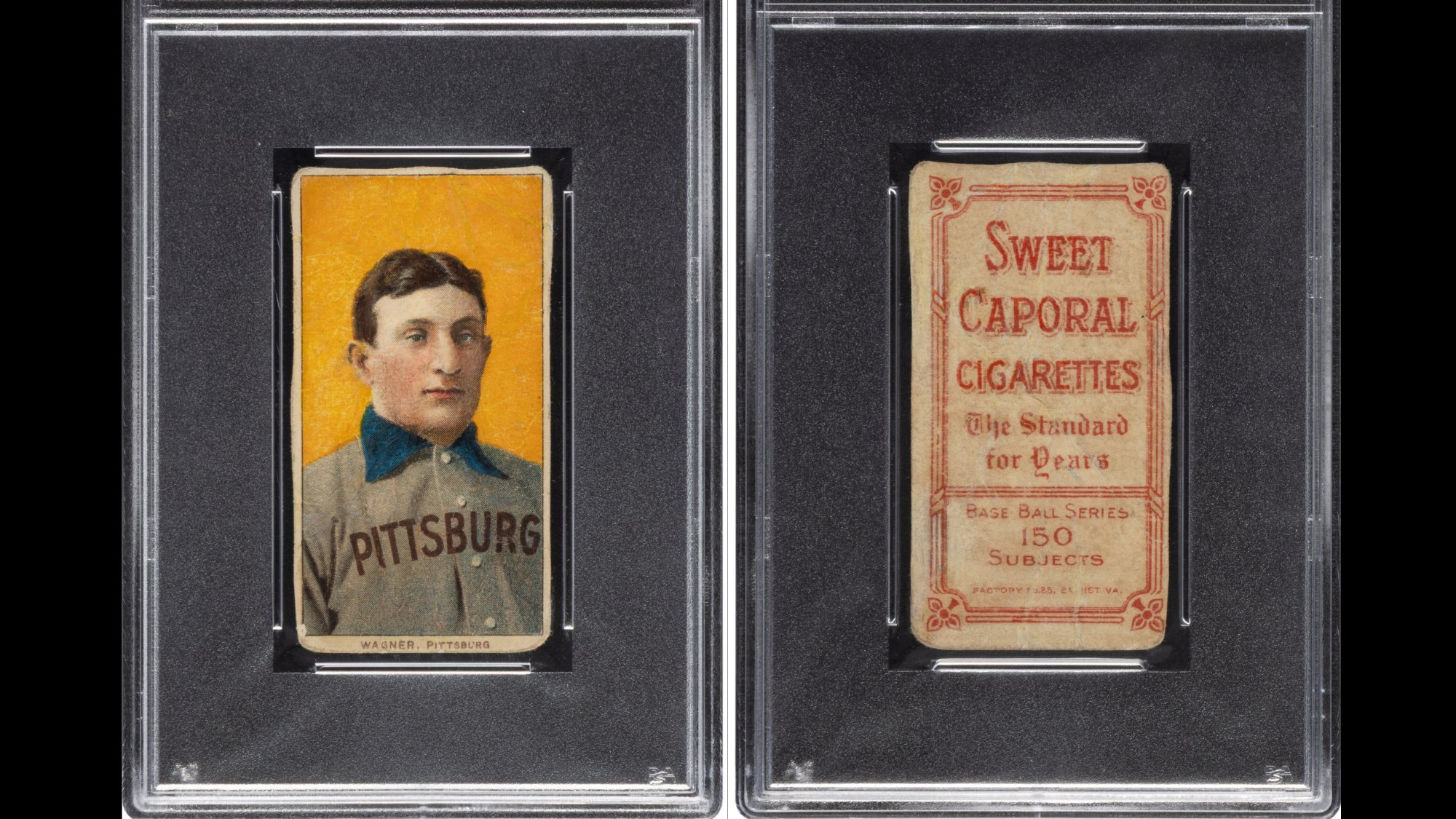
Yet, the genesis of the T206 card introduces a compelling narrative involving player agency and anti-tobacco advocacy. Between 1909 and 1911, the American Tobacco Company (ATC) produced the massive T206 set, inserting small cardboard advertisements into packs of cigarettes under various brand names, including Sweet Caporal and Piedmont.
According to sports lore, Honus Wagner demanded that the American Tobacco Company immediately cease the production and distribution of his card upon discovering that his likeness was being used to market tobacco products to the public—some historical accounts suggest he objected to children buying cigarettes just to acquire his picture, while others note he simply wanted financial compensation for the use of his image that was never negotiated. Whatever the precise motivation, compliance was swift. Production halted abruptly, leaving only a tiny fraction of the intended print run to circulate to the public.
Chronology of a Masterpiece
Tracing the journey of the T206 Honus Wagner reveals a fascinating timeline of sports history meeting modern financial valuation:
- 1909–1911: The American Tobacco Company manufactures the T206 white-border and Piedmont sets, distributing cigarette cards nationwide. Production of the Honus Wagner card is abruptly canceled due to the player’s objections, resulting in an estimated total survival pool of roughly 50 to 60 authentic copies known to exist today.
- 1937: Honus Wagner is enshrined in the inaugural class of the National Baseball Hall of Fame, cementing his legacy long after his retirement from the Pittsburgh Pirates.
- Late 20th Century: As organized sports card collecting transitions from a childhood hobby into a sophisticated multi-billion-dollar market, the T206 Wagner ascends to undisputed legendary status, with individual sales breaking historical records decade after decade.
- Early 2024: A high-grade comparable T206 Piedmont Honus Wagner is auctioned off, shattering expectations by fetching over $5.8 million.
- October 2026: Heritage Auctions launches its Fall Sports Catalog Event, featuring the 1909-11 T206 White Border Sweet Caporal Honus Wagner (PSA Authentic, Restored). Bidding opens and rapidly crosses the $1 million threshold within days, setting the stage for a dramatic close on October 25.
Supporting Data and Market Implications
The valuation of high-end sports memorabilia has evolved drastically over the past three decades. Once treated as ephemeral childhood playthings, vintage baseball cards are now analyzed with the same rigor as fine art, rare coins, and blue-chip equities.
Industry analysts point to several distinct economic drivers behind the multi-million-dollar valuations of cards like the T206 Wagner:
- Absolute Scarcity: With fewer than 70 confirmed copies of the T206 Wagner surviving in any condition—many of which bear heavy wear, trimming, or restoration—demand vastly outstrips supply. Simple economics dictates that elite collectors and institutional syndicates must compete aggressively for a nearly non-existent inventory.
- Institutionalization of Collecting: The rise of third-party grading and authentication services, such as Professional Sports Authenticator (PSA) and Sportscard Guaranty Corporation (SGC), has brought institutional trust and transparency to the hobby. Buyers can invest millions with confidence regarding the provenance and structural integrity of the item.
- Alternative Asset Diversification: High-net-worth individuals and private equity funds increasingly view rare sports memorabilia as an effective hedge against inflation and traditional market volatility. Tangible cultural assets that hold universal emotional appeal often retain their value independently of corporate earnings reports.
Chris Ivy, Director of Sports Auctions at Heritage Auctions, captured the sentiment of the industry when commenting on the offering: “The T206 Wagner is the foundational trophy of baseball card collecting. Every time one steps up to the plate, the entire sports world watches to see how the market will respond.”
Broader Impact and Cultural Resonance
Beyond the impressive financial figures and auction room drama, the enduring fascination with the T206 Honus Wagner speaks to society’s deep-seated desire to preserve physical connections to the past. In an increasingly digital world where historical media is streamed, archived, and consumed virtually, tangible artifacts carry profound psychological weight.
Owning a T206 Wagner is not merely about possessing a rare piece of cardboard; it represents stewardship of a pivotal era in American sports history, when baseball was cementing itself as the national pastime. As bidding continues toward the October 25 deadline, the event reinforces the reality that certain cultural treasures transcend their material form, commanding timeless reverence and staggering market value alike.