Michigan Judge Agrees to Early Retirement Following Sweeping Misconduct Inquiry Involving Alcohol Abuse, Case Delays, and Judicial Interference

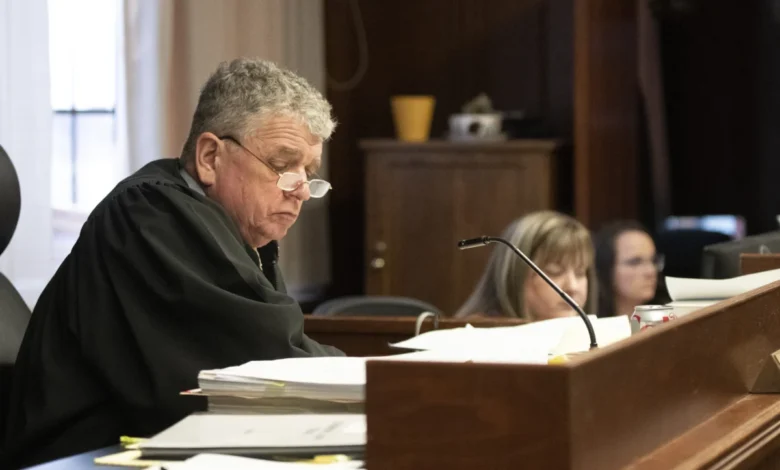
The American legal landscape faces renewed scrutiny regarding judicial ethics and oversight following a comprehensive state supreme court order detailing years of systemic misconduct by a sitting Michigan jurist. Thomas D. Wilson, a veteran judge of the 4th Circuit Court in Jackson County, has formally agreed to a permanent retirement under a negotiated settlement with the state’s judicial oversight body. However, the resolution has sparked debate within the legal community due to a provision allowing him to potentially accept future appointments as a visiting judge, subject to certain conditions.
The disciplinary action concludes a protracted investigation by the Michigan Judicial Tenure Commission (JTC) that exposed a troubling pattern of ethical breaches, substance abuse, workplace harassment, and administrative manipulation spanning nearly two decades. The findings paint a picture of a judge who repeatedly leveraged his judicial authority for personal and familial benefit while systematically concealing judicial backlog and operating under the influence of alcohol.
Main Facts of the Disciplinary Order
According to the official order published by the Michigan Supreme Court, Thomas D. Wilson stepped down from his post on the 4th Circuit Court bench in February 2025, following a formal disciplinary complaint filed late that year by the State of Michigan Judicial Tenure Division. The sweeping nature of the complaint addresses multiple facets of Wilson’s tenure, culminating in a negotiated settlement that avoids a full public removal proceeding while effectively ending his career as a permanent full-time jurist.
Central to the allegations is Wilson’s admission under oath in 2025 that he routinely engaged in a dangerous cycle of leaving the courthouse during the workday, consuming alcohol at home, and returning to the bench to preside over active legal proceedings. The JTC complaint highlights that Wilson’s alcohol abuse manifested across an eight-year window, running roughly from 2013 through 2021.
Beyond substance abuse on the job, the supreme court order itemizes a litany of egregious ethical violations. These include inappropriate ex parte communications, improper venue manipulation for family members, threats of professional retaliation against prosecutors, sexually harassing remarks directed at courthouse staff, pervasive failures to disclose financial and professional conflicts of interest, and the deliberate falsification of administrative docket codes to cover up severe case delays.
Chronology of Events and Escalating Misconduct
The trajectory of Thomas D. Wilson’s judicial career is marked by a long, slow accumulation of institutional oversight interventions that ultimately culminated in his exit from the bench.
A 1988 graduate of Wayne State University Law School, Wilson spent nearly two decades operating as a sole legal practitioner before successfully winning election to the 4th Circuit Court in 2006. Over the course of his tenure, he ascended to a leadership role within the local judiciary, eventually serving as the chief judge for the 4th Circuit, a position that carried administrative oversight responsibilities over his fellow judges and court personnel.
Despite his leadership standing, warning signs regarding his professional conduct emerged early. The JTC’s investigation identified ethical violations stretching back to the earliest years of his judgeship:
- 2007 to 2022: Wilson routinely failed to disclose material conflicts of interest to litigants appearing in his courtroom. Specifically, he omitted the fact that three attorneys practicing before him were his residential tenants. Furthermore, he neglected to disclose that five separate lawyers representing him or members of his immediate family in personal legal matters were actively appearing in his court.
- 2007 to 2025: For nearly two decades, Wilson developed a systematic practice of delaying decisions in various civil and criminal cases without providing legally mandated explanations to the parties. To prevent court administrators and state overseers from noticing the stagnant dockets, he explicitly instructed his court staff to code and categorize the delayed cases deceptively, hiding the true backlog from public view.
- 2013 to 2021: During this eight-year period, Wilson’s abuse of alcohol intensified, frequently impacting his daily functioning at the courthouse.
- 2016: In the midst of his own divorce proceedings, Wilson engaged in improper ex parte communication by directly approaching the presiding judge handling his personal family law case outside the presence of opposing counsel.
- 2016 to 2018: Wilson subjected female courthouse employees to a hostile work environment characterized by inappropriate, sexually explicit remarks, graphic descriptions of sexual acts, and unsolicited commentary regarding their physical appearances.
- 2017: Wilson abused his judicial influence to insulate his family members from criminal accountability in two separate incidents. In the first instance, he successfully arranged for a retail theft and fraud case involving his child to be transferred directly to Jackson County, where he maintained jurisdictional control. In the second instance, when a relative was facing a minor-in-possession charge, Wilson confronted two local prosecutors and explicitly threatened them with professional retaliation if they refused to dismiss the charges.
- 2019: Amid growing concerns regarding his fitness, the Judicial Tenure Commission formally requested that Wilson undergo a substance abuse assessment through the State Bar of Michigan Lawyers and Judges Assistance Program (LAP). Wilson ignored this directive, declining to participate in the evaluation.
- 2024: The JTC renewed its demand for a substance abuse assessment. This time, facing mounting institutional pressure, Wilson complied. The subsequent LAP assessment determined that Wilson was candid during his interview process and concluded there was "no present cause for concern" at that specific juncture.
- 2025: The JTC formally filed its comprehensive disciplinary complaint against Wilson, which included his damning admissions under oath regarding his practice of drinking alcohol during the workday and returning to court intoxicated. In February 2025, Wilson officially departed from the 4th Circuit Court bench.
- October 2025: The Michigan Supreme Court officially published its binding disciplinary order formalizing Wilson’s retirement and establishing the terms of his exit.
Supporting Data and Legal Representation
The gravity of the charges against Wilson placed him under intense scrutiny from both state regulators and the broader legal reporting community. Throughout the disciplinary proceedings, Wilson retained legal counsel from the prominent Michigan-based defense firm Miller, Canfield, Paddock and Stone. Representatives from the firm did not immediately respond to inquiries from legal publications such as the ABA Journal and Bloomberg Law regarding the settlement terms or the decision to permit potential visiting judge appointments.
Publicly accessible data from Ballotpedia and state judicial directories outline Wilson’s institutional footprint in Jackson County, highlighting the irony that a jurist tasked with upholding the rule of law routinely bypassed statutory procedures for personal convenience and familial protection. The sheer breadth of the JTC complaint—encompassing financial non-disclosures, sexual harassment, docket manipulation, witness intimidation, and operating under the influence—makes this one of the most comprehensive judicial discipline cases in recent Michigan history.
Official Responses and Institutional Context
While the Michigan Supreme Court order brings a formal close to Wilson’s active, permanent role on the bench, the inclusion of a clause allowing him to potentially accept future assignments as a visiting judge has drawn quiet skepticism from judicial ethics watchdogs. In many jurisdictions, negotiated retirements allow aging or compromised judges to exit gracefully without the protracted expense of a public removal hearing, while simultaneously stripping them of their permanent seat. However, permitting an individual with a documented history of severe substance abuse on the job, docket manipulation, and threats of prosecutor intimidation to retain visiting judge privileges raises critical questions about consistency in judicial accountability.
The Judicial Tenure Commission operates as the constitutional watchdog over Michigan’s judiciary, charged with investigating allegations of judicial misconduct, physical or mental disability, and ethical violations under the Michigan Code of Judicial Conduct. The commission’s ability to compel substance abuse evaluations—as demonstrated in its multi-year pursuit of Wilson—serves as a vital mechanism for identifying impaired jurists before their actions compromise the integrity of trials and hearings. Yet, the delayed compliance by Wilson in 2019 underscores the ongoing challenge regulatory bodies face when attempting to enforce accountability among sitting judges who hold administrative authority within their own circuits.
Broader Impact and Implications for Judicial Ethics
The case of Thomas D. Wilson serves as a cautionary tale for state judiciaries nationwide regarding the urgent need for robust, proactive mental health and substance abuse intervention programs within the legal profession. Judges occupy positions of immense public trust, where impairment—whether due to chemical dependency, burnout, or personal stress—directly threatens the constitutional rights of litigants.
Furthermore, the allegations concerning docket manipulation and the deliberate concealment of case delays highlight vulnerabilities in administrative oversight. When a chief judge or senior jurist can instruct staff to miscode stagnant files, it reveals a structural blind spot in how state court administrative offices monitor case processing times and judicial productivity. The revelation that Wilson concealed delays from 2007 to 2025 emphasizes that statistical reporting systems must incorporate independent auditing mechanisms that cannot be easily overridden by individual judges seeking to hide their own administrative backlogs.
Finally, the fallout from Wilson’s tenure touches upon workplace safety and professional decorum within the judiciary. The inclusion of findings regarding inappropriate, sexually explicit remarks made to female staff members reinforces the reality that judicial chambers are not immune to workplace harassment. Legal experts note that systemic power imbalances often make it difficult for courthouse employees to report misconduct committed by the very judges who evaluate their performance and determine their employment standing.
As Michigan’s legal community digests the supreme court’s final order, the case will likely be cited in future discussions surrounding judicial discipline, the limits of negotiated settlements, and the delicate balance between offering a dignified exit for struggling jurists and safeguarding the absolute integrity of the justice system.
Related posts: