The Ongoing Siege of Sovereignty: The Tohono O’odham Nation and the Fight Against the Border Wall

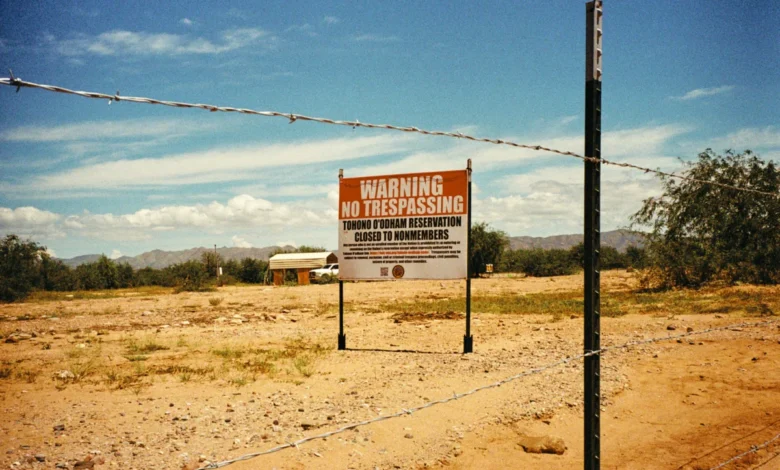
At 4:59 a.m. on August 25, Verlon Jose, the chairman of the Tohono O’odham Nation in Southern Arizona, received an email from the acting chief patrol agent of the U.S. Border Patrol’s Tucson Sector, Henry N. Laxdal. The communication was brief and carried the weight of a fait accompli: government contractors were already en route to conduct soil testing for a 62-mile segment of the border wall along the Nation’s southern boundary. The work, Laxdal wrote, would begin in exactly one minute. This notification marked a pivotal, if not aggressive, escalation in a long-standing territorial and cultural conflict between the federal government and one of the largest Native American tribes in the United States.

For the Tohono O’odham, whose ancestral homelands span both sides of the U.S.-Mexico border, the project represents an existential threat to their sovereignty and spiritual life. Thousands of tribal members maintain family ties and participate in ceremonies that require routine cross-border travel, all of which would be severely disrupted by a physical barrier. While federal authorities cite the necessity of border security, the Nation argues that the destruction of their sacred landscapes—some of which have been documented for over 6,500 years—constitutes a violation of their rights that far outweighs the government’s stated security objectives.
A Chronology of Escalation
The friction between the Nation and the Department of Homeland Security (DHS) has been building for years, characterized by a series of legal battles and a tightening of the security apparatus around the reservation. Following a change in administration, tensions spiked in February 2026, when Customs and Border Protection (CBP) informed the tribe of plans to seal off the reservation entirely. The initiative, funded under the $52 billion "One Big Beautiful Bill Act," bypassed standard environmental and cultural preservation statutes, a maneuver the Trump administration has utilized on 60 separate occasions during its tenure.

By mid-June, the federal government had awarded a $1.3 billion contract to the Texas-based Sullivan Land Services Co. (SLS), a firm known for its history of political donations and previous border wall projects. In response, the Nation filed a lawsuit in the U.S. District Court for the District of Columbia, asserting that the construction would result in an illegal reduction of tribal lands and an act of trespass on sovereign territory.
Despite the legal challenge, the federal government moved quickly. On August 14, Judge Richard J. Leon denied the tribe’s request for an emergency injunction. Within hours of the ruling, the tone from the federal government became openly hostile. James Percival, the general counsel for the DHS, took to social media to post a meme featuring the "Borg"—a cybernetic, assimilationist race from the Star Trek franchise—accompanied by the text, "RESISTANCE IS FUTILE." The message signaled a clear departure from the collaborative, albeit strained, relationship the tribe had maintained with federal agencies for decades.

The Human Cost and Surveillance Apparatus
The impact of this construction is not merely abstract; it is deeply personal for the residents of the reservation. Deshane Gregg, a tribal member who saw her vehicle forced off the road by a convoy of contractors and federal agents, described the presence of these forces as a "siege." This sentiment is shared by many within the community, who report a constant, invasive surveillance presence.
Data compiled by tribal members through daily activity logs—numbering over 1,000 entries—details the extent of this monitoring. These logs document a persistent presence of drones, helicopters, and heavily armed tactical teams, including units from BORTAC (the Border Patrol’s special operations group) that have been implicated in previous controversial operations in major U.S. cities. For the Tohono O’odham, the "safety" promised by the federal government feels indistinguishable from occupation.

This environment is particularly distressing given the history of fatal encounters between tribal members and federal agents. The 2023 killing of Ray Mattia, an unarmed 58-year-old tribal member shot on his own doorstep by Border Patrol agents, remains a haunting reminder of the stakes. For the youth of the Nation, such as 24-year-old Collin Quasule, the presence of these agents triggers a constant state of vigilance, with reports of agents following residents home and conducting unauthorized, aggressive traffic stops.
Official Rationales and Disputed Security Claims
The government’s official stance remains centered on the necessity of the project. CBP Commissioner Rodney Scott has described the Tohono O’odham reservation’s southern border as "one of the most dangerous smuggling and trafficking corridors on the Southwest border." He maintains that the wall is a critical tool for addressing cartel activity and preventing illegal entry.

However, these claims are at odds with the data provided by the tribe. Interim Chief of Police James Cook has reported a 90% reduction in illegal entry incidents over the past year, with border-related crimes described as having "almost disappeared." Despite the statistically low levels of border activity—which federal reports confirm are at their lowest levels in over 50 years—the administration insists that the absence of a barrier creates a "funneling effect" that necessitates the wall’s construction.
The Double Standard: Arizona vs. Texas
The contrast between the treatment of the Tohono O’odham and other border communities has not gone unnoticed. In Texas, a similar push for a border wall in Big Bend National Park faced intense opposition from a diverse coalition of hunters, ranchers, and environmentalists. In that instance, the federal government agreed to a pause following discussions with Governor Greg Abbott.

For the Tohono O’odham, who have been told by officials like Secretary Markwayne Mullin that their sovereignty is respected only "to the extent that it does not hinder border security," this discrepancy highlights a troubling double standard. Activists like Amy Juan have labeled the situation a result of "good old boy" politics, where the political influence of certain states carries more weight than the treaty-protected rights of sovereign tribal nations.
Implications for Tribal Sovereignty
The implications of this struggle extend far beyond the Sonoran Desert. By waiving over 30 federal laws to expedite construction, the DHS is setting a dangerous precedent for the erosion of tribal authority. If a federal agency can unilaterally override the land-use rights of a federally recognized tribe, the concept of "tribal sovereignty" is rendered functionally void.

Legal experts note that the administration’s reliance on the "Roosevelt Reservation"—a 60-foot-wide strip of land that the government claims it can manage without local oversight—is a strategic move to bypass the legal complexities of tribal law. However, as attorney Riyaz Kanji argued during the injunction hearings, the rugged and uneven terrain of the borderlands makes it impossible for construction to remain within such a narrow boundary, effectively guaranteeing the destruction of lands beyond the government’s authorized scope.
A Future Under the Shadow of the Wall
As of late 2026, the construction continues, and the Tohono O’odham have, for the time being, ceased their efforts to physically remove contractors, fearing further escalation or violence. The Tadai Me:i prayer camp remains a quiet center of resistance, where the smoke from ceremonial fires continues to rise despite the constant hum of drones and the presence of federal tactical teams.

The battle for the reservation is a defining moment for the relationship between the U.S. government and Indigenous peoples. It serves as a stark reminder that even in an era of technological surveillance and shifting security priorities, the land itself—and the people who have served as its stewards for thousands of years—remains the ultimate site of conflict. For the O’odham, the struggle is not merely about a wall; it is about the right to exist as a distinct, sovereign people in a landscape that has been theirs since time immemorial. The outcome of this standoff will likely resonate in federal courts and tribal councils for generations to come, defining the limits—or the total lack thereof—of federal power on tribal lands.
Related posts: