Chris Rock Takes a Scalpel to L.A. in ‘Misty Green,’ Makes a Star of Rosalind Eleazar

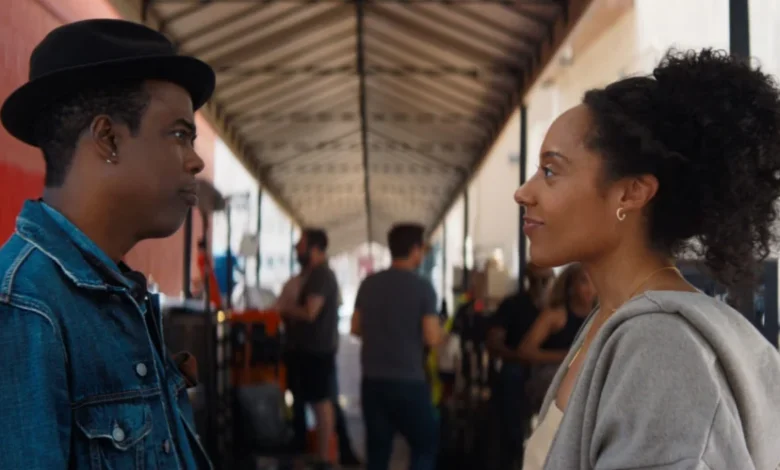
The film, which premiered to significant attention at this year’s New York Film Festival (NYFF), marks a notable departure for Rock. Known primarily for his incisive stand-up comedy and social commentary, Rock has pivoted here to a raw, "slice-of-life" drama. The narrative follows the titular Misty Green—a once-promising actress whose career is in terminal decline—as she navigates the socioeconomic and professional volatility of contemporary Hollywood.
The Breakout Performance of Rosalind Eleazar
The central pillar of the film is the performance of British actor Rosalind Eleazar. Having established her stateside presence as the resilient Louisa Guy on Apple TV+’s critically acclaimed espionage drama Slow Horses, Eleazar brings a layered complexity to the role of Misty. Her background, which includes training at the London Academy of Music and Dramatic Art (LAMDA) and a role in the BBC’s Howards End, provides the technical foundation for a character defined by self-destruction and armor-plated defensiveness.
During the NYFF premiere, Eleazar spoke to the difficulty of portraying a protagonist who actively alienates those around her. "She’s so incredibly complicated and contradictory," Eleazar remarked. "You know she’s difficult to get on board with, because she’s so self-destructive. But I have a lot of compassion for people that sort of go out into the world with so many layers of protection. Because they’ve experienced so much hurt and so much pain that they’re constantly fighting."
Plot Dynamics and Industry Commentary
The film unfolds over a frantic week as Misty approaches housing instability, a reality that mirrors the economic precarity often hidden behind the facade of celebrity. Rock’s screenplay forces Misty into a series of escalating conflicts: she lashes out at her agent, attempts to reconcile with industry rivals, and engages in a series of volatile encounters that emphasize her lack of personal boundaries.
A significant portion of the film’s narrative weight is carried by an ensemble cast that plays against type. Anna Kendrick appears as a fellow "has-been" starlet, providing a cynical mirror to Misty’s own trajectory. Adam Driver features prominently as a long-term "friend"—a relationship characterized by mutual toxicity and a harrowing, cocaine-fueled sequence that serves as a nadir for the protagonist.
However, the film’s narrative cohesion faces challenges in its third act. The introduction of Daniel Kaluuya as Misty’s brother, who suffers from bipolar disorder, initially suggested a nuanced exploration of the intersection between mental health and the Black experience in America. Critics and viewers alike noted that this potential arc is ultimately sidelined in favor of a jarring and arguably unnecessary serial killer subplot, which detracts from the intimate character study established in the film’s first hour.
The Geography of Inequality in Los Angeles
Beyond the personal struggles of its lead, Misty Green functions as a commentary on the physical and social landscape of Los Angeles. Rock utilizes the city as a character itself, employing photo montages and stark cinematography to highlight the proximity of extreme wealth to systemic poverty.
At the NYFF, Rock elaborated on his vision for the city. "L.A. is America in a way," he stated. "It’s the best of times. It’s the worst of times. It’s the weather and the palm trees and homeless people everywhere. Skid Row and Rodeo Drive are seven miles apart. So I try to capture all of that." This dichotomy is central to the film’s atmosphere, as Misty drifts between the high-end trappings of a former star and the harsh reality of potential homelessness.
Chris Rock’s Directorial Evolution
Misty Green represents a major step in Chris Rock’s career as a filmmaker. His directorial filmography began in 2003 with Head of State, followed by I Think I Love My Wife (2007) and the critically acclaimed Top Five (2014). Over three decades in the industry, Rock has developed a reputation for observing the "soul-sucking" nature of celebrity.
Rock’s presence in the film—playing a filmmaker and a ghost from Misty’s past—suggests a meta-textual layer, positioning the director as both an observer and an active participant in the industry he critiques. When discussing the film’s themes of redemption and identity, Rock emphasized the importance of grounding one’s life in the present moment rather than relying on past accolades. "It’s that weird thing when you get success at something," Rock noted. "You can talk about something you did 30 years ago for a long time. You can do that, but some people have worked, and some people need to live now."
Industry Implications and Analysis
The film arrives at a time when the Hollywood labor market is under intense scrutiny. Data from recent industry reports suggests that the "gig economy" model of acting, which forces performers to move from one short-term project to the next, has led to a mental health crisis among mid-level actors. Misty Green captures this phenomenon by depicting a character who lacks a "routine" and the stability required to maintain psychological health.
Eleazar’s perspective on the character’s future—that acting may not be the right profession for Misty—speaks to a broader, unspoken narrative within the film: the idea that the "dream" of stardom can become a cage. "She actually needs a job that provides a routine," Eleazar noted. "She needs a slightly smaller life, and a life that’s going to give her a bit of peace."
Reception and Future Outlook
The reception at the New York Film Festival has been polarized, with most critics lauding Eleazar’s performance as the film’s undeniable anchor. While the script’s structural choices—particularly the shift into thriller territory in the final act—have invited criticism, the film is nonetheless viewed as an ambitious attempt by Rock to move beyond the boundaries of traditional comedy.
As the film moves toward a wider release, it stands as a testament to the changing landscape of Hollywood storytelling. It avoids the traditional "comeback" tropes, opting instead for a bleak, honest, and ultimately uncomfortable look at what happens when the lights go out. Whether the film succeeds as a cohesive narrative or not, it succeeds as an exploration of the desperation inherent in a culture obsessed with visibility.
In the final analysis, Misty Green is a film about the cost of professional obsolescence. By refusing to grant his protagonist an easy path to redemption, Rock forces the audience to confront the reality that for many, the "Hollywood dream" is not a journey toward a better life, but a process of attrition. As audiences continue to engage with the film, the conversation surrounding its depiction of mental health, the industry’s role in personal degradation, and the geographic inequalities of Los Angeles will likely remain a focal point of the critical discourse surrounding Rock’s latest work.