Gerrit Graham, Versatile Character Actor of Cult Classics and Star Trek, Dies at 76

The entertainment industry is mourning the loss of Gerrit Graham, a prolific character actor, writer, and musician whose distinctive screen presence enriched dozens of cult classic films, blockbuster franchises, and landmark television series across a career spanning more than five decades. Graham passed away on Tuesday at the age of 76 in Rhinebeck, New York, due to complications from lung disease and various underlying health conditions.
Renowned for his chameleon-like ability to inhabit eccentric, villainous, comedic, and deeply memorable supporting roles, Graham carved out a unique niche in Hollywood. Whether he was terrifying audiences as a sentient computer’s test subject, belting out glam-rock anthems, or guest-starring on television’s most-watched prime-time dramas and sitcoms, Graham remained a reliable and universally respected figure among peers and directors alike. His passing marks the conclusion of a remarkable artistic journey that began in the academic theater circles of New York City and evolved into a celebrated multi-faceted career encompassing film, television, and even rock-and-roll songwriting.
Early Life and Theatrical Foundations
Born on November 27, 1949, in New York City, Graham developed an early and enduring passion for the dramatic arts. During his formative years, he cultivated his craft through formal education and rigorous stage training. He attended Columbia University, where his leadership potential and creative vision quickly became apparent to faculty and fellow students alike. During his tenure at the Ivy League institution, Graham assumed the prestigious role of head of the Columbia Players, the university’s premier student-run theater company.
His time with the Columbia Players allowed him to hone his stage presence, direct ambitious productions, and master a wide variety of dramatic styles. This rigorous foundation served as an invaluable springboard for his transition into professional acting. In the late 1960s, as the American film industry was undergoing a revolutionary shift toward gritty, independent, and auteur-driven storytelling, Graham found himself at the right place at the exact right time to catch the eye of visionary young filmmakers.
The Breakthrough Collaboration with Brian De Palma
Graham made his feature film debut in 1968, stepping in front of the camera for a rising young director named Brian De Palma. The film, Greetings, was De Palma’s satirical sophomore feature that explored draft evasion, counterculture, and voyeurism, notable for also featuring an early performance by Robert De Niro. This initial collaboration marked the beginning of a fruitful creative relationship between Graham and De Palma, who consistently utilized the actor’s unique physical presence and comedic-yet-sinister timing.
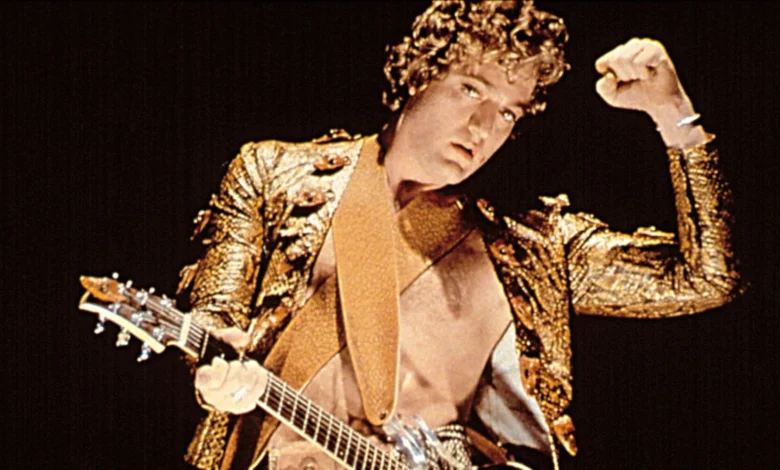
The pinnacle of their cinematic partnership arrived in 1974 with the release of Phantom of the Paradise, De Palma’s wildly inventive, rock-musical-horror adaptation of Gaston Leroux’s The Phantom of the Opera and Goethe’s Faust. In the film, Graham delivered what would become his most iconic and enduring performance as Beef, a flamboyant, narcissistic, and delightfully over-the-top glam rock star. Sporting flamboyant makeup, outrageous costumes, and delivering a powerhouse vocal performance, Graham’s portrayal of Beef captured the decadent, hedonistic spirit of 1970s glam rock while serving as a brilliant comedic foil to the film’s darker themes. Decades after its initial mixed box office reception, Phantom of the Paradise achieved legendary status as a midnight movie classic, and Graham’s magnetic performance remains a high-water mark of the genre.
A Cinematic Shape-Shifter: Filmography Across Genres
Following his breakout turn in De Palma’s musical, Graham became one of the most sought-after character actors in Hollywood, moving effortlessly between horror, science fiction, slapstick comedy, and high drama. His filmography reads as a veritable historical archive of late 20th-century American cinema, filled with beloved cult classics and mainstream hits.
In the 1970s, Graham appeared in horror and sci-fi features such as Beware! The Blob (1972), the campy sequel to the 1958 classic, and Joseph Sargent’s chilling technological thriller Demon Seed (1977), starring Julie Christie. As the industry transitioned into the 1980s, Graham’s comedic timing came to the forefront. He starred alongside Dan Aykroyd and John Belushi’s brother, Jim Belushi, in the high-octane comedy Used Cars (1980), directed by Robert Zemeckis. He followed this with a role in the nostalgic comedy National Lampoon’s Class Reunion (1982).
The latter half of the 1980s proved exceptionally busy for the actor, who became a staple of imaginative genre filmmaking. He appeared in the sci-fi horror comedy TerrorVision (1986), the satirical killer-robot shopping mall thriller Chopping Mall (1986), and the sixth installment of the popular slapstick franchise, Police Academy 6: City Under Siege (1989). Demonstrating his incredible vocal versatility, Graham also contributed to the monumental animation renaissance of the late 1980s and 1990s, lending his talents to Disney’s watershed animated masterpiece The Little Mermaid (1989).
His momentum continued unabated into the 1990s. Graham secured roles in prominent features including the satirical horror sequel Child’s Play 2 (1990), Tobias Wolff’s biographical drama This Boy’s Life (1993)—sharing screen time with Leonardo DiCaprio and Robert De Niro—and the family drama My Girl 2 (1994). Across more than four decades on the silver screen, Graham consistently elevated every project he touched, transforming even minor roles into unforgettable cinematic moments.
Prolific Television Career and Star Trek Legacy
While Graham’s film résumé is formidable, his contributions to television were equally vast. Over a career that spanned generations of small-screen evolution, Graham guest-starred on nearly every major television series broadcast during the golden eras of network television and syndicated drama.
His television credits comprise a masterclass in American pop culture programming. In the 1970s and 1980s, he appeared in quintessential procedural and dramatic series such as Starsky & Hutch, Laverne & Shirley, Dynasty, The A-Team, The Dukes of Hazzard, St. Elsewhere, Miami Vice, Dallas, and The Twilight Zone. His ability to adapt to any tone—ranging from gritty crime dramas to whimsical fantasy—made him a favorite casting choice for television directors seeking an actor who could instantly command attention.
Science fiction fans, in particular, hold a special place in their hearts for Graham due to his contributions to the legendary Star Trek franchise. He made memorable contributions to the television universe by portraying distinct, separate characters in Star Trek: Deep Space Nine and Star Trek: Voyager, cementing his legacy within one of science fiction’s most devoted fan bases.
As the television landscape shifted in the 1990s, Graham remained a ubiquitous presence. He booked guest spots on era-defining sitcoms and dramas, including The Wonder Years, Seinfeld, Family Matters, Babylon 5, and the powerhouse procedural Law & Order. Whether playing a twitchy eccentric, a weary bureaucrat, or a menacing villain, Graham brought absolute commitment and professional rigor to every television set he stepped onto.
Beyond Acting: Writing and Rock-and-Roll Collaborations
Though primarily celebrated for his on-camera performances, Gerrit Graham possessed a diverse creative intellect that extended well beyond acting. He was an accomplished writer who brought his distinctive voice to the literary and musical spheres.
Demonstrating his versatility in television production, Graham stepped behind the typewriter to pen two episodes of the iconic anthology series The Twilight Zone, translating his love for the speculative and uncanny into compelling teleplays. Furthermore, Graham maintained deep ties to the counterculture music scene. In a lesser-known but fascinating chapter of his creative life, he collaborated as a songwriter with Bob Weir, the legendary rhythm guitarist and founding member of the Grateful Dead. These songwriting partnerships underscored Graham’s deep connection to the artistic bohemian subcultures of the era, proving that his creative impulses were not confined to dramatic scripts or studio soundstages.
Industry Reactions and Tributes
In the wake of news regarding his passing, tributes began pouring in from colleagues, film historians, and devoted fans across social media and industry trade publications. Directors, casting agents, and fellow actors who worked with Graham over the decades remembered him not only as a consummate professional and brilliantly unpredictable talent, but also as a warm, intelligent, and deeply witty individual.
Film preservationists and repertory cinema programmers highlighted Graham as the quintessential character actor—the foundational glue that held complex narratives together while allowing stars to shine. In an era obsessed with leading-man aesthetics, Graham proved that longevity, respect, and enduring cultural impact often belong to the versatile artists who can morph seamlessly into any imaginable persona.
Broader Impact and Cultural Legacy
The passing of Gerrit Graham signals the gradual fading of a specific, highly cherished breed of American character actor—performers who trained rigorously in the theater, embraced the gritty independence of 1970s cinema, and built resilient, decades-long careers through sheer talent, adaptability, and tireless work ethic.
From the glitzy, strobe-lit soundstages of Phantom of the Paradise to the sterile corridors of Star Trek, and from the gritty asphalt of New York police dramas to the whimsical heights of animation, Graham’s creative footprint is firmly embedded in the cultural consciousness. As fans revisit his extensive body of work—whether discovering him anew in a late-night horror marathon or spotting him in a classic 90s sitcom rerun—Gerrit Graham’s unique artistic spirit will continue to entertain, surprise, and captivate audiences for generations to come. He is survived by his family, friends, and an indelible cinematic legacy that will long outlive him.
Related posts: