James Gunn is already hard at work writing his next cinematic project as the industry anticipates the 2027 release of Superman: Man of Tomorrow.

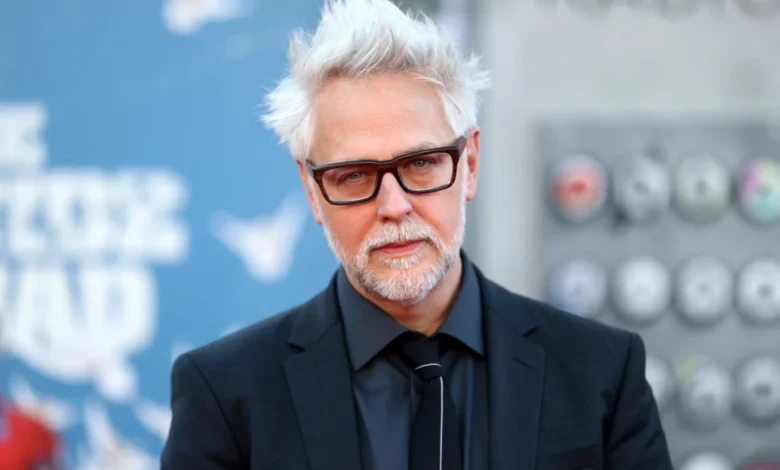
The DC Studios co-CEO confirmed his current creative focus via a direct interaction on the social media platform Threads. When queried by a follower regarding his professional status following the intensive production cycle of the upcoming Superman sequel, Gunn revealed that he has already pivoted to his next screenwriting endeavor. He noted that the transition was a practical necessity, stating, "I had to do something while I was waiting for the assembly," referring to the post-production phase of his current film.
This development marks a continuation of the rapid production pace Gunn has maintained since assuming leadership of DC Studios alongside Peter Safran in November 2022. As the creative architect of the new DC Universe (DCU), Gunn’s ability to balance executive responsibilities with active screenwriting and directing has become a hallmark of his tenure.
The Production Timeline of Superman: Man of Tomorrow
The confirmation that the assembly cut of Superman: Man of Tomorrow is complete provides a critical milestone for the production. An assembly cut is typically the first version of a film, where all scenes are edited together in sequence without final visual effects, color grading, or polished sound mixing. The completion of this stage suggests the project remains firmly on track for its scheduled theatrical debut on July 9, 2027.
The production cycle for the film has been efficient, particularly given the scale of the DCU. Filming officially wrapped in August 2026, and the rapid progression into the editing suite signals that post-production—often the most time-consuming stage for blockbuster superhero films—is proceeding according to the studio’s internal timeline.
Superman: Man of Tomorrow acts as the direct sequel to the 2025 Superman film. While the first installment served as the formal introduction to David Corenswet’s iteration of the Man of Steel, the sequel is expected to escalate the stakes by integrating a broader coalition of characters and a more formidable antagonist.
Narrative Expansion and Character Integration
The plot of Superman: Man of Tomorrow represents a strategic effort to weave together the disparate threads of the burgeoning DCU. The narrative will see Clark Kent forming an uneasy alliance with his primary antagonist, Lex Luthor, portrayed once again by Nicholas Hoult. This partnership is necessitated by the emergence of Brainiac, played by Lars Eidinger, a superintelligent entity that poses a multiversal threat.
The cast reflects a heavy investment in continuity. Rachel Brosnahan returns as Lois Lane, anchoring the emotional core of the film, while the supporting ensemble includes Skyler Gisondo as Jimmy Olsen, Sara Sampaio as Eve Teschmacher, Isabela Merced as Hawkgirl, Nathan Fillion as Guy Gardner, and Edi Gathegi as Mister Terrific.
A significant component of the film’s narrative strategy is the crossover potential between television and film. Milly Alcock, who debuted as Kara Zor-El in the summer 2027 Supergirl tentpole, will return in this sequel. Furthermore, the film will introduce Aaron Pierre as John Stewart, the Green Lantern. Pierre’s character is expected to debut in the HBO Max series Lanterns, illustrating the "one-universe" approach that Gunn and Safran have championed since the inception of their leadership.
The Strategic Vision of DC Studios
The leadership of James Gunn and Peter Safran has fundamentally altered the operational structure of DC Studios. Since taking the helm in late 2022, the pair has sought to unify the previously fragmented creative departments of DC entertainment.
In a January interview with Variety, Gunn articulated the nature of his partnership with Safran, noting the complementary nature of their skill sets. "Peter’s the best," Gunn remarked. "He does everything I don’t do well. He keeps the ship steady, keeps everyone aligned, connects us with Jim Lee and the comics side and unifies departments that used to operate separately."
This unification strategy is not merely administrative; it is a creative mandate intended to ensure that every project within the DCU feels like a cohesive part of a singular tapestry. By acting as both a director and a studio head, Gunn provides a "showrunner-style" continuity that has historically been missing from large-scale comic book film franchises. The responsibility of shaping these legacy characters is one that Gunn has publicly described as a privilege, emphasizing that the studio takes the stewardship of the DC intellectual property with extreme seriousness.
Market Context and Industry Implications
The superhero genre has faced significant market fluctuations over the past three years. As audiences have shown signs of "superhero fatigue," studios have responded by shifting their focus toward distinct creative visions and tighter, more interconnected storytelling.
Gunn’s proactive writing schedule is indicative of a broader industry trend toward "pre-production heavy" models. By finalizing scripts well in advance, studios are better positioned to manage budgets and minimize the costly reshoots that plagued many tentpole films in the early 2020s.
Furthermore, the integration of television properties like Lanterns into the feature film release schedule is a calculated risk. While the Marvel Cinematic Universe (MCU) pioneered the "cross-platform" storytelling model, the success of the DCU will depend on whether casual moviegoers can follow these narratives without needing to consume every preceding episode of an HBO series. The inclusion of Aaron Pierre’s John Stewart in Man of Tomorrow will serve as a bellwether for the success of this strategy.
Analytical Outlook: What Comes Next?
While Gunn has kept the specifics of his current writing project under wraps, industry observers are speculating on the next phase of the DCU slate. With Superman: Man of Tomorrow slated for 2027, the studio is already looking toward the 2028 and 2029 release windows.
If the current pattern holds, the "next film" Gunn is writing could range from a sequel to another established DCU property to an entirely new project featuring an unexplored character. Given his history of elevating "B-list" characters—as seen with The Suicide Squad and Peacemaker—it is entirely possible that his next script involves a lesser-known property that requires his specific brand of genre-blending, dark humor, and character-driven drama.
The efficiency of the current production pipeline suggests that DC Studios is no longer merely reacting to market pressures but is instead operating on a proactive, multi-year plan. By keeping his focus on the script—the foundational element of any successful film—Gunn is signaling that the creative direction of the DCU remains the top priority.
Conclusion
As the countdown to the July 2027 release of Superman: Man of Tomorrow continues, the project stands as the definitive test of the Gunn-Safran era. With the assembly cut finalized and the studio already looking toward the next horizon, the infrastructure for a unified DC universe appears more stable than it has in years.
For fans and investors alike, the primary question remains whether this structured, highly-integrated approach will resonate with a changing theatrical audience. However, the objective facts remain clear: production is moving forward, the creative team is unified, and the architect of the franchise is already building the next chapter. The industry will continue to monitor Gunn’s output, as his next writing project will likely dictate the tone and trajectory of the DCU for the remainder of the decade.