The Supreme Court is increasingly shifting its substantive decision-making power from public hearings to the opaque emergency docket

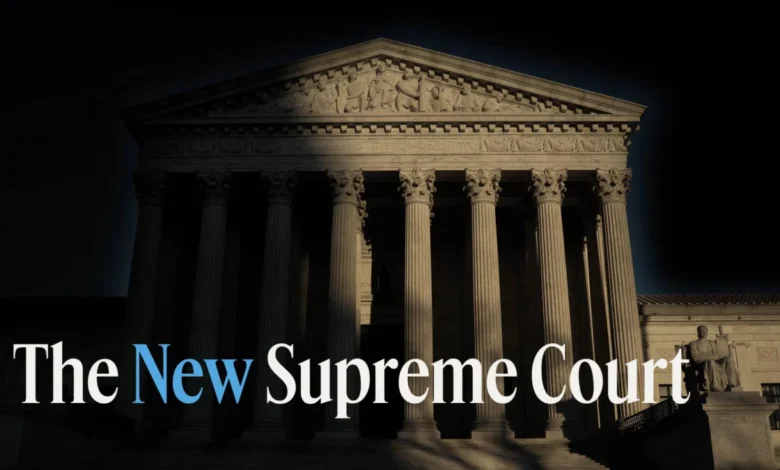
The Supreme Court of the United States, an institution traditionally defined by its deliberative, transparent process of oral arguments and written opinions, is undergoing a profound structural transformation. A meticulous analysis of the Court’s online archives reveals that the institution is increasingly relying on its "emergency docket"—commonly referred to as the shadow docket—to issue substantive rulings that carry the weight of law without the traditional transparency of the merits docket. During the term that concluded in 2025, the justices issued more consequential decisions via this summary process than they did through cases argued in open court, marking a significant departure from modern judicial norms.
The Mechanics of the Shadow Docket
The emergency docket was originally designed to handle time-sensitive, procedural matters, such as stay requests or deadline extensions. These filings are typically handled quickly, often without a full briefing schedule or public hearing. However, the nature of these rulings has evolved. Today, the Court frequently utilizes this mechanism to issue orders that resolve complex legal questions, often without providing an explanation for the decision or a breakdown of how individual justices voted.
This lack of transparency poses a significant challenge for legal practitioners and the public alike. In a traditional merits case, the Court provides a written opinion, signed by the justices, outlining the legal reasoning and the precedent upon which the decision is based. In contrast, shadow docket rulings are often unsigned and provided as brief orders. This ambiguity leaves lower courts, legislators, and citizens without clear guidance on how the law is being interpreted or how the Court might rule in future litigation.
Chronology of a Shift in Power
The rise of the shadow docket is not a sudden development, but a trend that has accelerated over the past decade. Legal scholars note that the frequency of these rulings began to climb in the mid-2010s, but the 2025 term serves as a critical inflection point where the volume of these substantive rulings officially surpassed that of the merits docket.
Following the close of the regular term in June, the Court entered its summer recess. Under standard practice, this period is generally quiet, characterized by administrative housekeeping. Yet, the 2025 recess has been marked by a continuation of substantive activity on the emergency docket. Since July, every significant decision issued by the Court has originated from this process. This pattern is expected to hold firm until the opening of the new term on October 5.
Data Analysis and Transparency Concerns
By parsing tens of thousands of individual case files and docket entries, it becomes clear that the sheer volume of substantive emergency filings has fundamentally altered the Court’s workload. While the merits docket—the process involving full briefing and oral argument—remains the hallmark of the Court’s authority, its relative importance as a source of legal precedent is being eclipsed.
The impact of this shift is multifaceted. First, it diminishes the role of the adversarial process. Without the opportunity for oral arguments, the justices lose the ability to test the legal theories presented by opposing counsel in a public forum. Second, it shifts the burden onto lower courts, which must interpret these opaque orders without the benefit of a clear majority opinion. Third, it invites political scrutiny, as the lack of a stated rationale makes it difficult for the public to determine whether decisions are grounded in established constitutional doctrine or broader ideological considerations.
Political Reactions and Internal Tensions
The perceived ideological shift of the Court has led to friction, even among those who originally championed the current composition of the bench. Recently, former President Donald Trump, who appointed three of the current justices, publicly expressed dissatisfaction with the Court’s output. In a series of posts on his social media platform, Truth Social, Trump criticized the bench, suggesting that the justices were not adhering to the philosophies they expressed during their confirmation processes.
"It is a Court that will go down as having rendered some of the most destructive, hurtful, and damaging decisions in our Country’s history," Trump wrote. His remarks highlighted a growing sentiment that the Court’s recent rulings—specifically those affecting federal agency authority and regulatory power—have not always aligned with the political objectives of his base. This criticism underscores the irony of a Court that, while often viewed as moving in a more conservative direction, maintains an internal autonomy that occasionally defies the expectations of its political architects.
Official Silence and Institutional Accountability
Despite repeated inquiries regarding the procedural shift toward the shadow docket, the Supreme Court’s public information office has remained silent. This lack of comment is standard for the institution, which typically allows its written opinions to serve as its sole form of communication with the public. However, the reliance on unsigned, unexplained orders complicates the idea that the Court’s decisions speak for themselves.
Legal experts argue that the lack of institutional response to the concerns raised by the shadow docket is indicative of a broader insulation from public accountability. While the judiciary is designed to be independent of political pressure, the transition toward a system of summary, opaque rulings risks eroding the public’s perception of the Court’s legitimacy. If the Court is to maintain its role as the final arbiter of constitutional law, critics argue it must restore the transparency that once defined its decision-making process.
Implications for the American Legal System
The broader implications of this shift are profound. When the Supreme Court issues a major ruling via the shadow docket, it often bypasses the standard vetting process that ensures legal arguments are fully developed and vetted by the broader legal community. This can lead to unintended consequences, such as conflicting interpretations in federal appellate courts or the sudden invalidation of long-standing regulatory policies.
Furthermore, the reliance on this docket impacts the stability of law. Precedent is built upon the incremental, reasoned development of legal principles. When rulings are issued in the shadows, they often lack the depth of analysis required to serve as stable guideposts for future litigation. This creates a volatile legal environment where the outcome of cases may depend more on the specific timing and procedural posture of a petition than on the underlying merits of the case.
Looking Toward the New Term
As the Court prepares for its upcoming term starting October 5, observers are looking for signals regarding whether the justices will attempt to rein in the use of the shadow docket. There is a strong consensus among constitutional scholars that the Court must find a balance between the necessity of emergency action and the requirement for transparency.
For the American public, the shadow docket represents a shift in how power is exercised at the highest levels of government. The trend toward summary rulings is not merely a procedural change; it is a fundamental alteration in how the Court interacts with the law and the public it serves. Whether the justices will address these concerns remains an open question. For now, the Court continues to operate in a manner that, while legally valid, remains increasingly shielded from the scrutiny that is essential for a healthy democratic society.
As independent investigations continue to peel back the layers of this transformation, the public is left with a clearer understanding of the Court’s internal operations, even as the Court itself remains largely silent on the rationale behind its evolution. The reliance on the emergency docket is not just a logistical choice—it is a decision about the nature of judicial authority in the 21st century. Whether that authority will be exercised in the open, as has been the custom for generations, or in the shadows, will be a defining issue for the Court in the years to come.
Related posts: