Behind the Gates of the Delta Institute: How a Private School Operated with Public Funds and Little Oversight Amidst Abuse Allegations

The Delta Institute for the Developing Brain sat discreetly off a quiet country road just outside of Jonesboro, Arkansas, housed in a white colonial structure that bore little resemblance to a traditional educational facility. To a passing motorist, it appeared to be nothing more than a private residence, yet inside, a series of disturbing events were unfolding that would eventually lead to criminal charges and expose a profound lack of state oversight in the burgeoning private school sector. The facility, marketed as a specialized environment for neurodivergent children and those with autism, became the center of a law enforcement investigation after reports emerged of systemic student mistreatment, including an incident where the school’s founder actively encouraged students to assault a thirteen-year-old classmate.
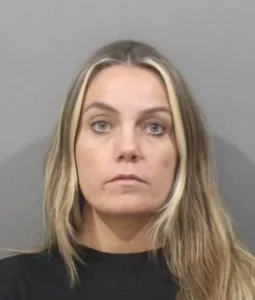
The revelation of these incidents has ignited a fierce debate regarding the transparency of private schools in Arkansas, particularly as the state continues to redirect millions of dollars in public funds toward private education through voucher programs. Unlike public schools, which are bound by rigorous reporting requirements, standardized testing, and public records access, private institutions like the Delta Institute operate in a regulatory "gray zone." In Arkansas, the state’s requirements for private schools are remarkably minimal, focusing on basic safety such as fire drills and immunization records rather than the quality of the curriculum or the professional backgrounds of the staff and operators. This lack of scrutiny allowed Mary "Tracy" Morrison, an occupational therapist with no prior experience in school administration, to establish an institution where her "interventions" eventually crossed the line into felony child abuse.
A Culture of Punishment and Coercion
The investigation into the Delta Institute began in earnest in early 2025, following a report from Renee Johns, the mother of a ten-year-old boy with autism. Johns provided authorities with a video she had received directly from Morrison. In an attempt to explain why the boy was being held after school, Morrison had filmed and sent a video showing three young boys being forced to scrub the floors and walls of a room with rags. In the footage, Morrison can be heard shouting commands and admonishments at the children, who appear startled and distressed by her aggressive tone. For many parents, this was the first indication that the "expert" guidance they were paying for—often supplemented by state-funded vouchers—was rooted in punitive and archaic discipline.
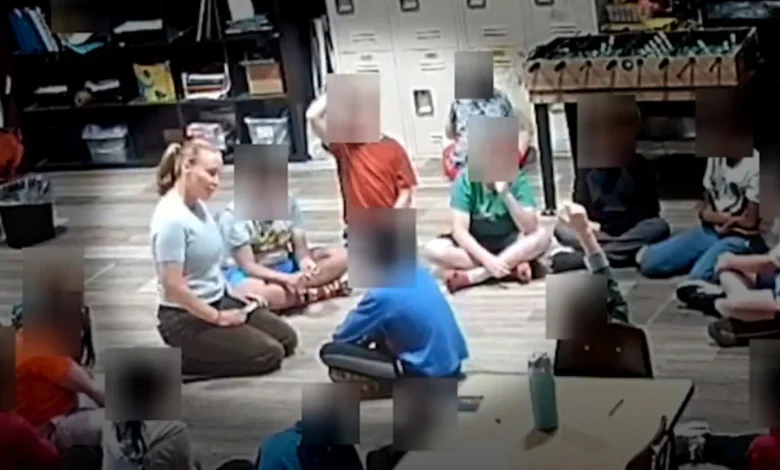
However, the floor-scrubbing incident was only the beginning. Approximately three weeks later, in April 2025, a second parent approached the Craighead County Sheriff’s Office to report an even more harrowing event. This report prompted a detective to execute a search warrant at the school, where authorities seized approximately forty minutes of internal surveillance footage. This video provided an unfiltered look into Morrison’s "restorative" methods. The footage depicted a "group discussion" that quickly devolved into a state-sanctioned assault. Morrison instructed a thirteen-year-old boy to sit in the center of a circle of his peers. She then directed the other students, aged twelve and thirteen, to put their hands on him in any manner they chose.
The resulting violence was both physical and psychological. One student was seen looping an arm around the boy’s neck in a chokehold, an action for which Morrison rewarded the aggressor with a high-five. Other students joined in, punching, hitting, and pinching the boy. When one student struck the victim with significant force, another child in the room can be heard remarking on the pain it must have caused. Morrison herself participated in the abuse, striking the boy with a foot-long plastic cylinder in an attempt to coerce a confession regarding his alleged unkindness to another student.
The Legal Response and the Rebranding of the Institute
The criminal justice system moved swiftly following the discovery of the video evidence. Mary "Tracy" Morrison was initially charged with eleven felony counts, including permitting child abuse. However, a plea agreement allowed her to avoid a public trial, a move that meant the disturbing footage was never played in an open courtroom. Morrison ultimately pleaded guilty to one count of permitting child abuse and four counts of contributing to the delinquency of a juvenile. Despite the severity of the charges and the physical evidence of the assault, Morrison was sentenced to only thirty days in jail.
The investigation revealed that while Morrison was incarcerated in May 2025, she continued to defend her actions. In more than 500 recorded phone and video calls from jail, she characterized the assault as a "sophisticated" intervention intended to help students at risk of criminal behavior. In a conversation with a documentary filmmaker, Morrison claimed the exercise was "restorative" and denied that she had intended for the students to hit their peer, despite the video evidence showing her explicitly encouraging and rewarding the behavior.
Morrison was released from jail on June 1, 2025. Following her release, the Delta Institute underwent a significant rebranding effort. The school changed its name to North Star Academy and appointed a new administrator who claimed that Morrison now has "zero involvement" with the school’s operations. Despite the criminal conviction and the documented history of abuse, the school remains open and continues to be eligible for public funding through the state’s voucher programs.
A Chronology of the Delta Institute Controversy
The timeline of the Delta Institute’s rise and subsequent legal troubles highlights the speed at which private schools can emerge and the difficulty the state faces in monitoring them:
- Early 2024: The Delta Institute for the Developing Brain opens in Jonesboro, Arkansas, founded by Mary "Tracy" Morrison.
- Late 2024: The school begins accepting students, many of whom are neurodivergent and utilize state-funded vouchers.
- March 2025: Renee Johns reports the floor-scrubbing video to the Craighead County Sheriff’s Office.
- April 2025: A second parent reports physical abuse; police execute a search warrant and seize surveillance footage of the "group discussion" assault.
- Late April 2025: Mary "Tracy" Morrison is arrested and charged with eleven felony counts.
- May 2025: Morrison serves her sentence in the Craighead County Jail; over 500 calls are recorded where she justifies her methods.
- June 1, 2025: Morrison is released from jail.
- Summer 2025: The school is renamed North Star Academy and continues operations under new management while maintaining eligibility for state funding.
The Voucher Program and the Oversight Vacuum
The situation at the Delta Institute is not an isolated incident but rather a symptom of a broader shift in educational policy across the United States. In Arkansas, the passage of the LEARNS Act (Literacy, Empowerment, Accountability, Readiness, Networking, and School Safety) significantly expanded the availability of Educational Freedom Accounts. These accounts allow parents to use approximately $6,600 in public funds per year—equivalent to 90% of the state’s per-student funding—to pay for private school tuition or other educational expenses.
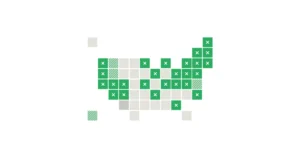
While proponents of the LEARNS Act argue that it provides families with much-needed choice and competition, critics point to the "transparency gap" that accompanies these funds. In many states, including Florida, Arizona, and West Virginia, the rapid expansion of voucher programs has outpaced the development of regulatory frameworks. Public schools are required to employ certified teachers, follow state-mandated curricula, and undergo regular audits. In contrast, Arkansas law only requires private schools to:
- Conduct regular fire drills.
- Maintain immunization records for students.
- Display an American flag on a flagpole.
There are no requirements for teacher certification, no mandatory background checks for all staff members beyond basic criminal records, and no state review of the curriculum or disciplinary policies. This lack of oversight meant that the Arkansas Department of Education had no record of investigating the Delta Institute, even after Morrison’s arrest. When questioned, state officials noted that site visits are only conducted when the department is made aware of specific issues, suggesting a reactive rather than a proactive approach to student safety.
Analysis of Implications for Private Education
The case of the Delta Institute serves as a cautionary tale for the "school choice" movement. The primary implication is that the influx of public money into private institutions does not inherently guarantee a higher standard of care or better educational outcomes. Instead, it can create a market where under-qualified operators can profit from vulnerable populations—such as children with autism—without being held to the same standards as public institutions.
Detective David Bailey, the lead investigator on the case, expressed profound concern over the school’s continued operation. "I think she should be prevented from teaching anywhere in the United States," Bailey stated, emphasizing that the systemic failure to protect these students rests on the lack of regulatory barriers. The fact that the school was able to simply rename itself and continue receiving public funds suggests that the current legal framework in Arkansas lacks the "teeth" necessary to decertify or permanently shutter institutions that have demonstrated a pattern of harm.
Furthermore, the difficulty in obtaining records from the Delta Institute highlights the challenge for investigative journalism and public accountability. Because the school is a private entity, it is not subject to the same Freedom of Information Act (FOIA) requests as public schools. The only reason the video evidence became public was due to the criminal nature of the investigation, which moved the records into the hands of the Sheriff’s Office and the prosecutor. Without a criminal trigger, the internal workings of such schools remain entirely shielded from public view.
The Future of Accountability in Arkansas Schools
As Arkansas and other states continue to lean into private education vouchers, the demand for increased accountability is growing. Families navigating these options are often left to rely on marketing materials and word-of-mouth rather than objective data. The rebranding of the Delta Institute to North Star Academy serves as a reminder that without structural changes to how private schools are monitored, the same risks may persist under different names.
The broader impact of this case may lead to legislative calls for "transparency parity," where any institution receiving public funds—regardless of its private status—must adhere to a baseline of safety and reporting standards. For the families in Jonesboro, the scars of the Delta Institute remain a vivid testament to what happens when the desire for educational freedom is not balanced with the necessity of public protection. As the state continues to implement the LEARNS Act, the balance between school autonomy and student safety remains one of the most pressing challenges in the American educational landscape.