Federal Judiciary Repudiates Department of Justice Campaign to Seize State Voter Rolls

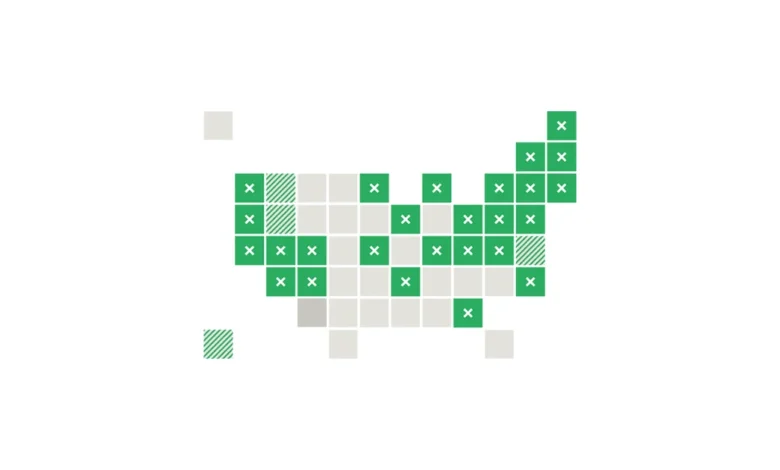
Since September 2025, the United States Department of Justice (DOJ) has engaged in an unprecedented legal campaign, filing lawsuits against 30 states and the District of Columbia in an effort to compel the surrender of unredacted, confidential voter registration rolls. These lists, which contain the sensitive personal information of millions of American citizens, have historically been managed exclusively at the state level under the authority of local election officials. The initiative represents a significant shift in the federal government’s posture toward election administration, serving as a cornerstone of President Donald Trump’s broader agenda to assert federal oversight over the electoral process and aggressively pursue allegations of noncitizen voting.
The legal strategy deployed by the administration has faced a near-universal rejection from the federal judiciary. Across 26 final rulings, judges have dismissed the government’s demands, citing a lack of statutory authority and questioning the underlying motives of the executive branch. While four cases remain pending and one state has reached a settlement, the judiciary’s response has been marked by a rare, bipartisan consensus, with judges appointed by presidents from both political parties criticizing the DOJ’s legal theories as both unfounded and potentially dangerous to the integrity of democratic processes.
A Chronology of Failed Legal Tactics
The government’s litigation strategy has evolved through two distinct phases, both of which have been systematically dismantled by the courts.
The first phase involved seven initial lawsuits that leaned heavily on President Trump’s March 2025 executive order regarding election integrity. In these filings, the DOJ argued that the federal government required immediate access to unredacted rolls to verify state compliance with federal election laws. However, federal judges found these arguments "halfhearted" and legally insufficient. Judge Lance E. Walker, a Trump appointee in Maine, noted that federal statutes governing election list maintenance do not grant the Justice Department the power to seize internal, unredacted state records.
Following the dismissal of these initial seven cases, the administration shifted its focus. The subsequent 19 lawsuits abandoned the executive order as a primary justification, pivoting instead to Title III of the Civil Rights Act of 1960. This provision was originally enacted to ensure the preservation of election records to protect Black voters from discriminatory practices and disenfranchisement in the South. DOJ attorneys argued that Title III granted the attorney general "sweeping power" to obtain voter rolls under the guise of preventing noncitizen participation.
This interpretation met with even sharper judicial rebuke. Judges observed that Title III applies specifically to voter registration documents and was never intended to encompass the proprietary databases generated by states. Furthermore, the court found that the DOJ’s attempt to use an anti-discrimination law to justify what many viewed as a voter suppression tactic was fundamentally inverted. Judge Randolph D. Moss, an Obama appointee in the District of Columbia, highlighted the irony of using a law designed to prevent the exclusion of voters to facilitate the scrutiny of those same lists.
Judicial Scrutiny and the Erosion of Trust
The judiciary’s reaction to these filings has been profound, with several judges expressing concern over the administration’s transparency. The courtroom discourse frequently transcended mere procedural disputes, touching upon the constitutional separation of powers and the sanctity of the right to vote.
Judge David O. Carter, a Bill Clinton appointee in California, openly questioned the DOJ’s motivations, suggesting that the executive branch was attempting to "abridge the right of many Americans to cast their ballots." Similarly, Judge Cathy Bissoon in Pennsylvania provided a scathing assessment, characterizing the federal effort as a "fishing expedition" designed to create a centralized database that could be weaponized for immigration enforcement and future political agendas.
Perhaps the most significant development in this legal saga is the damage caused to the Department of Justice’s reputation within the legal community. Judge Mustafa T. Kasubhai, a Biden appointee in Oregon, noted that the "presumption of regularity"—the historical judicial practice of accepting the government’s stated intentions at face value—has been compromised. His ruling suggested that the DOJ’s actions were "chilling" and signaled a departure from the department’s traditional role as an impartial arbiter of federal law.
Data and Statutory Conflict
The government’s legal position faced a further hurdle regarding the inherent conflict between the mandates of federal election law and the requirements of the Civil Rights Act. Federal law requires states to maintain accurate, up-to-date computerized voter lists, a process that necessitates constant modification and updating. However, Title III of the Civil Rights Act, as interpreted by the DOJ, would theoretically prohibit the alteration of these records.
Maryland Judge Stephanie A. Gallagher, a Trump appointee, noted the absurdity of this interpretation, stating that the government’s logic would effectively criminalize the very conduct that other federal statutes mandate states to perform. This internal inconsistency became a recurring theme in the dismissals, with multiple judges pointing out that the administration’s legal theory would result in an administrative stalemate, rendering election officials unable to perform their legally required duties.
Official Responses and the Path to Appeal
The Department of Justice has remained steadfast in its defense of these actions. In an official statement provided to media outlets, a DOJ spokesperson defended the department’s legal team, asserting that its attorneys are "skilled, principled advocates who argue every case honestly and in good faith." The statement further emphasized that disagreement with the government’s interpretation of law does not constitute bad faith and confirmed the administration’s intention to pursue the matter through the appellate court system.
The trajectory of these appeals remains uncertain. In the only appellate decision rendered thus far, the Sixth Circuit Court of Appeals upheld a lower court’s dismissal of a Michigan case. The appellate panel reinforced the lower court’s findings, noting that the government was invoking a civil rights law for an "inverse purpose"—to restrict voting rather than to ensure that all eligible citizens have the opportunity to cast their ballots.
Broader Implications for Election Administration
The failed litigation effort carries significant implications for the future of U.S. election integrity. By attempting to centralize control over voter rolls, the Trump administration sought to establish a new federal standard for electoral oversight. The uniform rejection of these efforts by the judiciary—including by judges appointed by conservative administrations—suggests a robust institutional defense of state sovereignty in election administration.
As the government considers taking these arguments to the Supreme Court, the legal community is watching closely to see if the administration will continue to pursue the "Title III" strategy or pivot toward a new legal framework. Regardless of the outcome of pending cases, the events of 2025 and 2026 have highlighted a widening rift between the executive branch’s aggressive approach to election monitoring and the judiciary’s interpretation of federal authority.
For state election officials, the litigation has been a source of significant administrative burden and legal expense. However, the outcomes have largely solidified the status quo, confirming that states retain the primary authority over the management and confidentiality of their voter registration lists. As the 2026 midterm elections approach, the focus now shifts to whether the Department of Justice will continue its legal offensive or seek a legislative path to achieve its goals—a move that would likely face similar constitutional challenges in Congress and the courts. The legacy of these cases will likely be remembered as a pivotal moment in the ongoing debate over the boundaries of federal power and the protection of the American ballot.