Evaluating the Los Angeles Lakers Championship Ceiling Amid Western Conference Competitiveness

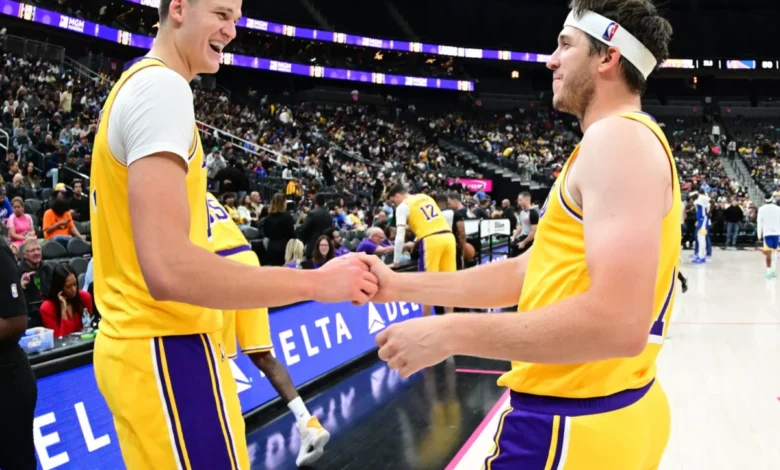
The Los Angeles Lakers enter the new NBA season facing both internal reinvention and external intimidation, sparking intense debate regarding the true ceiling of a roster reshaped by significant off-season acquisitions. Head coach JJ Redick and star guard Luka Doncic have publicly asserted that the franchise possesses the necessary components to compete for a championship. However, analyzing whether this projection is realistic requires examining a competitive Western Conference landscape defined by established powerhouses, lingering roster vulnerabilities, and the complex challenge of integrating nine new players into a cohesive rotation.
The Western Conference Landscape: Goliaths and Rivals
The road to the NBA Finals for any Western Conference contender runs directly through elite organizations that have already established their dominance or demonstrated championship proximity. Chief among these external hurdles is the San Antonio Spurs, anchored by 7-foot-4 generational talent Victor Wembanyama. Following a remarkable postseason run that carried the Spurs to the NBA Finals—where they ultimately fell to the New York Knicks after squandering double-digit leads in four of five games—Wembanyama has spent the summer preparing for an aggressive campaign to capture the league’s ultimate prize. As LeBron James approaches the twilight of his storied career, Wembanyama stands as the primary heir to the throne as the face of the league.
Compounding the difficulty of the Western Conference is the Oklahoma City Thunder, led by two-time reigning MVP Shai Gilgeous-Alexander. The Thunder captured the NBA championship in 2025 and remain eager to reclaim the summit after being pushed out in a grueling seven-game Western Conference Finals series by San Antonio. For the Lakers, navigating this tier of proven, highly coordinated opponents demands overcoming a significant deficit in terms of institutional continuity and shared experience.

Internal Transformation and Roster Chemistry
While the external threats are formidable, the Lakers’ most immediate challenge stems from within. The front office engineered a sweeping roster overhaul, introducing nine new players to the organization ahead of the season. Among the most crucial additions is center Walker Kessler, who is slated to form an integral core alongside Doncic and Austin Reaves. This influx of fresh talent has raised legitimate questions regarding perimeter defense, depth at the forward positions, and the overall defensive identity of the squad.
Building team chemistry is rarely instantaneous, particularly when reshaping a rotation to this magnitude. Yet, Redick has maintained a posture of unwavering optimism. Ahead of media day, the head coach generated widespread attention by expressing absolute confidence in the team’s trajectory. When pressed on his optimism during a Thursday practice, Redick contextualized his expectations based on past precedent.
"I think that every season," Redick said. "Unless somebody blatantly tells me that we’re not trying to win, I think that every year. That’s why I say I’m confident. I said the same thing last year for all of January and February that we were going to figure it out at some point, and we did. And then we had some injuries."
Historical Precedent and the Redick Effect
Redick’s reference to the previous season highlights a critical stretch of play that validates his coaching philosophy. During the spring, despite early skepticism regarding how Doncic, Reaves, and LeBron James would coexist, the Lakers engineered a formidable 16-2 run. Throughout this surge, Doncic operated at an MVP level with regular 40-point performances, Reaves solidified his status as an All-Star-caliber contributor, and James—widely regarded as one of the greatest players in basketball history—voluntarily accepted a tertiary offensive role to maximize team efficiency.

However, that momentum was abruptly halted on April 2 when Doncic suffered a strained hamstring and Reaves sustained a strained oblique. The injuries exposed the thin margins of error for a team still searching for sustainable depth.
As the new season tips off, Redick faces a comparable developmental challenge. The coaching staff must determine whether Kessler can evolve into an All-Defense-caliber anchor while unlocking the potential of a heavily populated supporting cast that includes Ziaire Williams, Adou Thiero, Cameron Carr, Quentin Grimes, Jake LaRavia, Sandro Mamukelashvili, Collin Sexton, and Matisse Thybulle. Redick’s history suggests an aptitude for managing high-profile egos and optimizing personnel, most notably convincing James to accept a secondary or tertiary offensive burden for the first time in his career, and maximizing role players like Luke Kennard during high-pressure playoff series.
Defining a Championship-Level Standard
To accurately assess the Lakers’ prospects, leadership has been careful to distinguish between internal maturation and the unpredictable variables required to hoist the Larry O’Brien Trophy. Redick emphasized that establishing a championship-level standard does not guarantee a guaranteed appearance in the NBA Finals.
"Being a championship-level team or being a—I don’t like the word ‘contender’—but being a team that can make a run and can play in the playoffs and can play different ways in the playoffs, those things take time, and it doesn’t mean you’re going to be in the NBA Finals," Redick explained. "It’s just not the way this works, particularly with the way the playoffs work in terms of just matchups and what you can exploit and what you can’t exploit versus certain teams. But I think because of our talent, because of our fit, because of our depth, I really like our team."

Fact-Based Analysis of Implications
The statistical and tactical profile of the Lakers reveals a dual narrative. On paper, the team possesses top-tier offensive firepower spearheaded by Doncic, supported by elite playmaking and high-level scoring versatility. If the newly configured supporting cast coalesces defensively and injuries spare the core rotation, the Lakers possess the raw ingredients to disrupt the established hierarchy of the Western Conference and pressure conference giants like Oklahoma City and San Antonio.
Conversely, structural vulnerabilities—specifically the lack of proven starting forwards and reliable center depth behind Kessler—leave the team exposed against physical opponents with established continuity. The success of the campaign will ultimately depend on how rapidly Redick can bridge the gap between individual talent and collective execution, transforming a roster with substantial question marks into a unified, battle-tested playoff adversary.